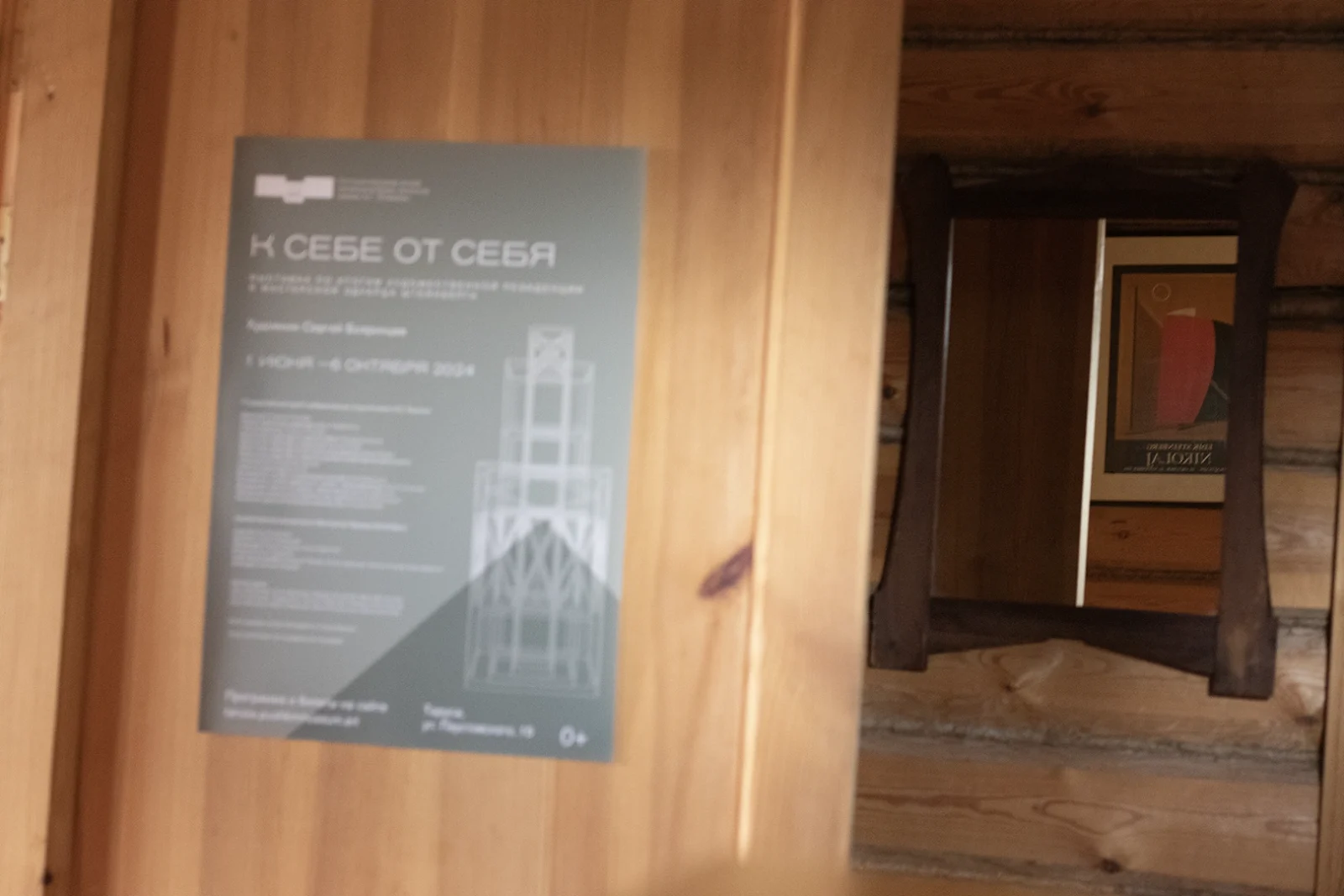
To Myself from Myself
An Exhibition Following the Art Residency in Eduard Steinberg Studio
The image of an exodus from home into the unknown and the path of knowledge was defining for me during the residency. It seems to relate to life and creative activity of Eduard Steinberg and Tarusa.
Home is a symbol and birthplace of culture, a person’s refuge, co-scaled with the person, separated from someone else’s and undeveloped. Following the path to truth – knowledge – suggests exodus from home to the world to be comprehended and mastered. A new home might be found as well. The old home might be expanded and included into the new space. It might be lost at all. Not everyone will dare to take this trip, but some will.
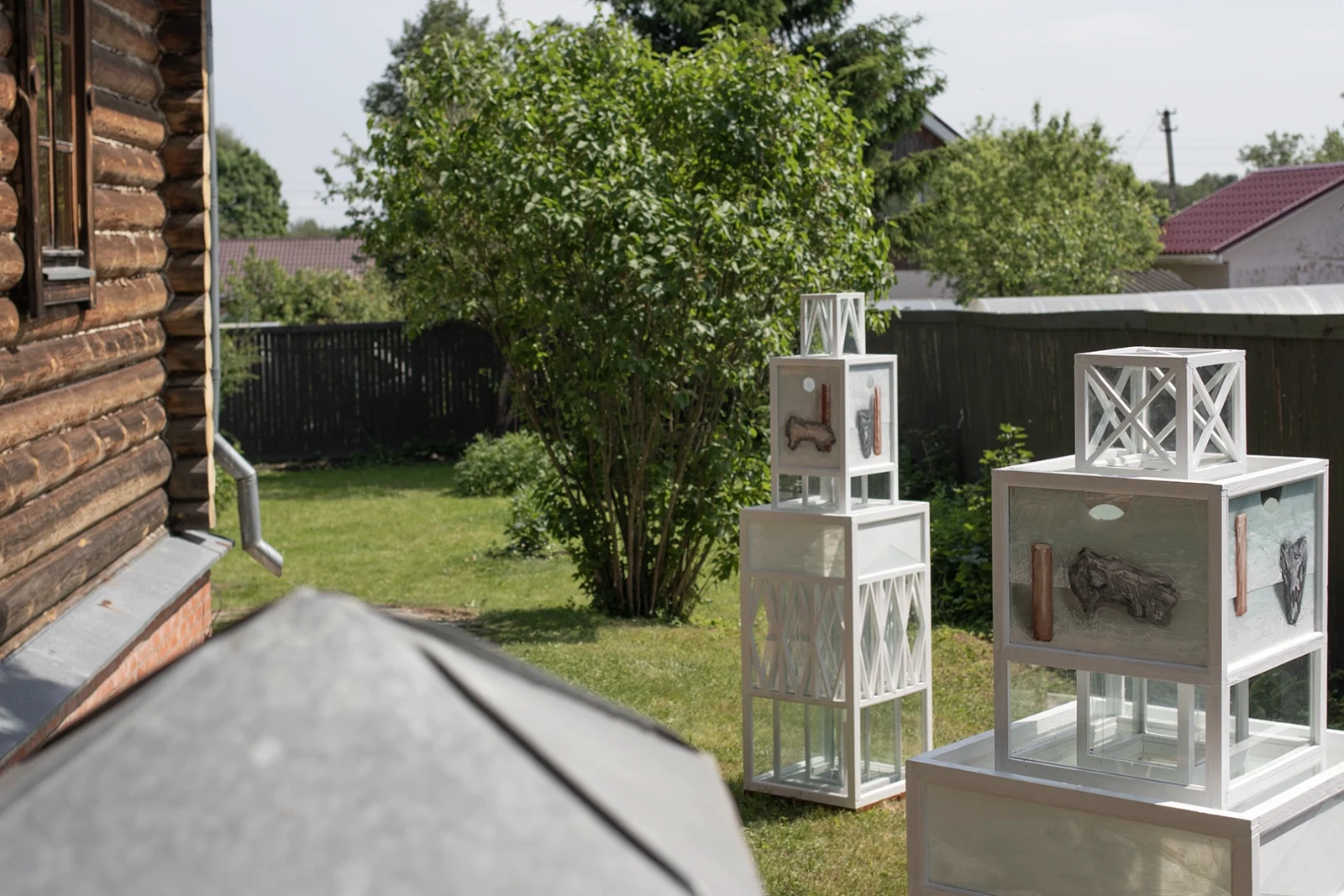
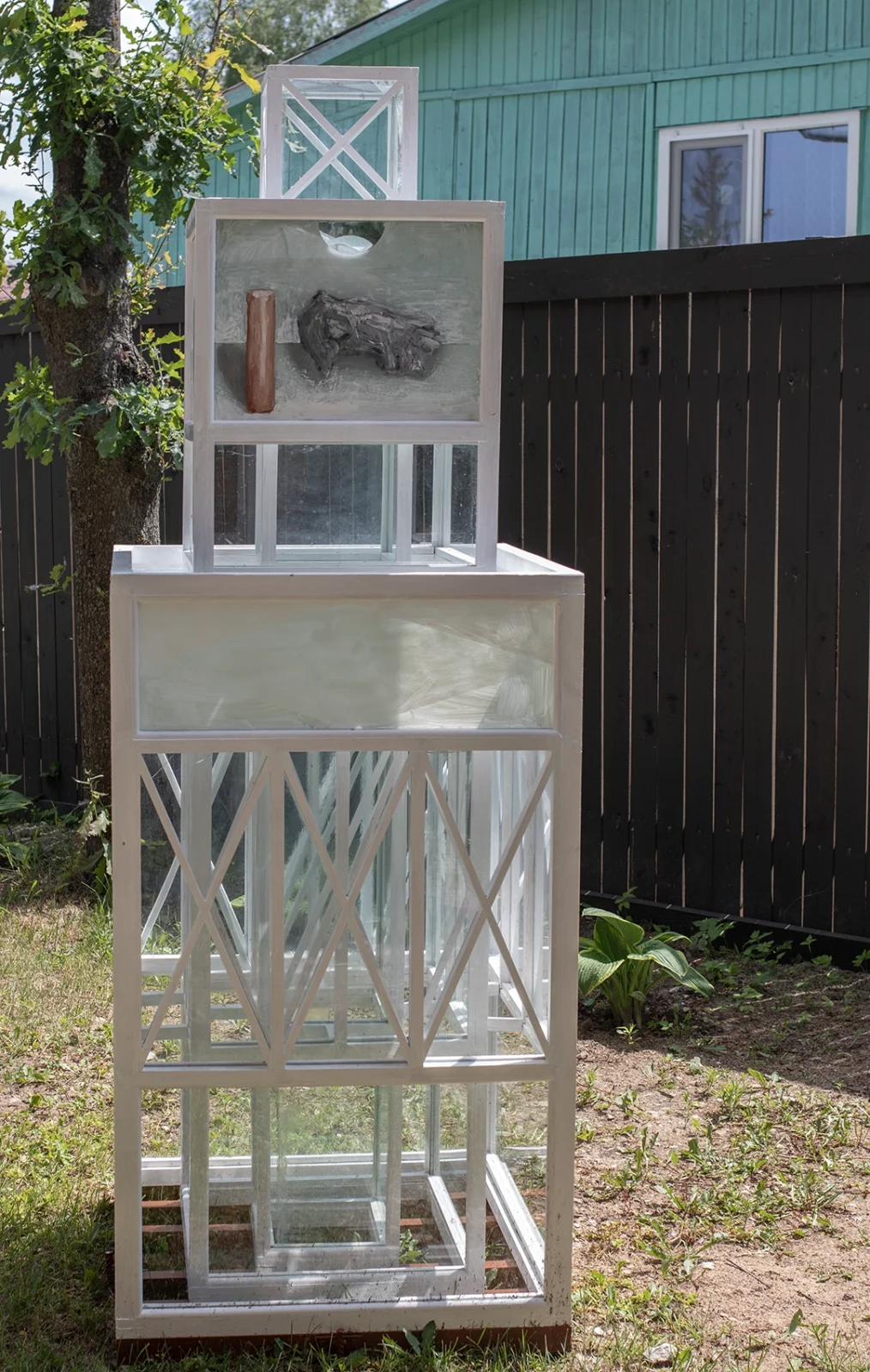
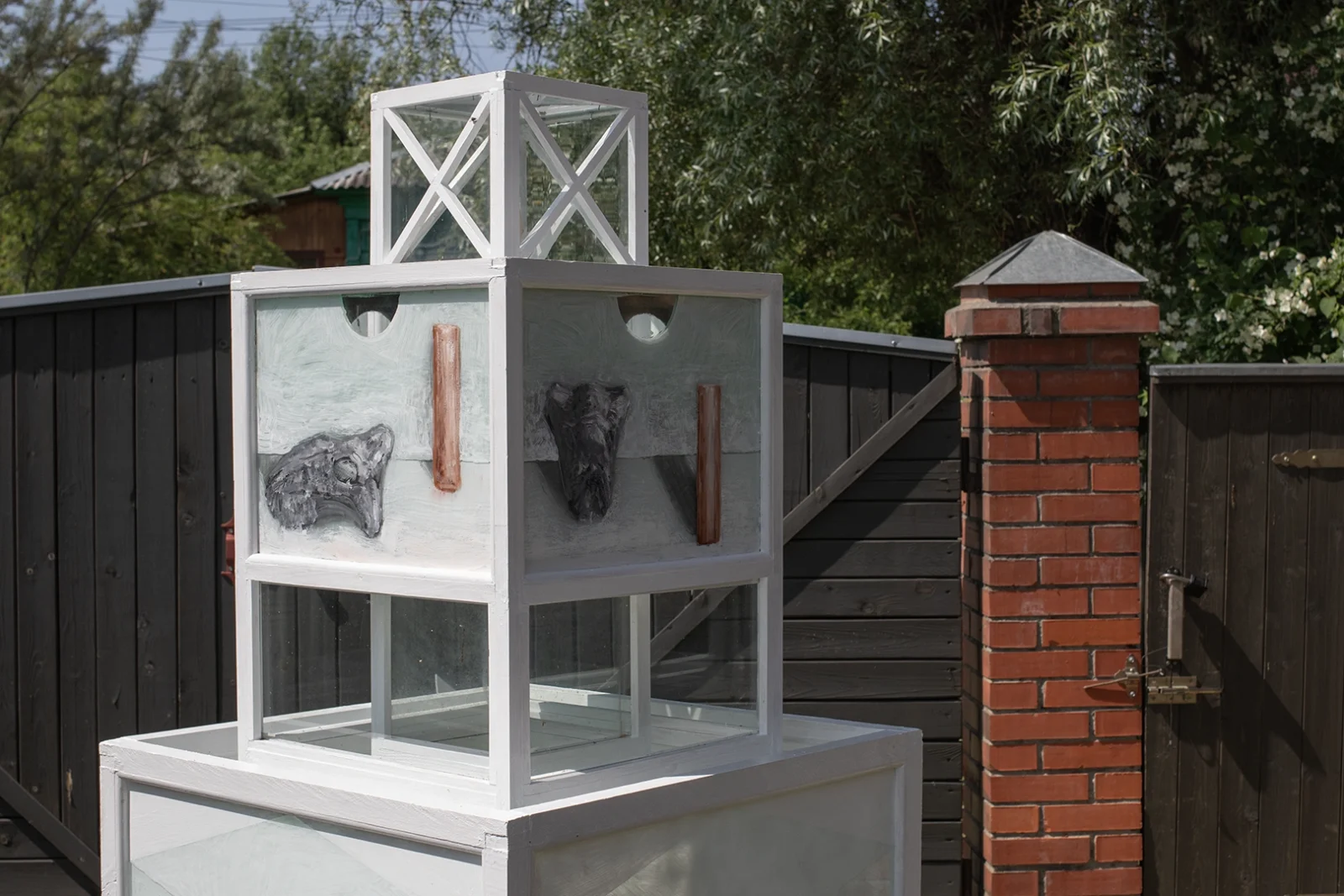
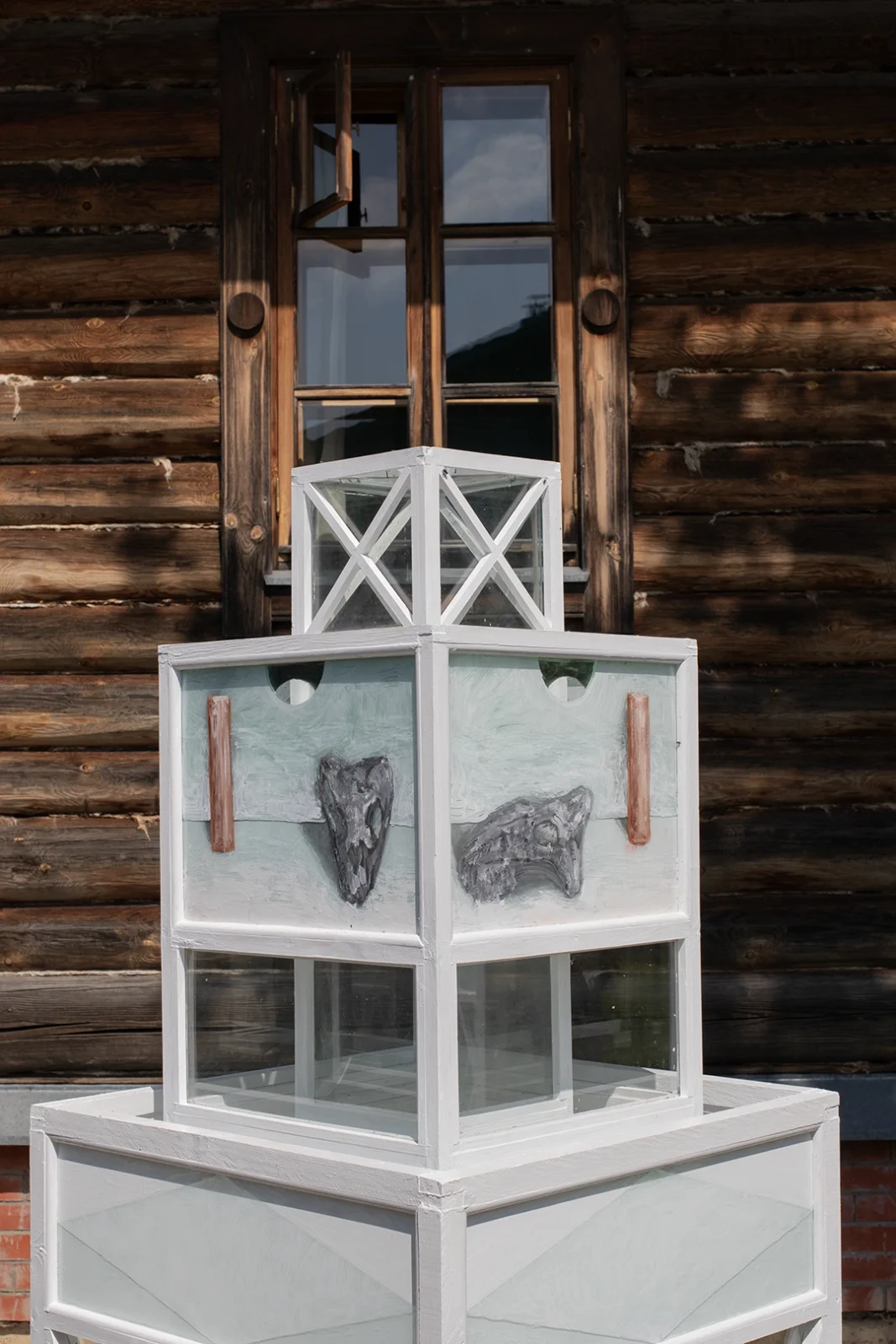
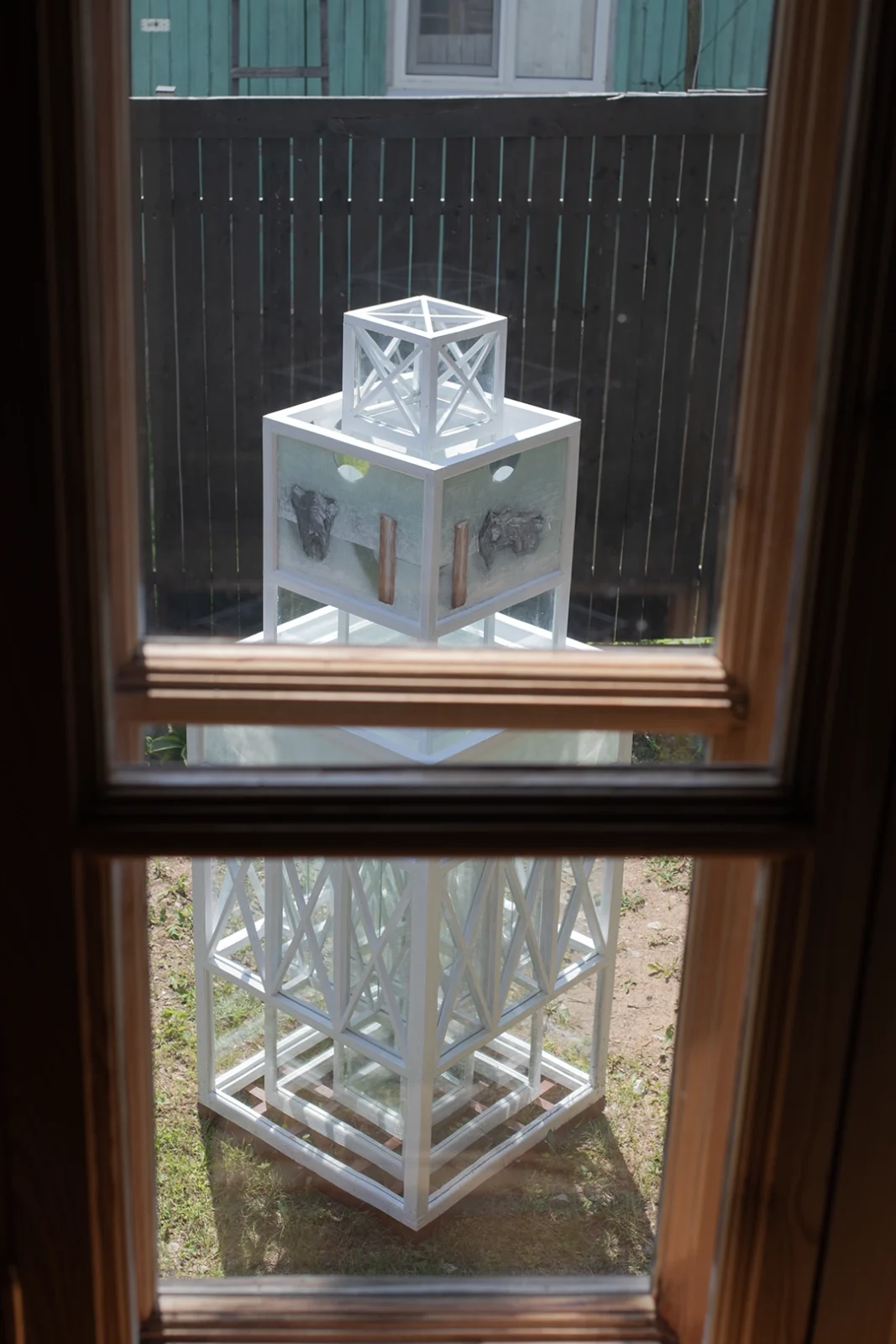
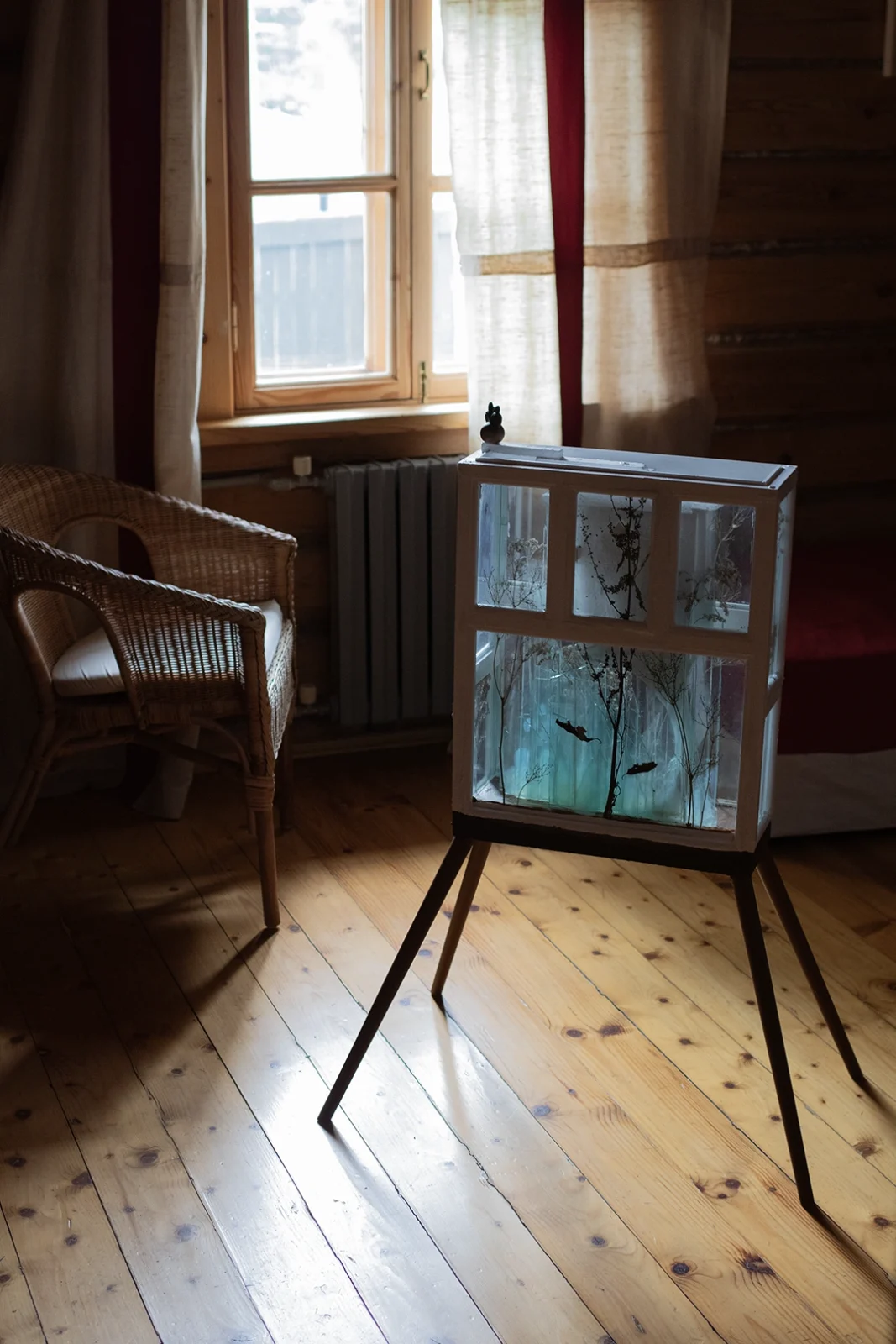
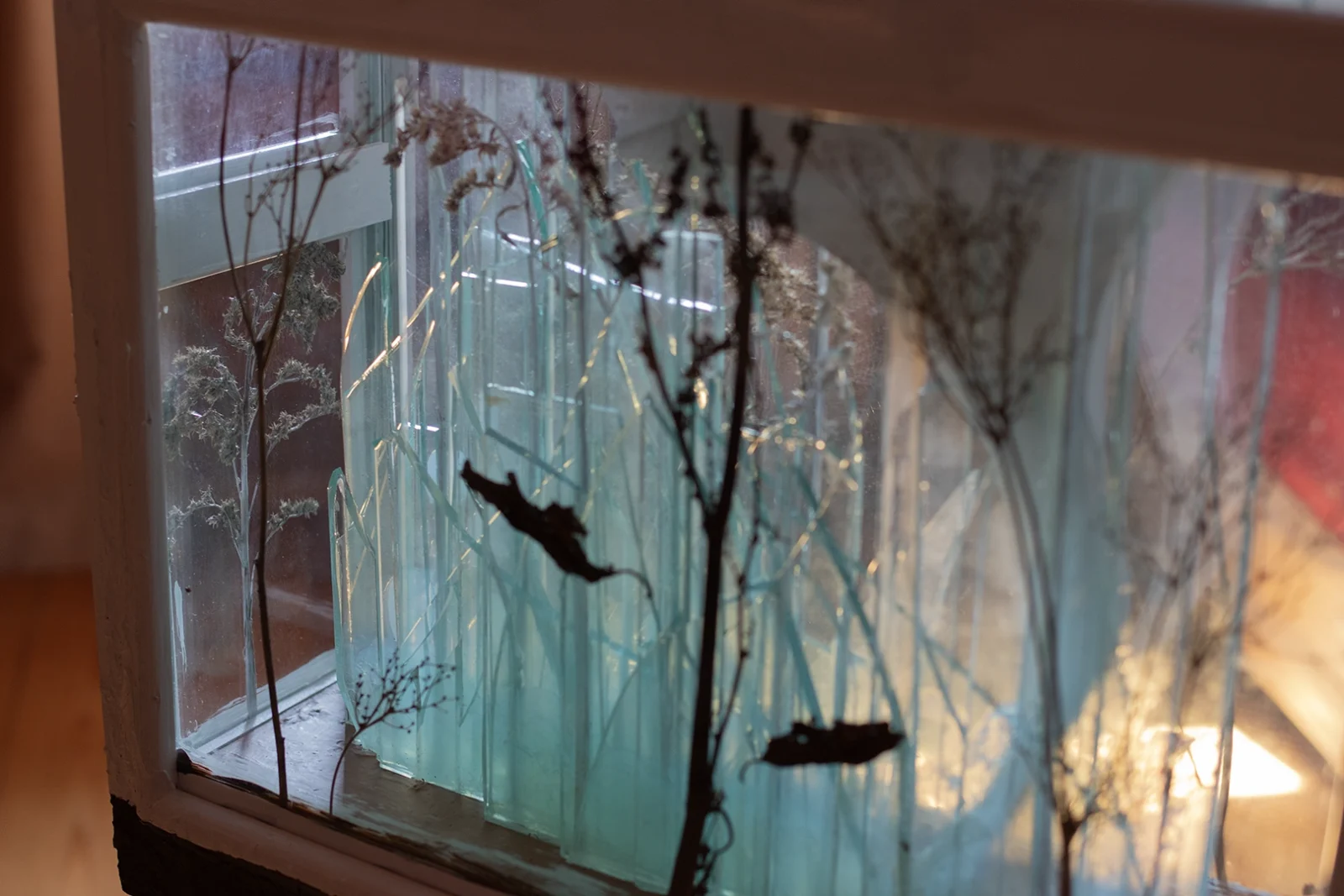
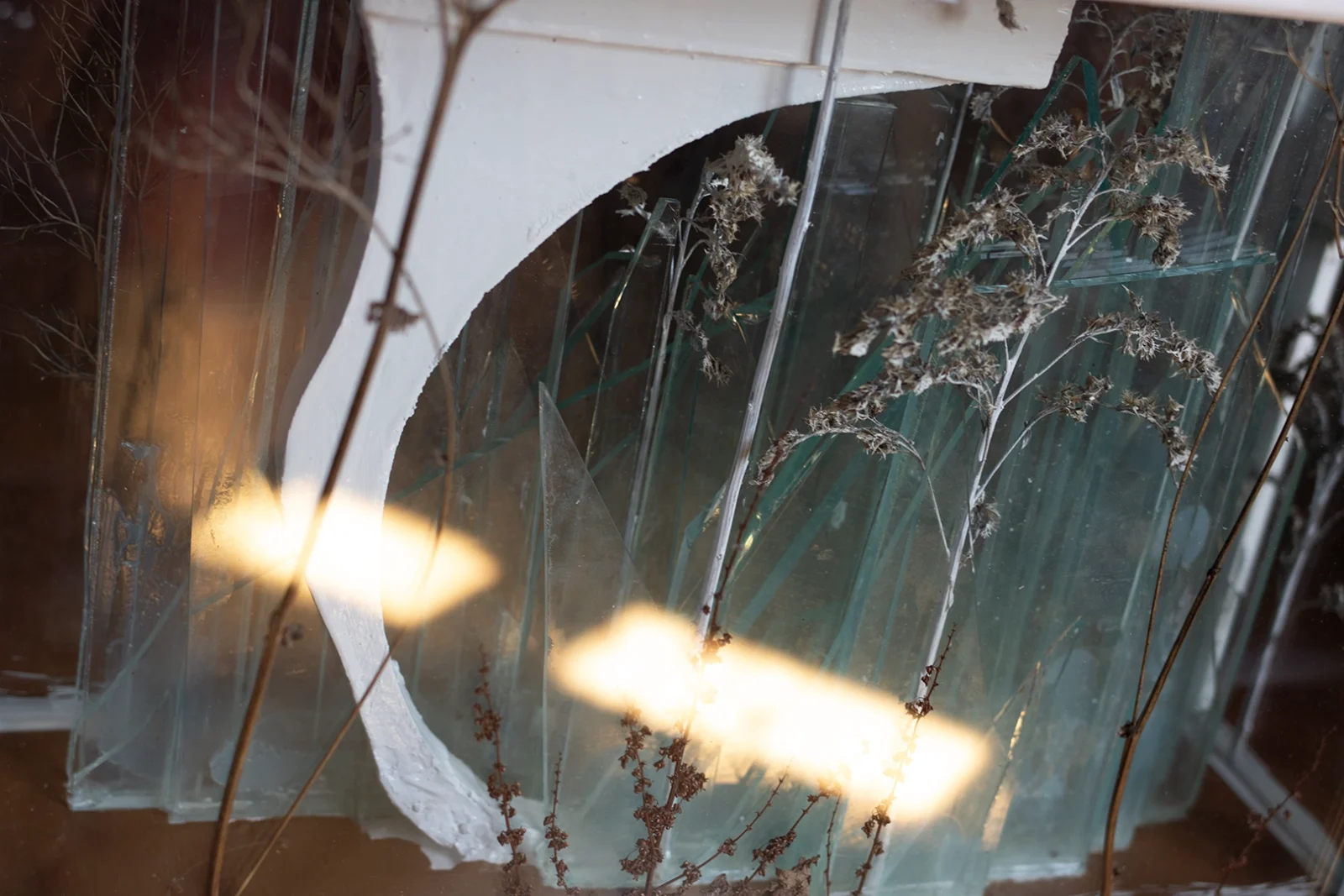
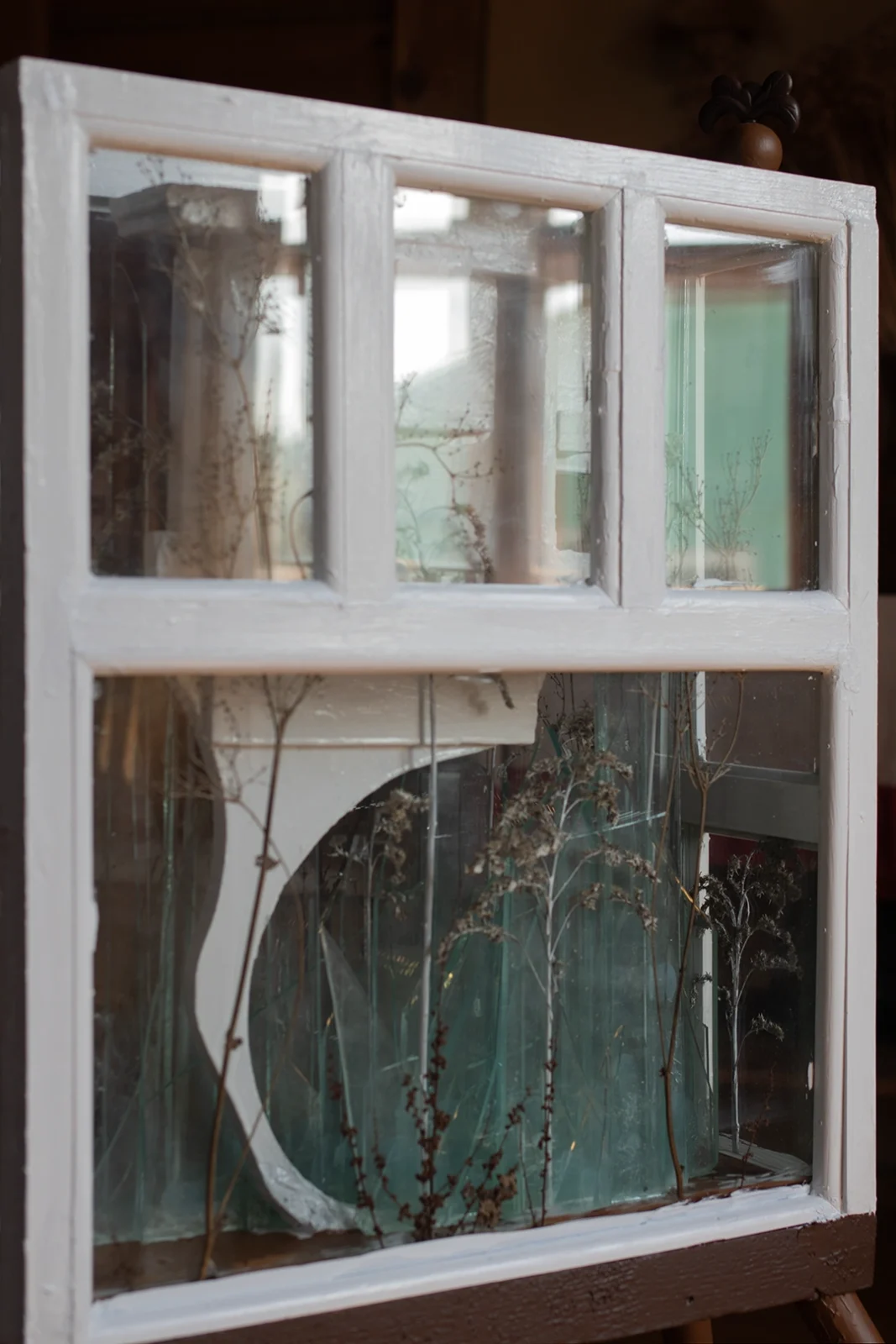
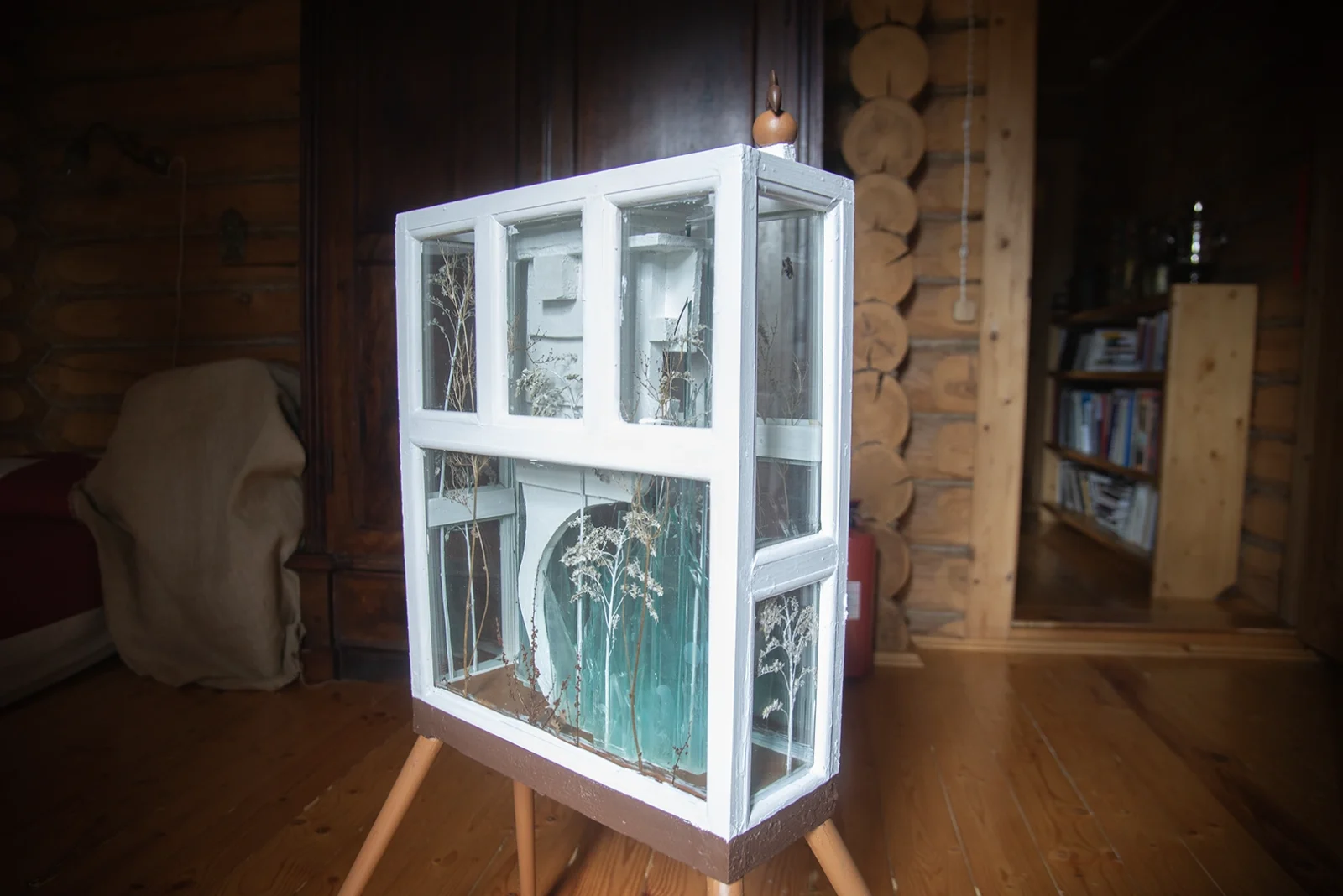
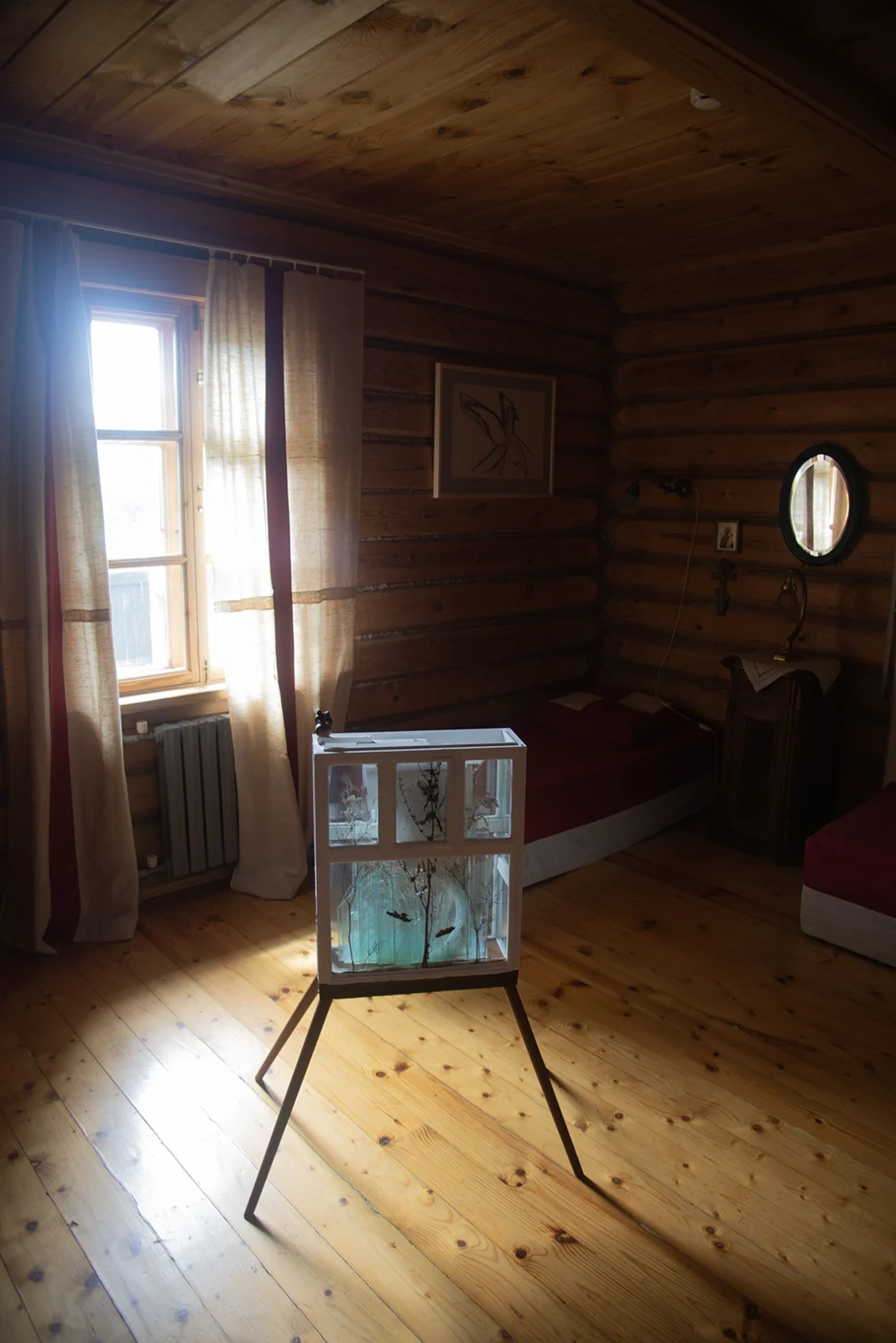
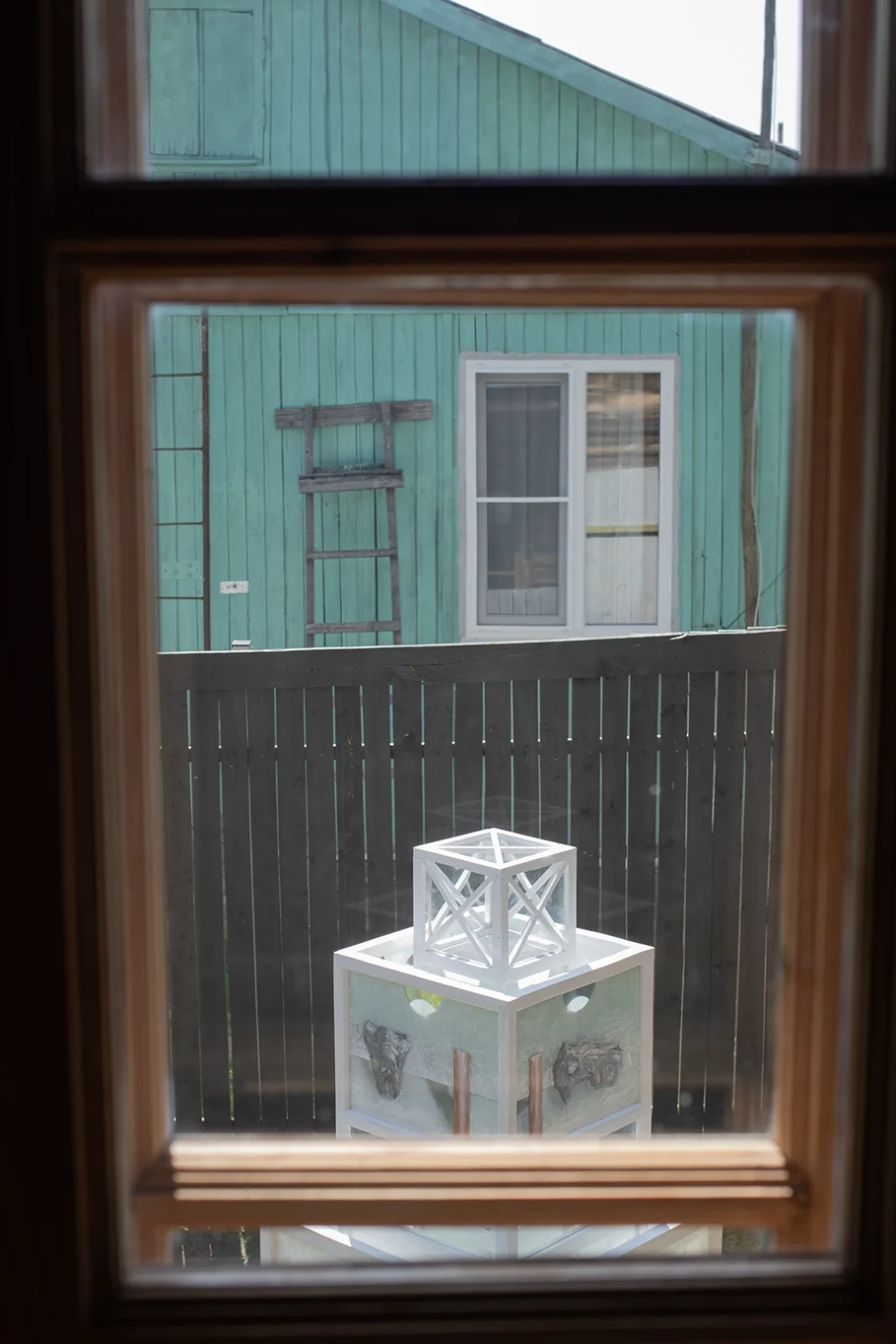
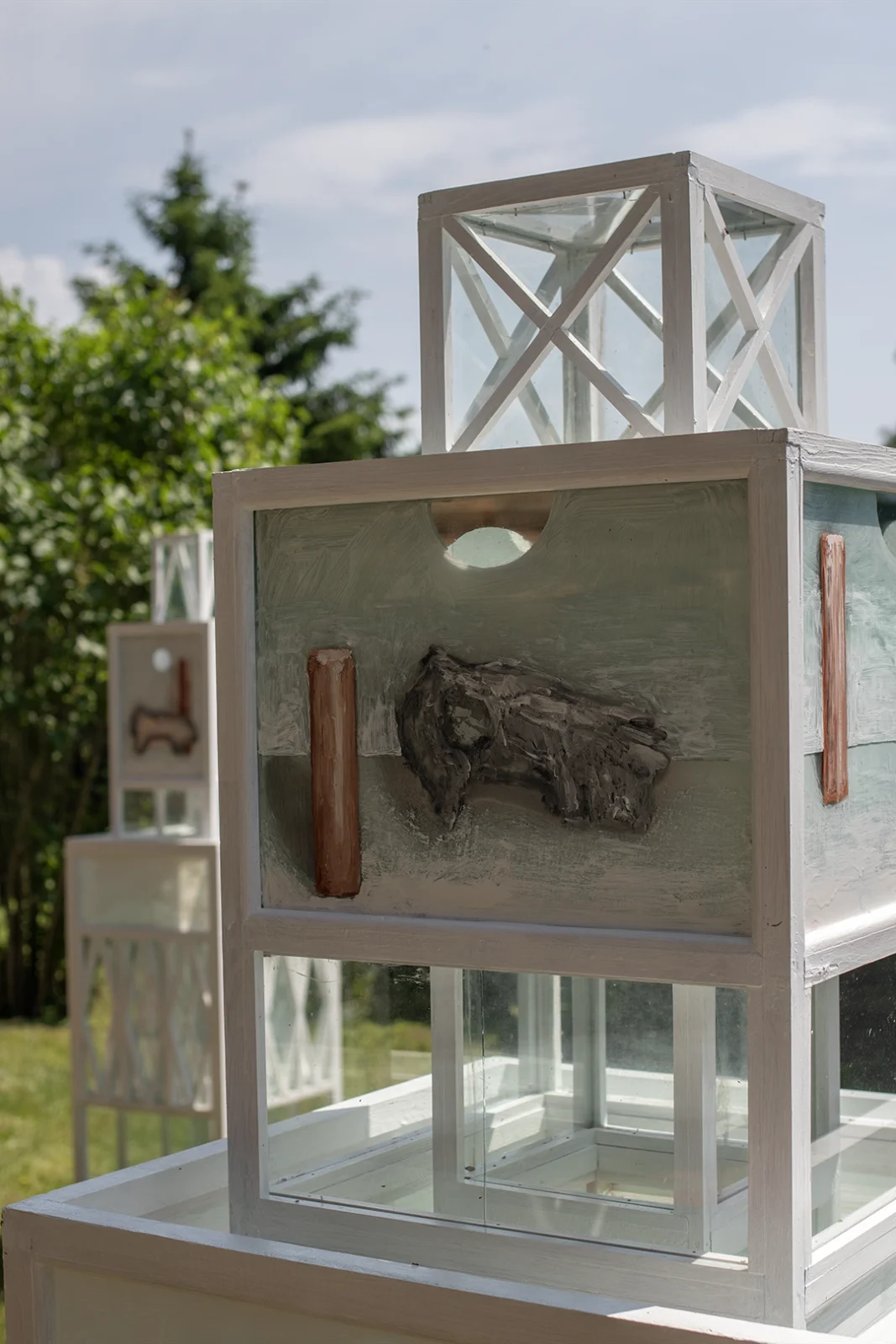
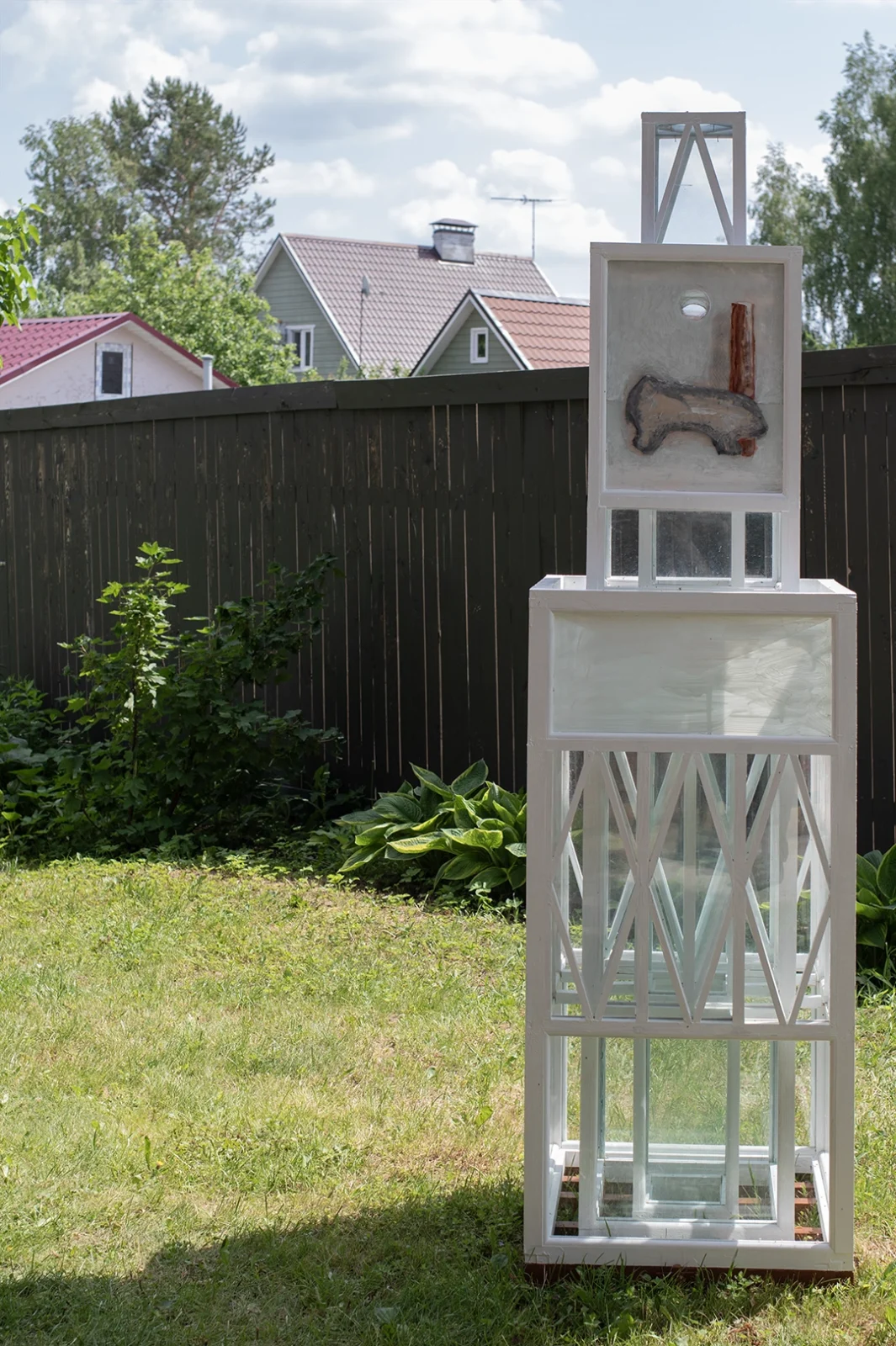
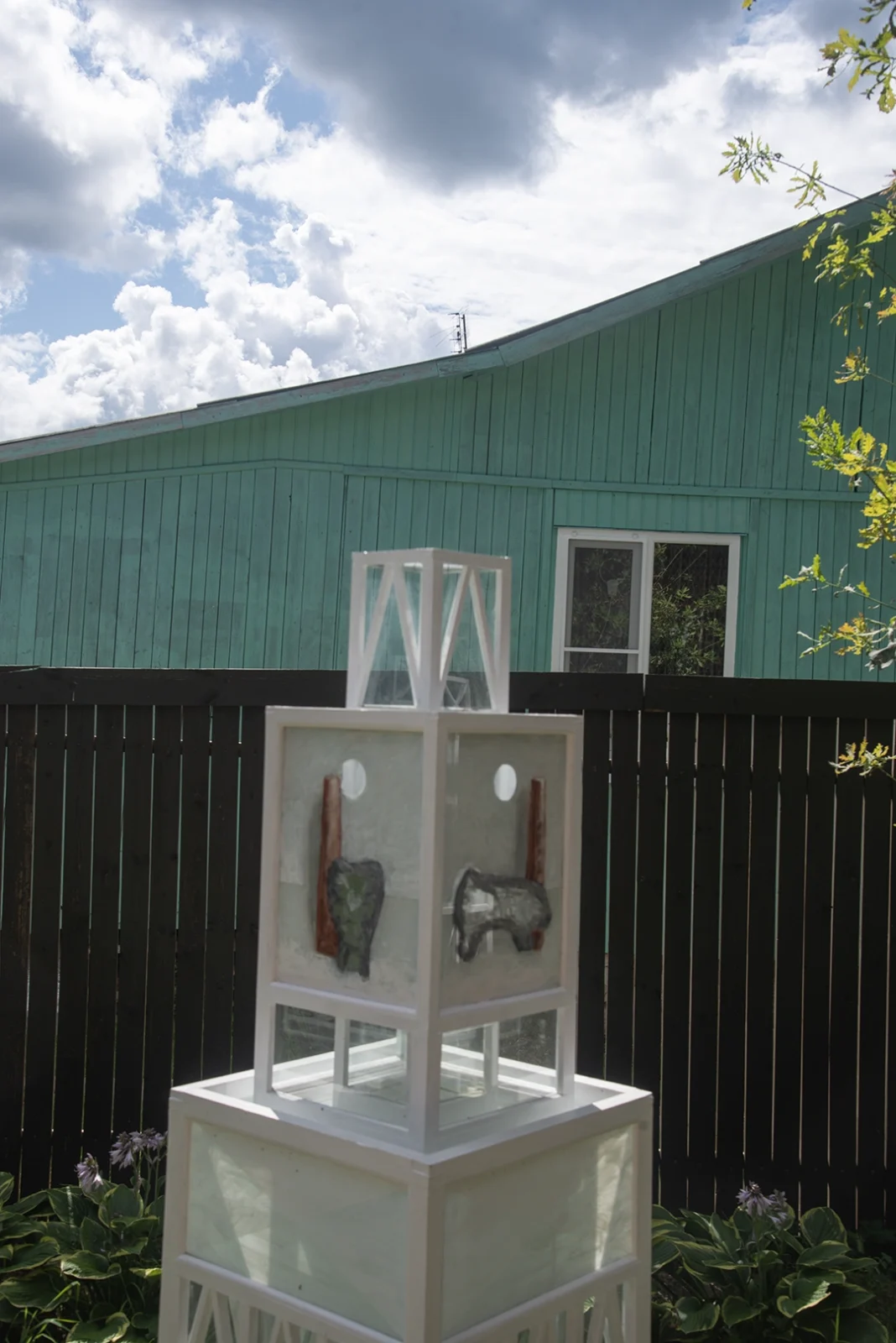
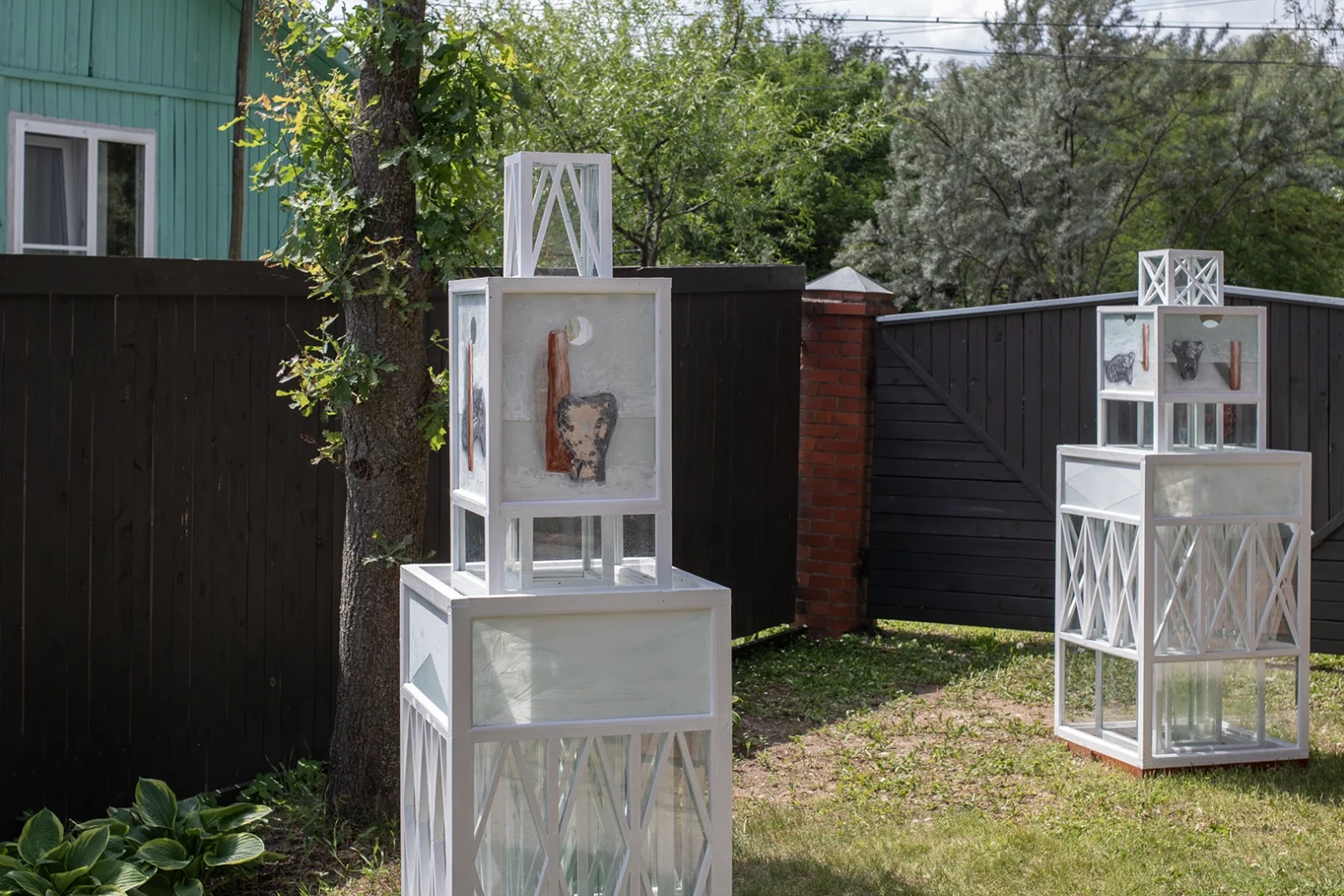
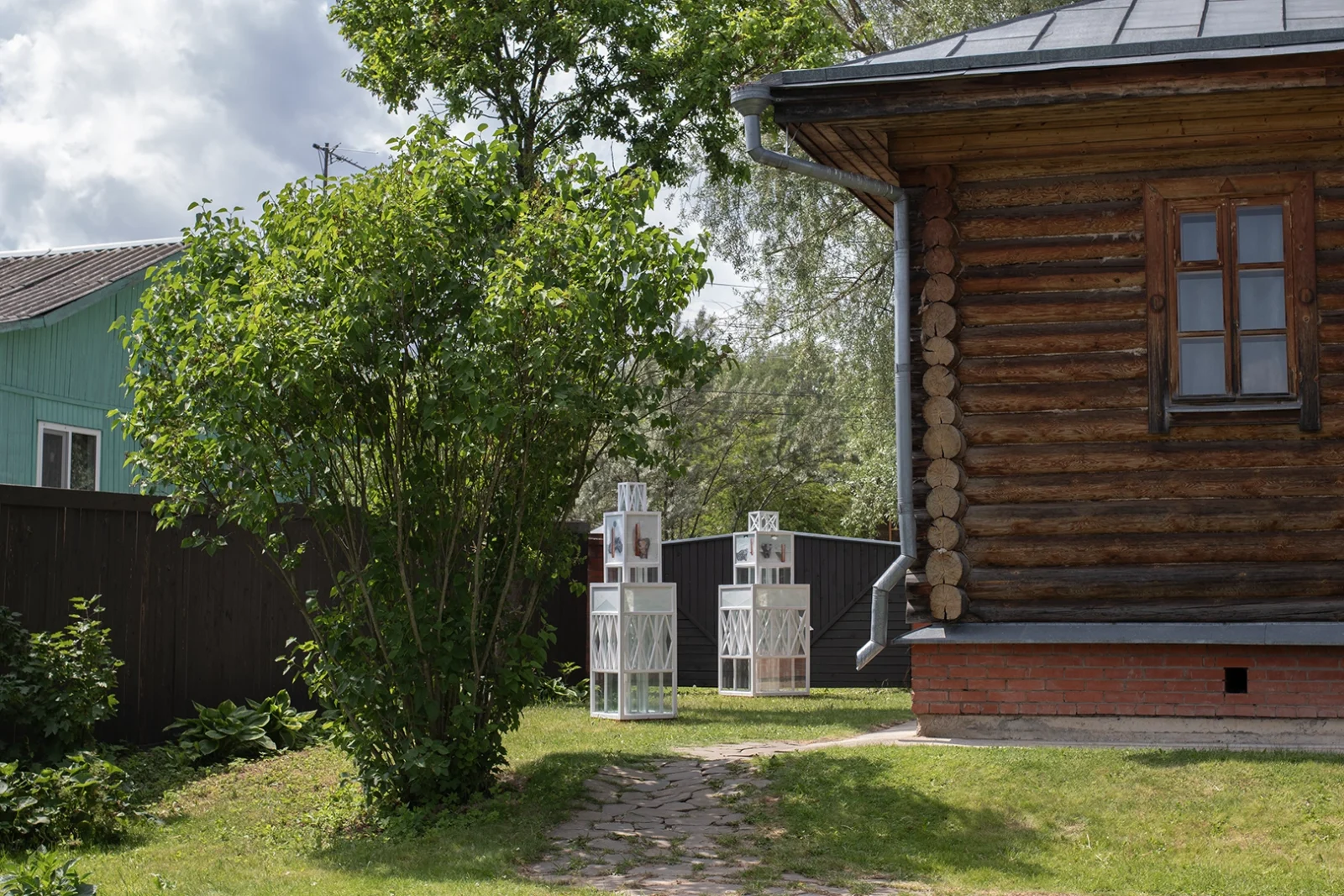
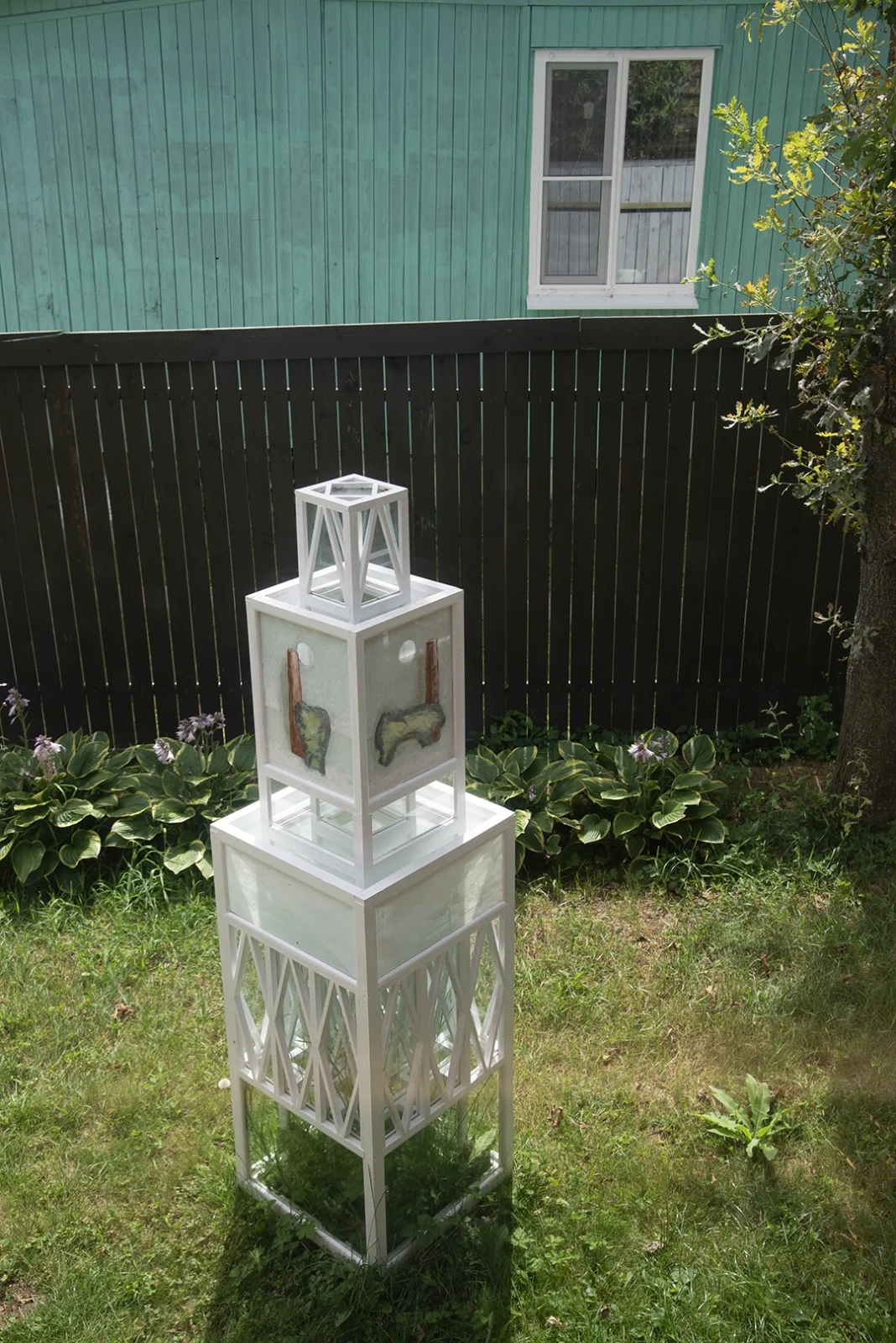
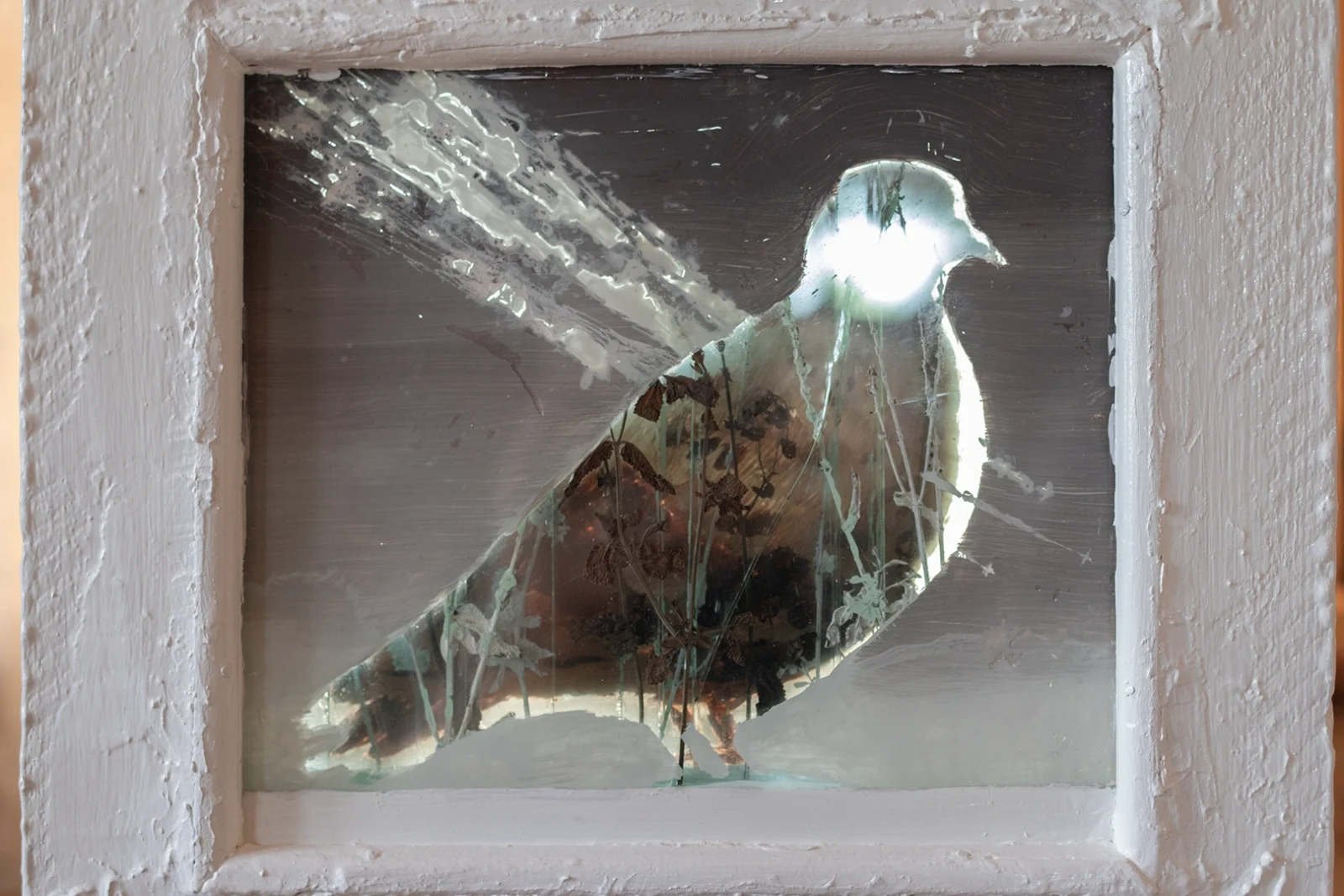
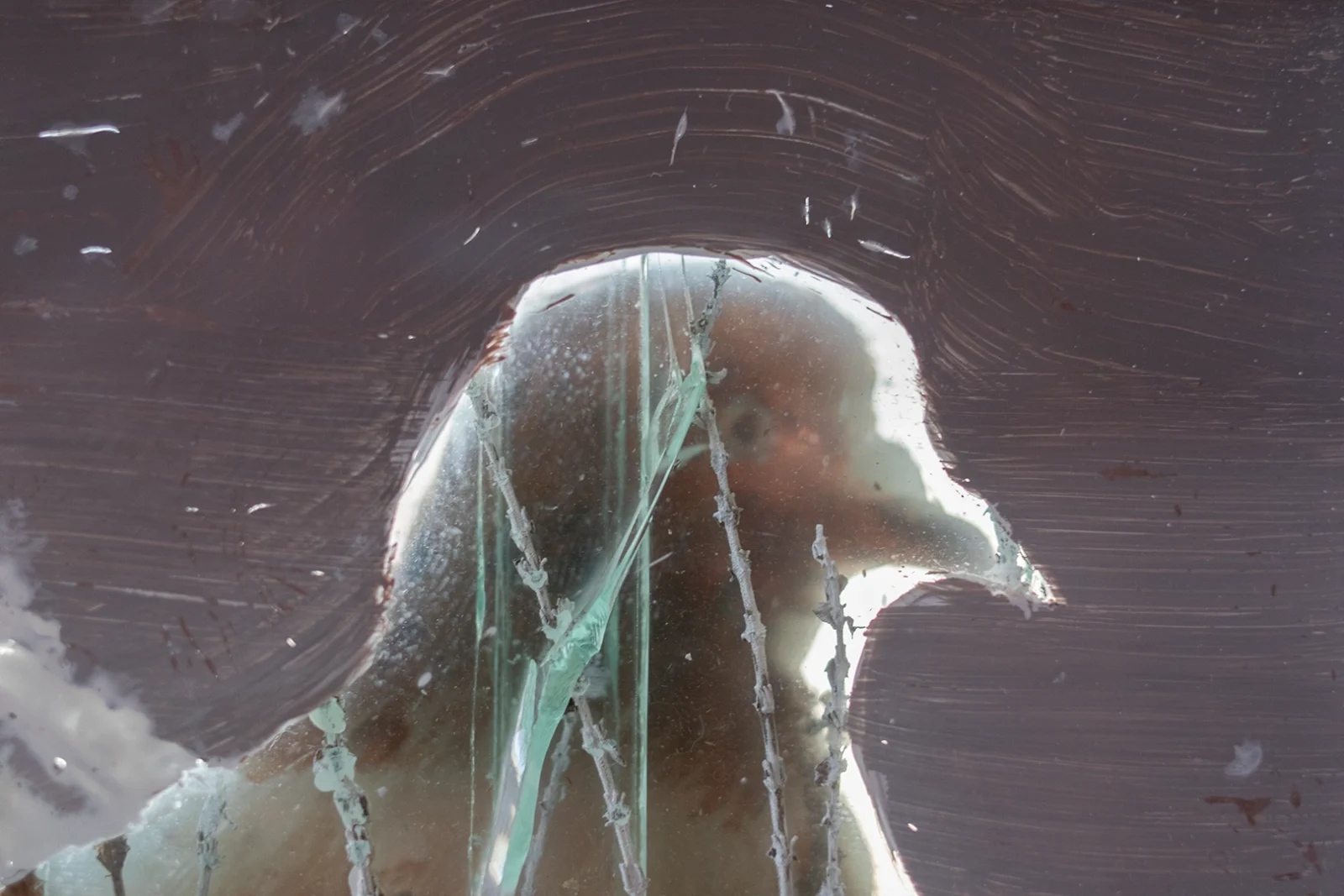
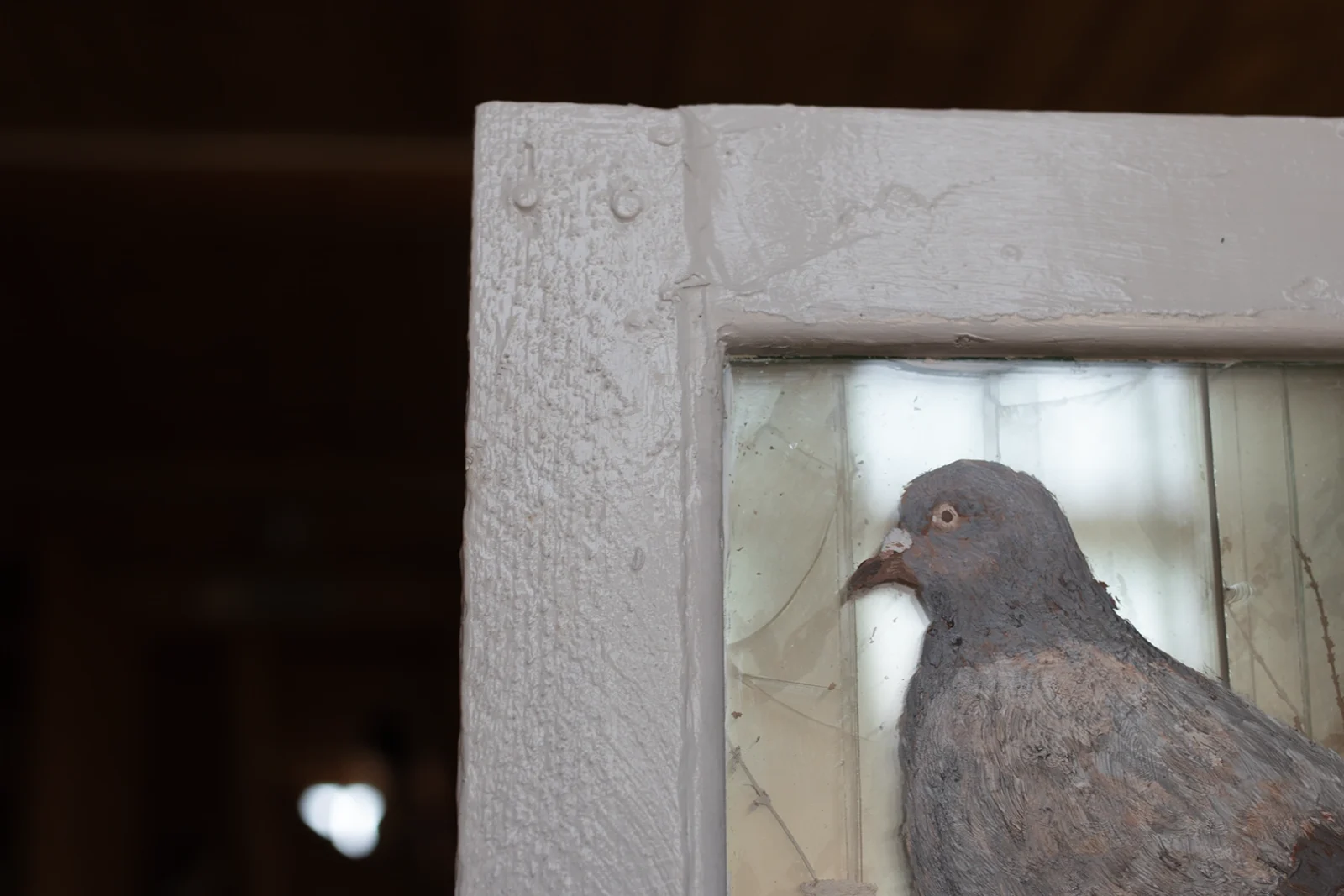
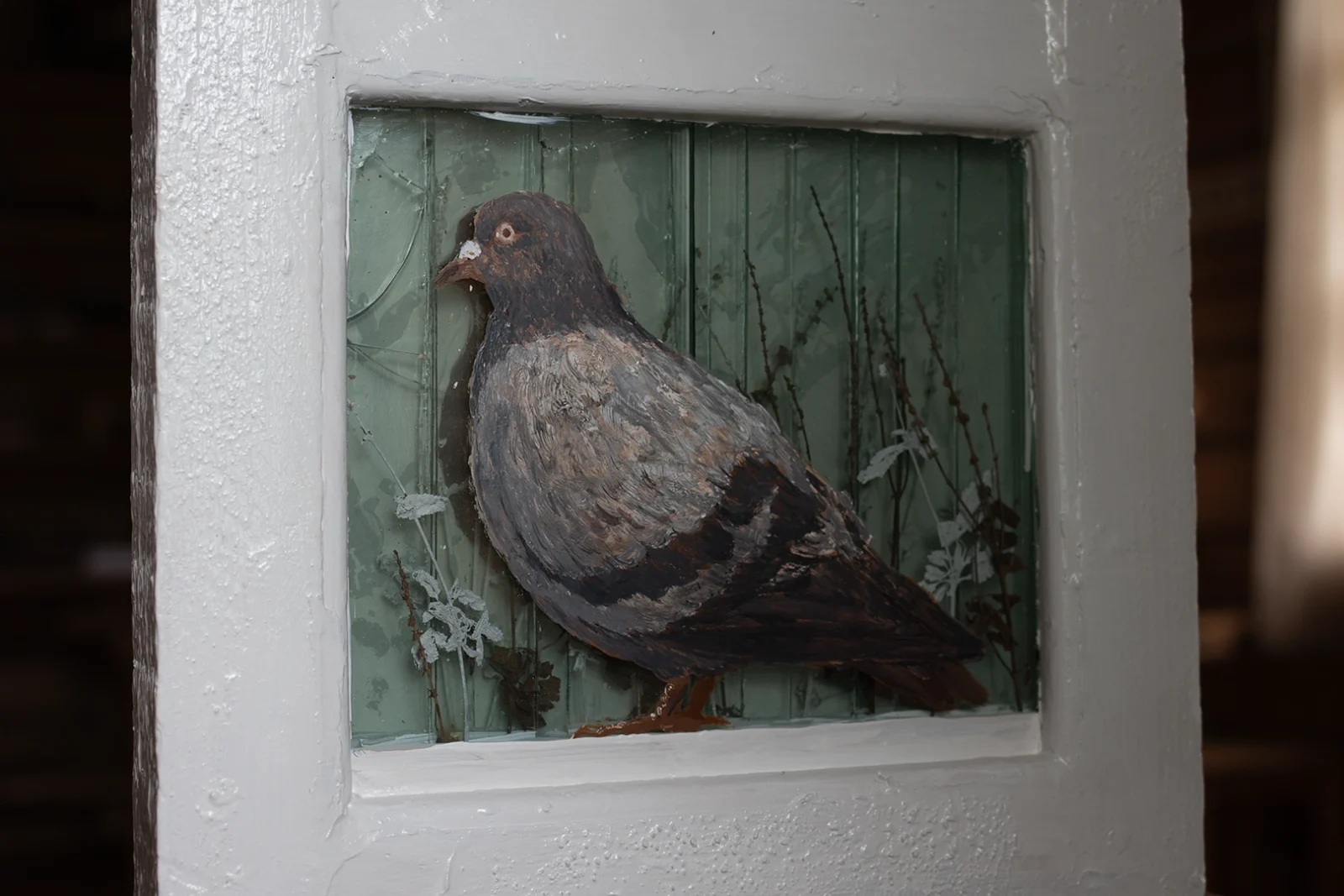
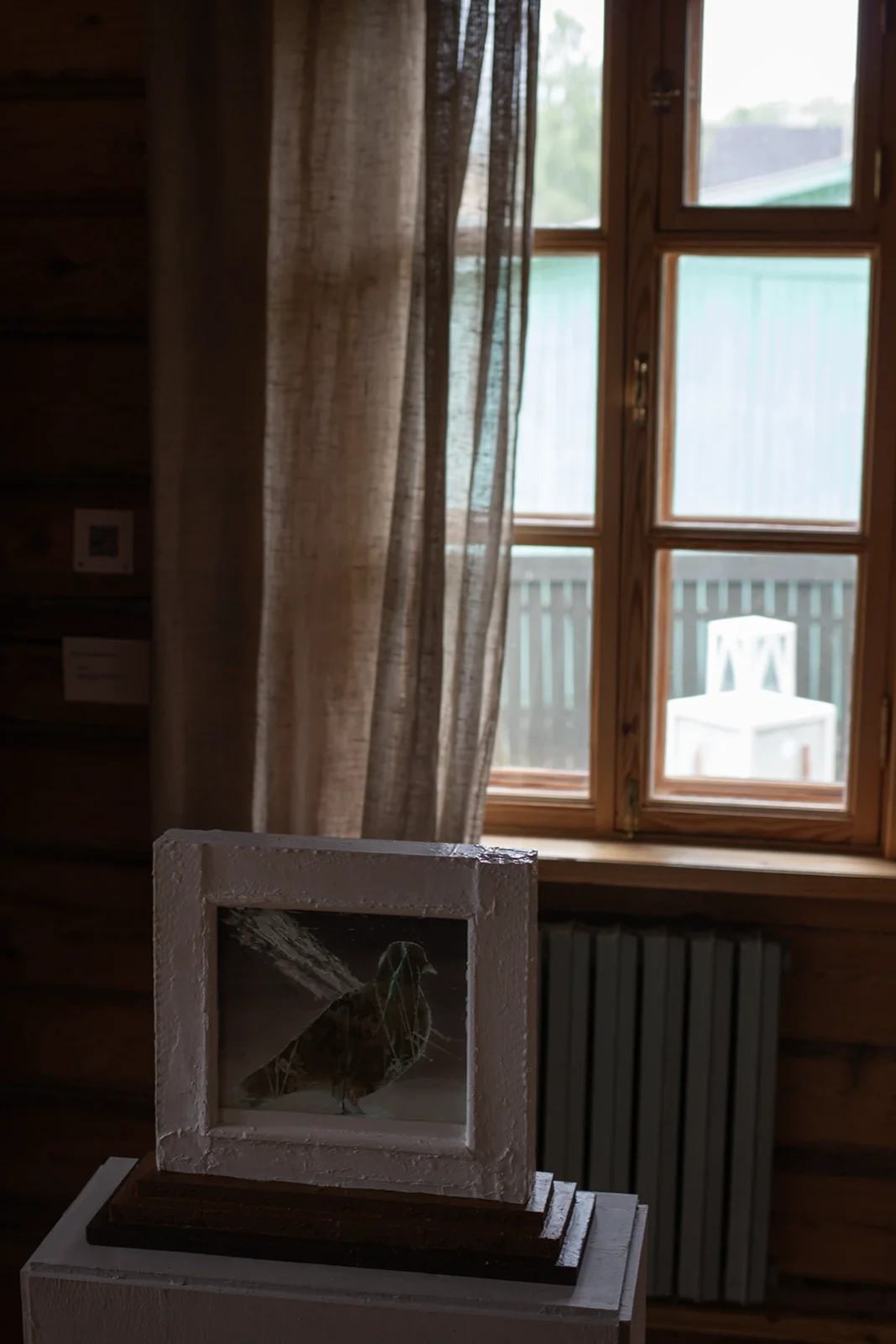
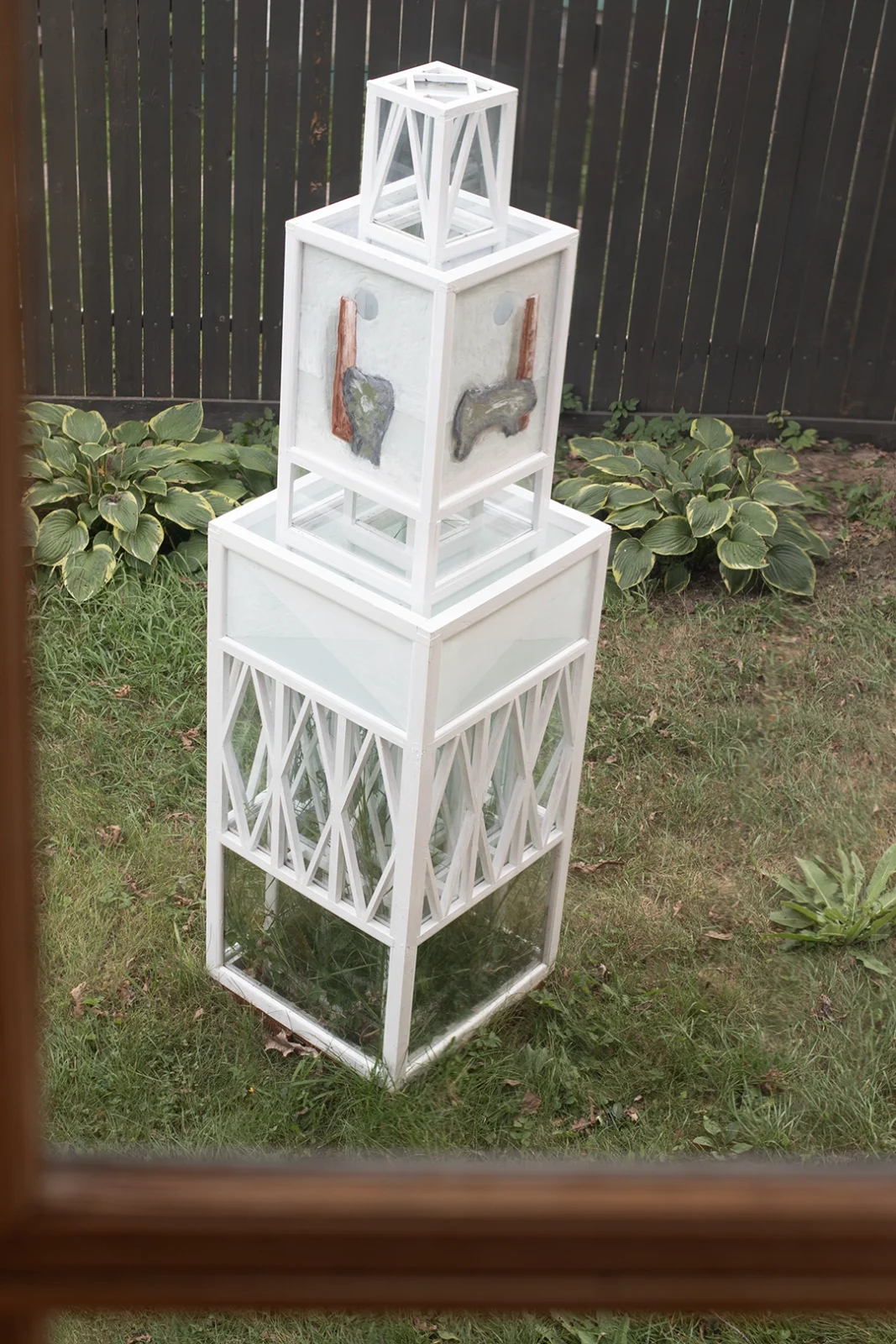
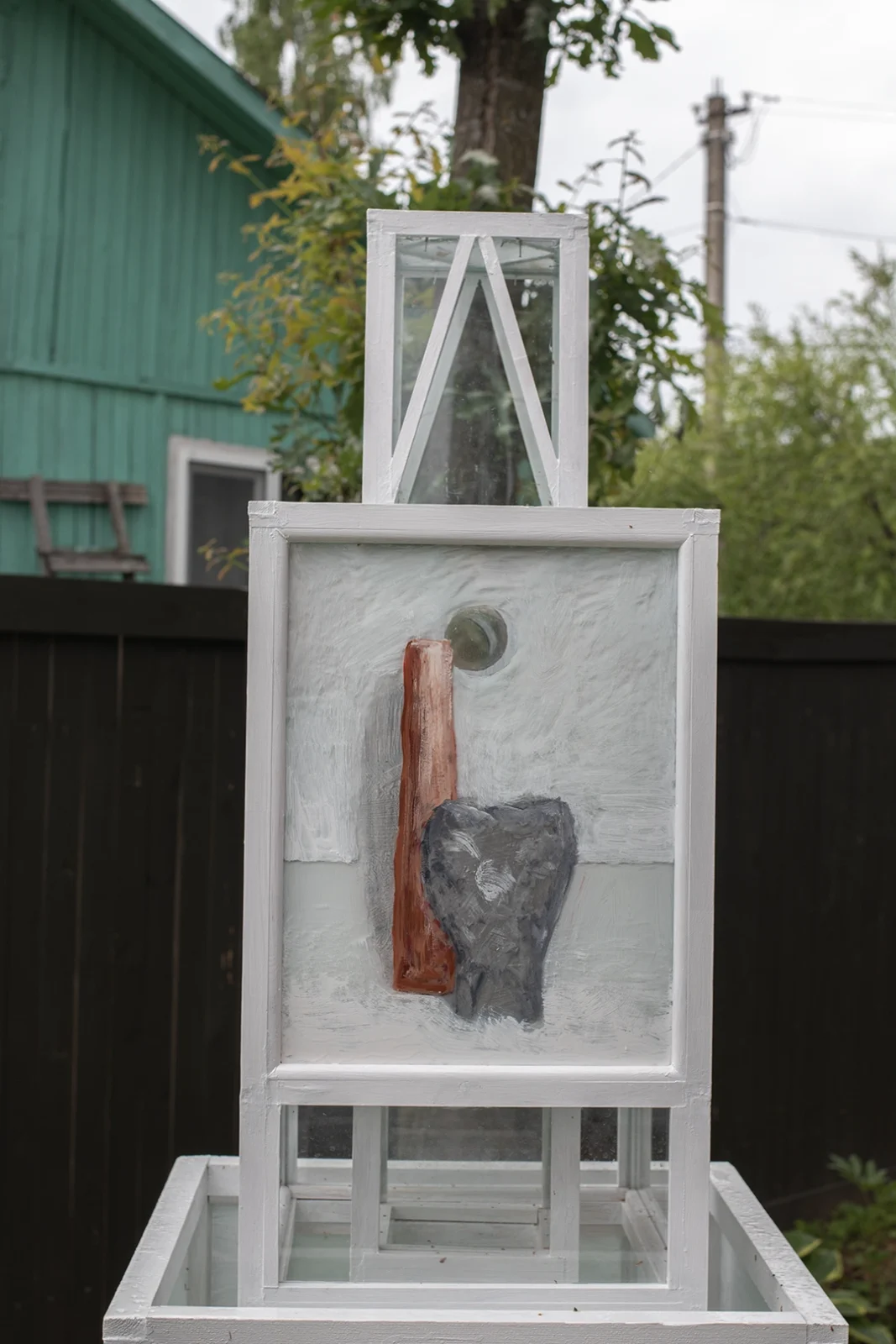
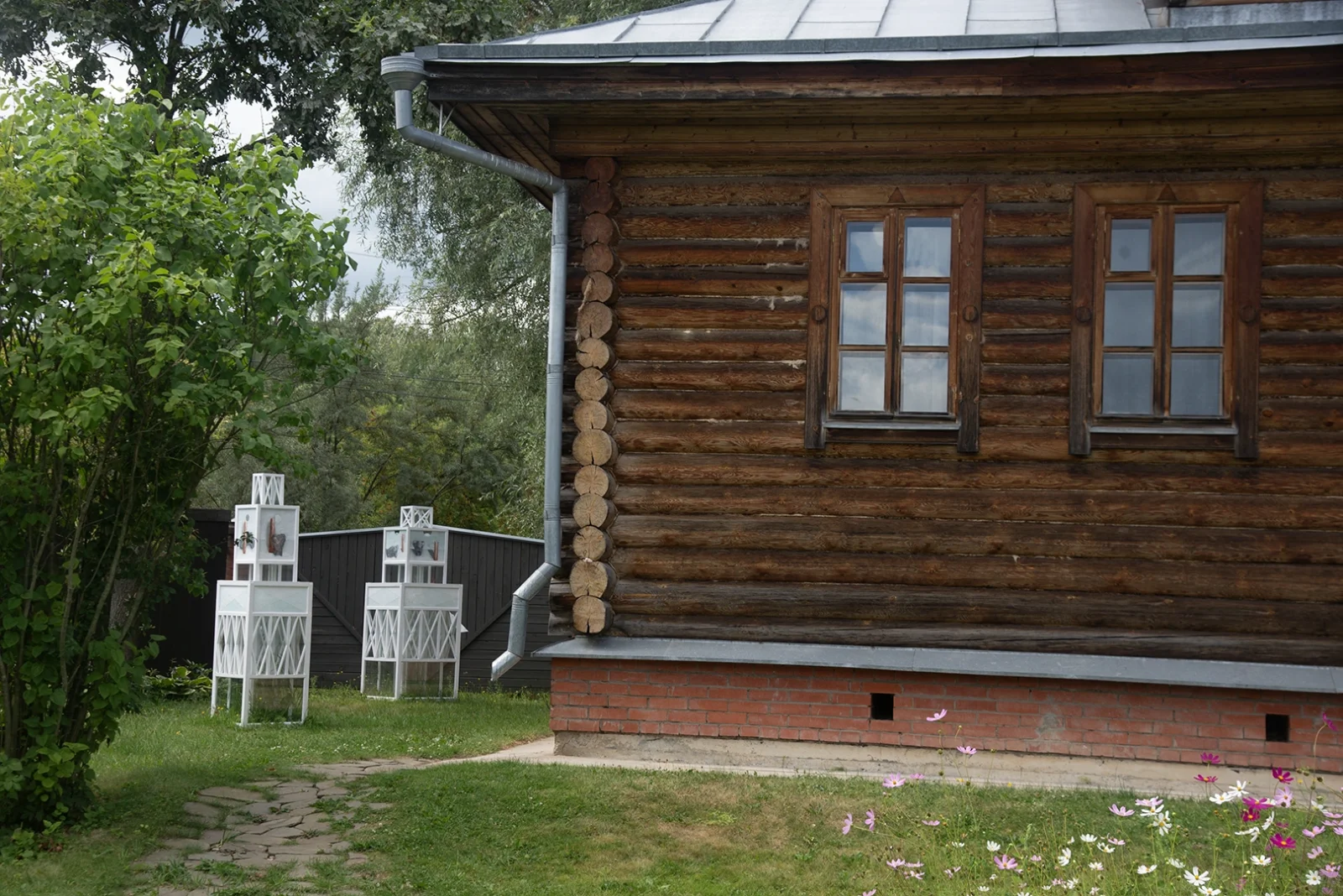
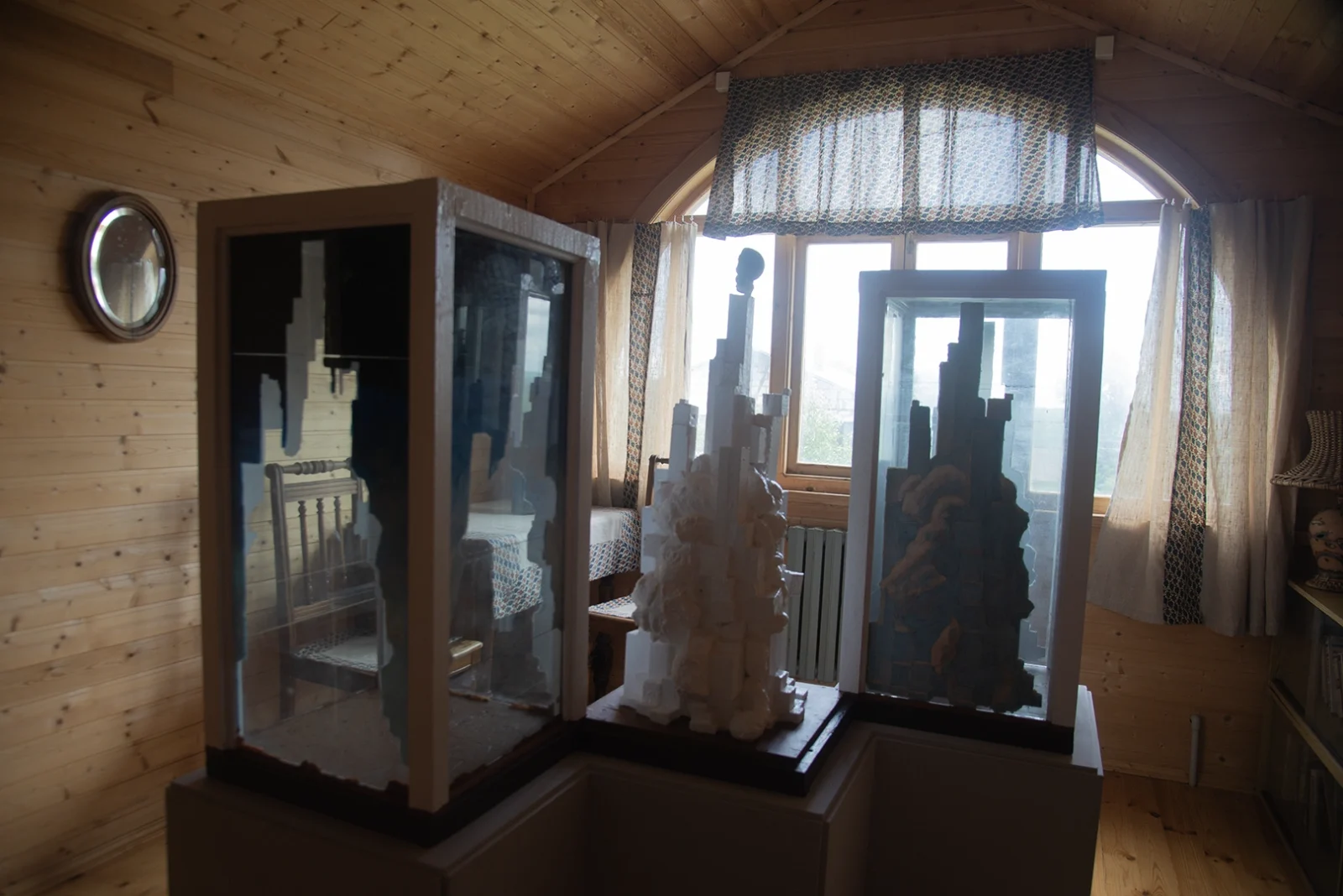
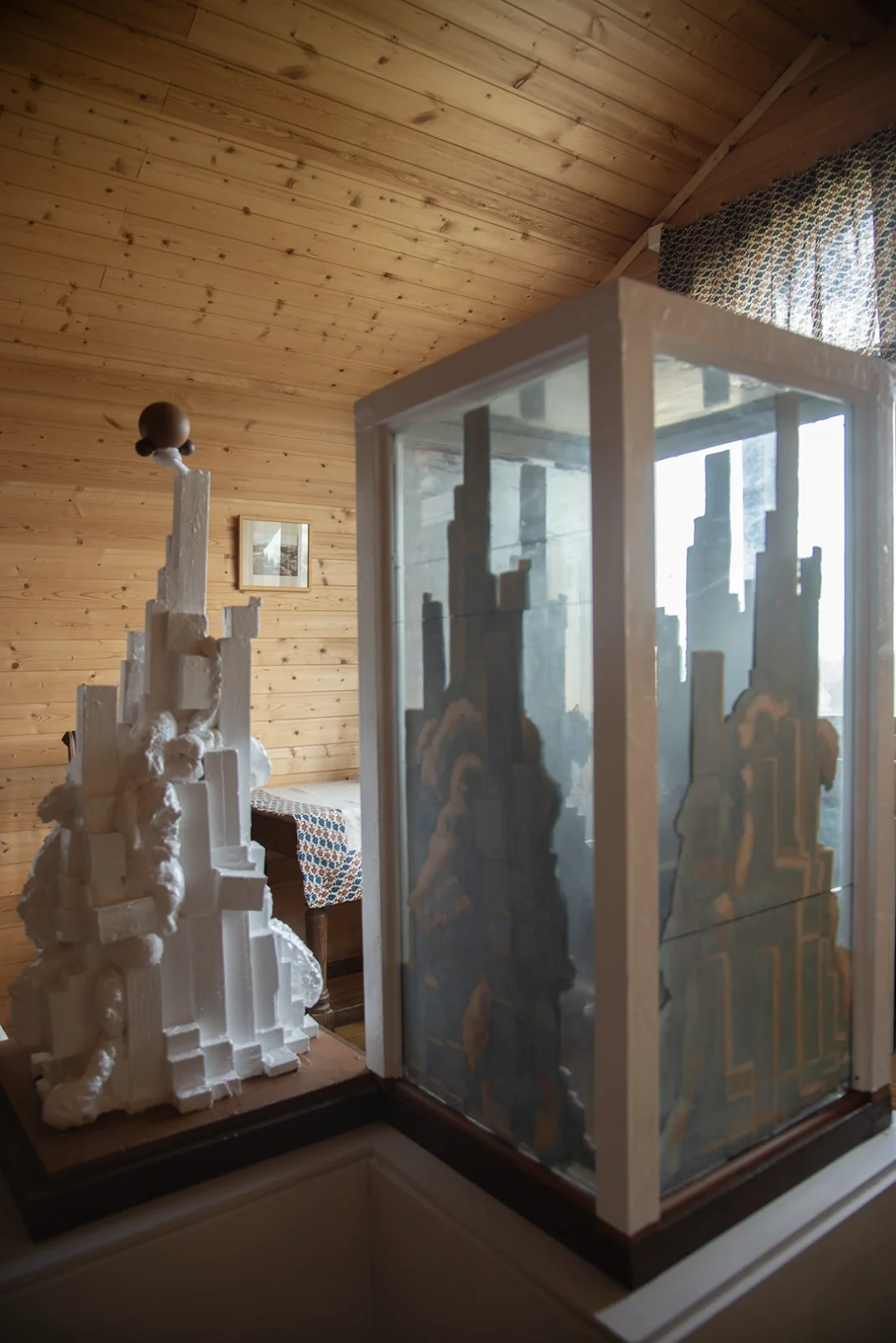
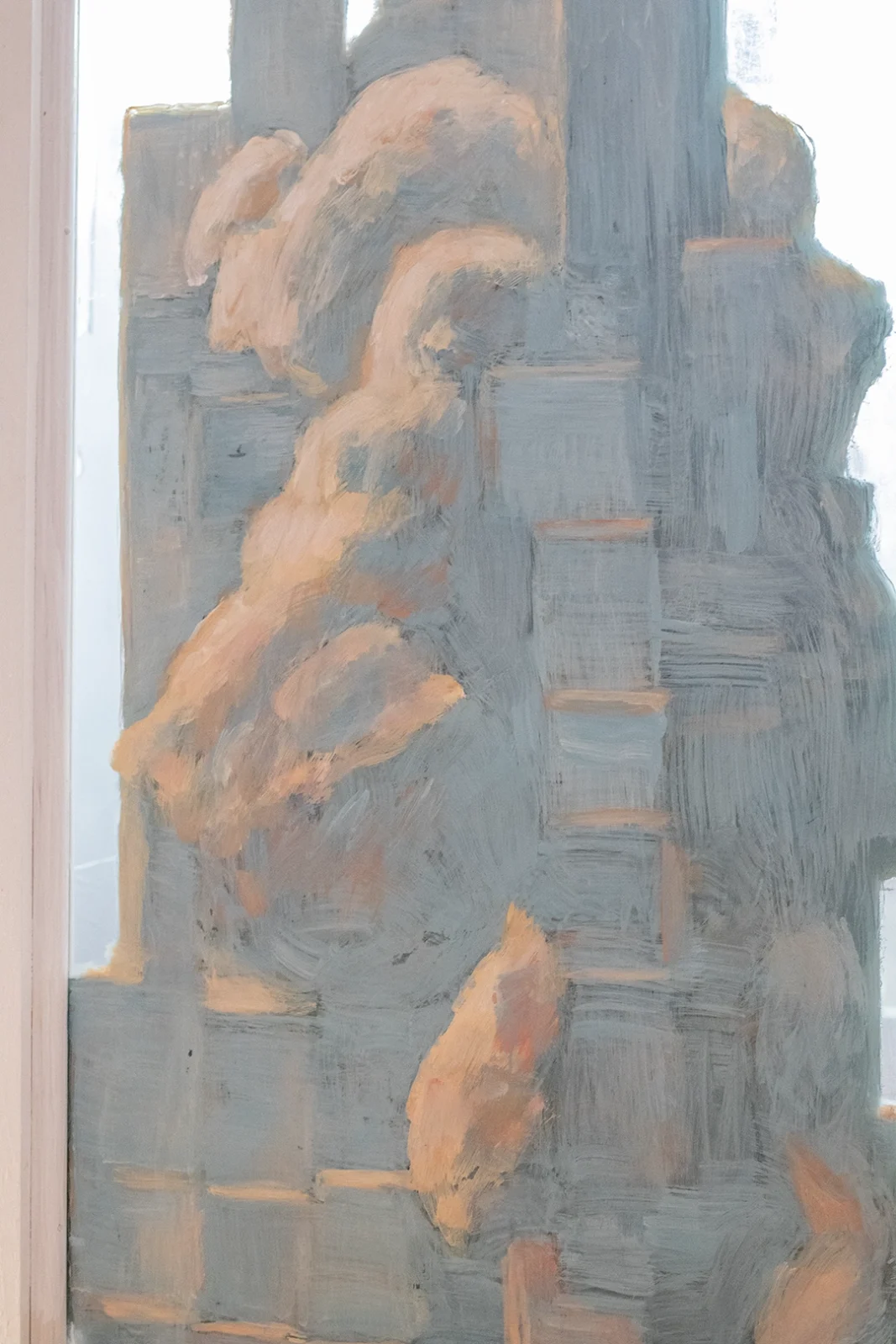
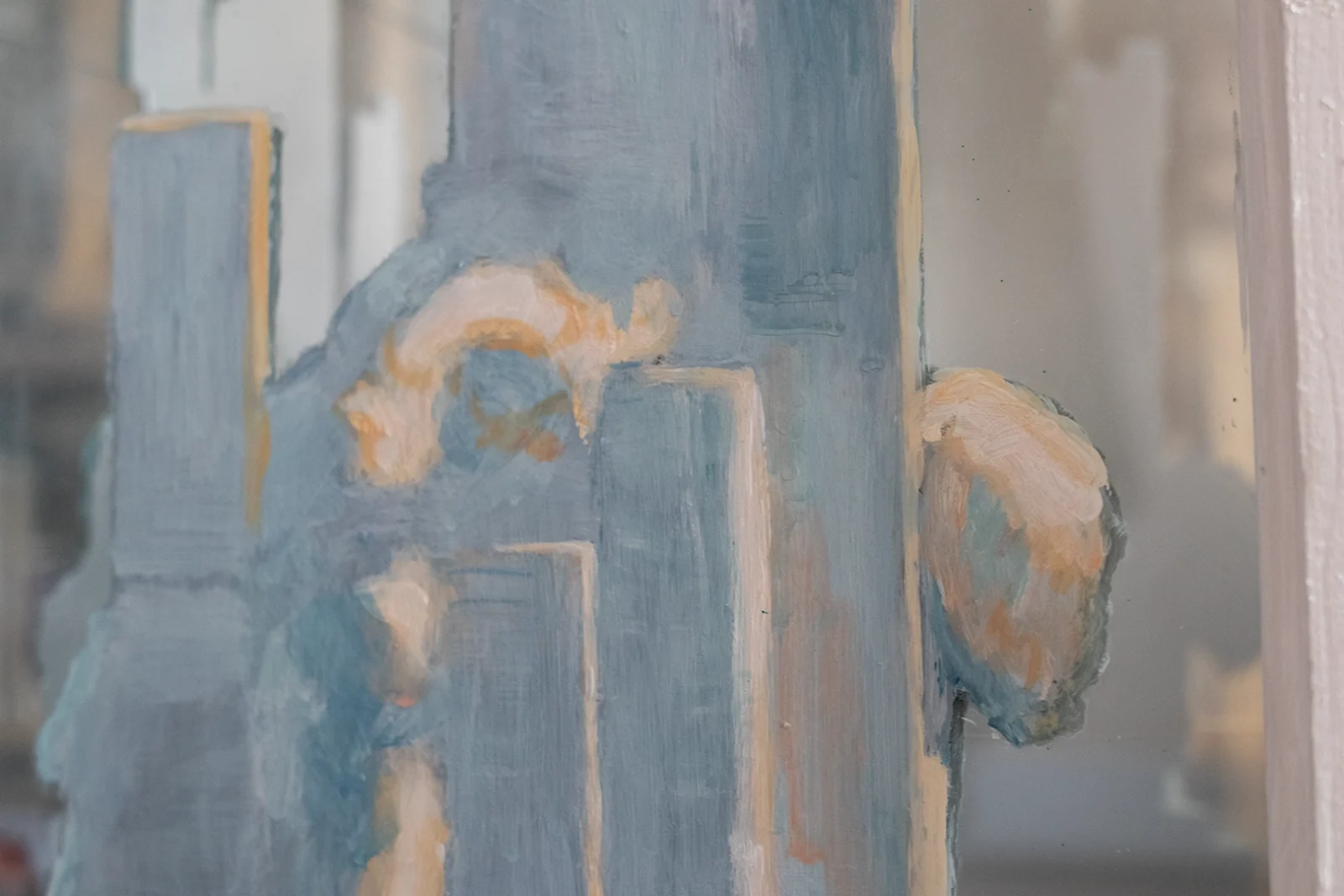
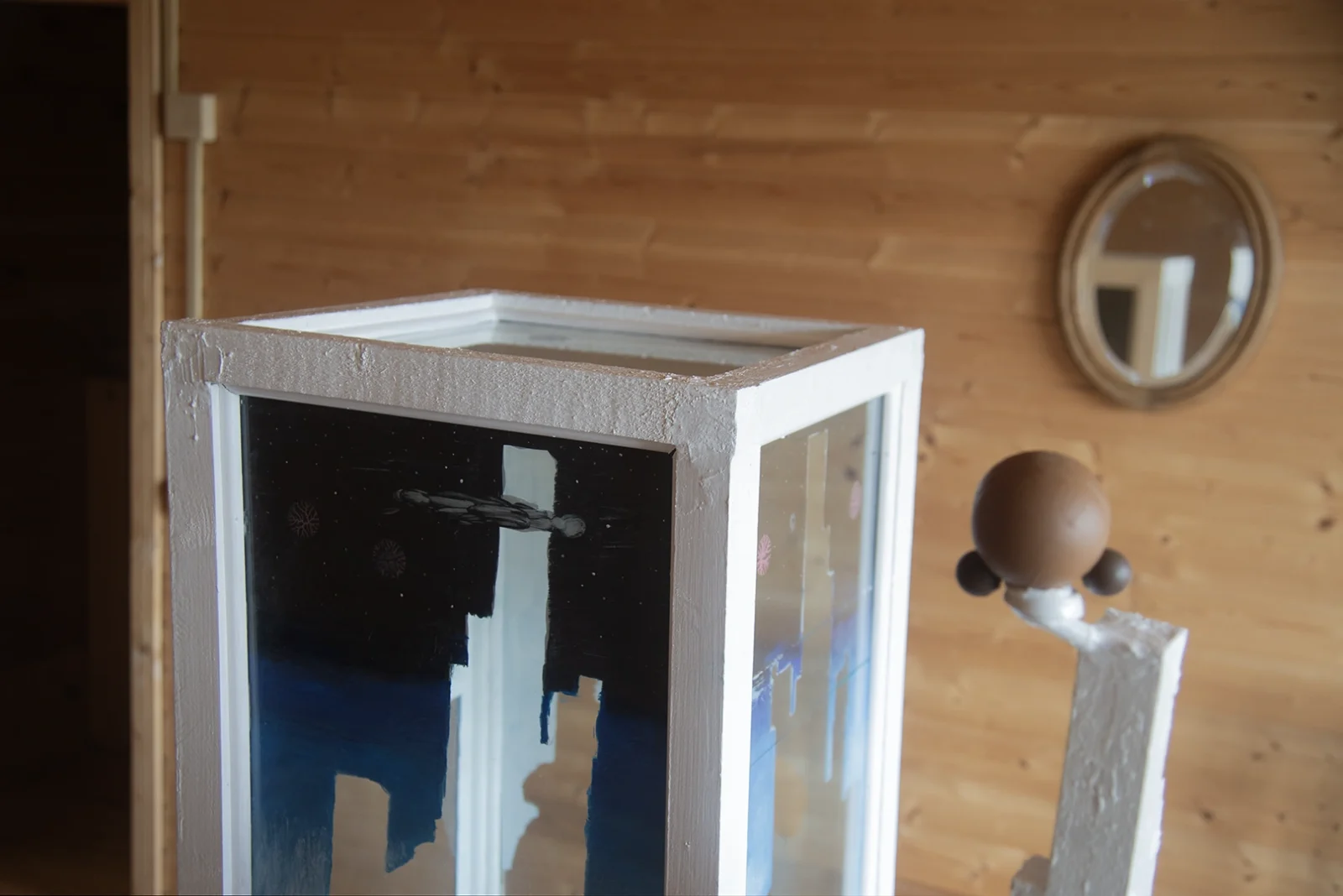
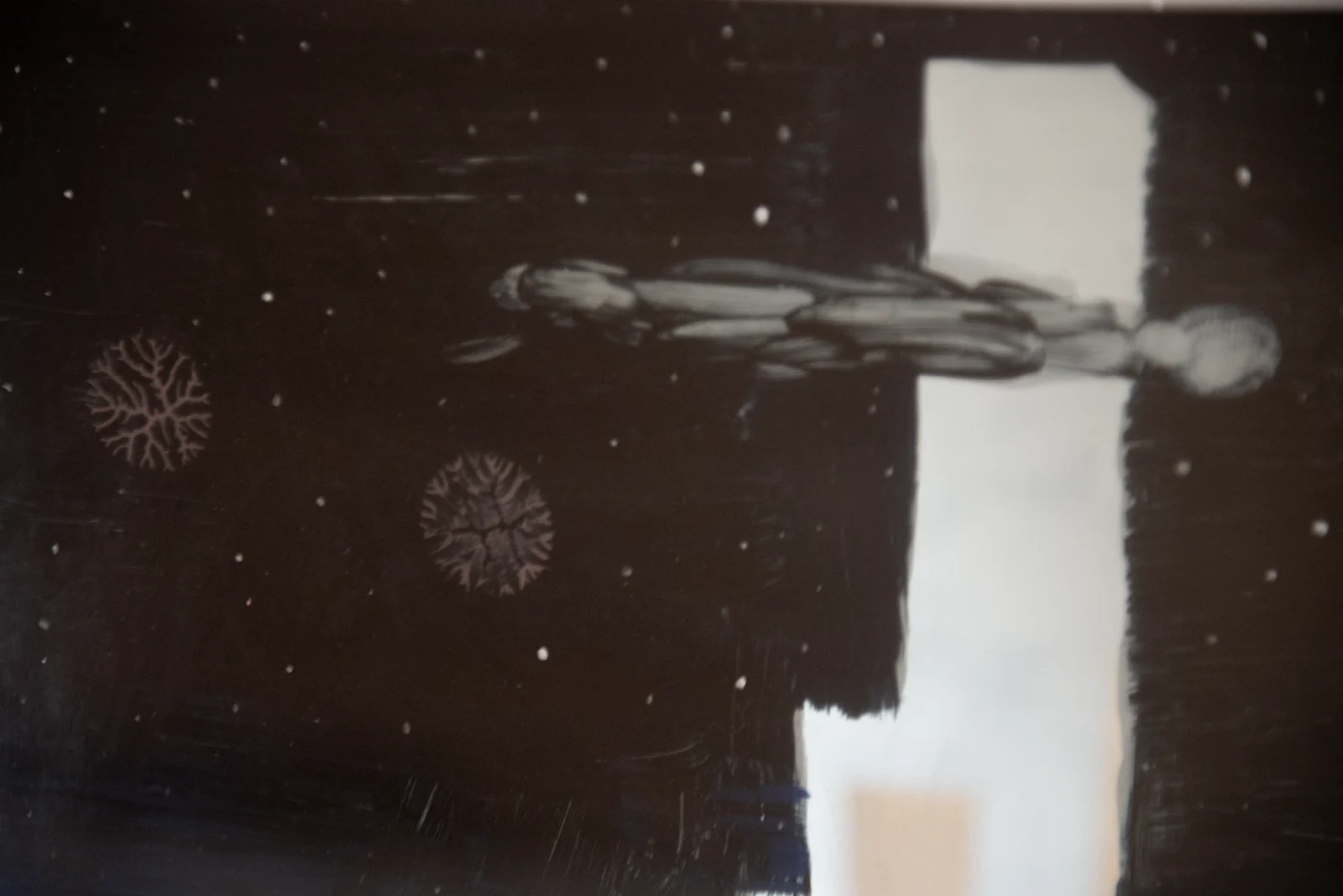
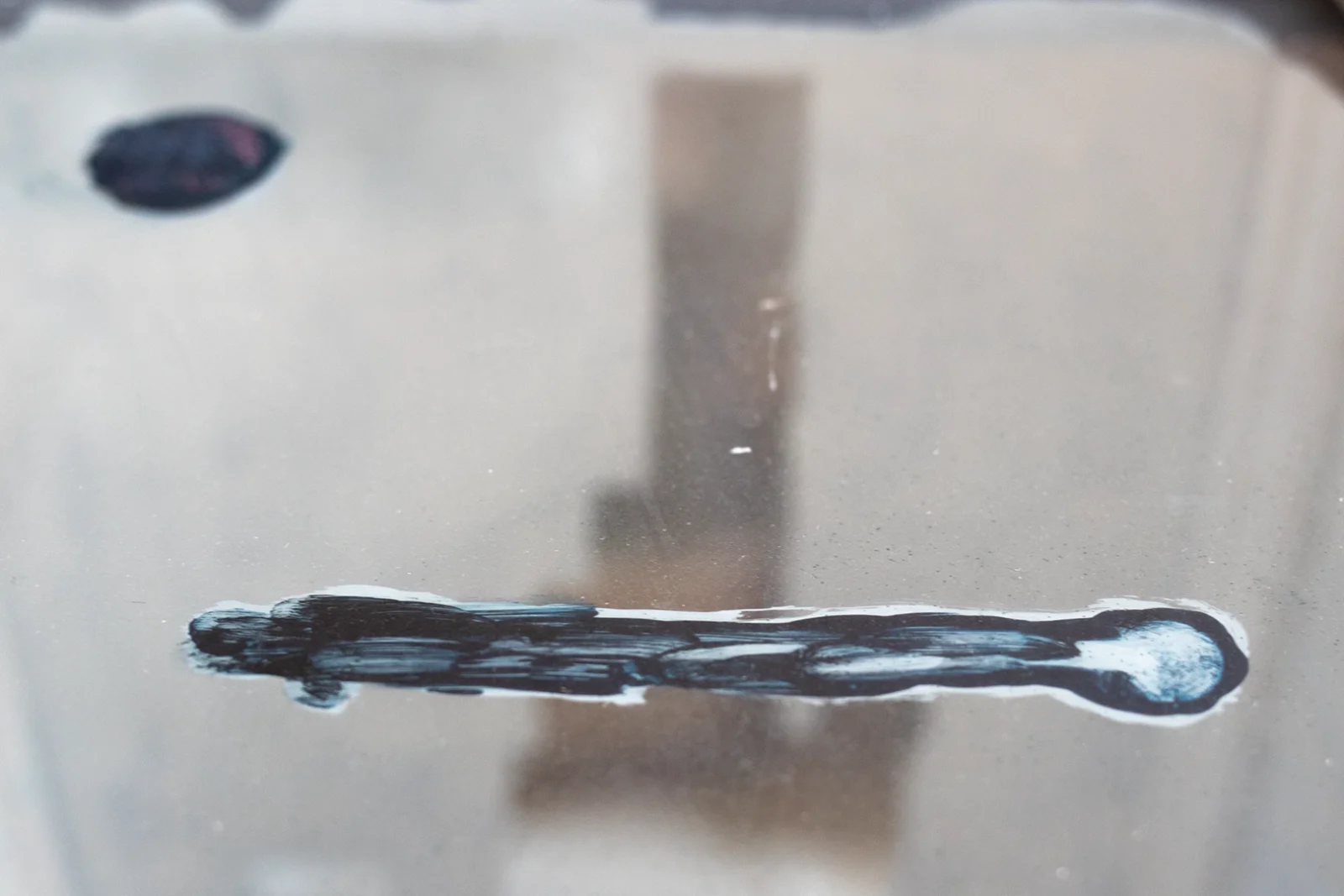
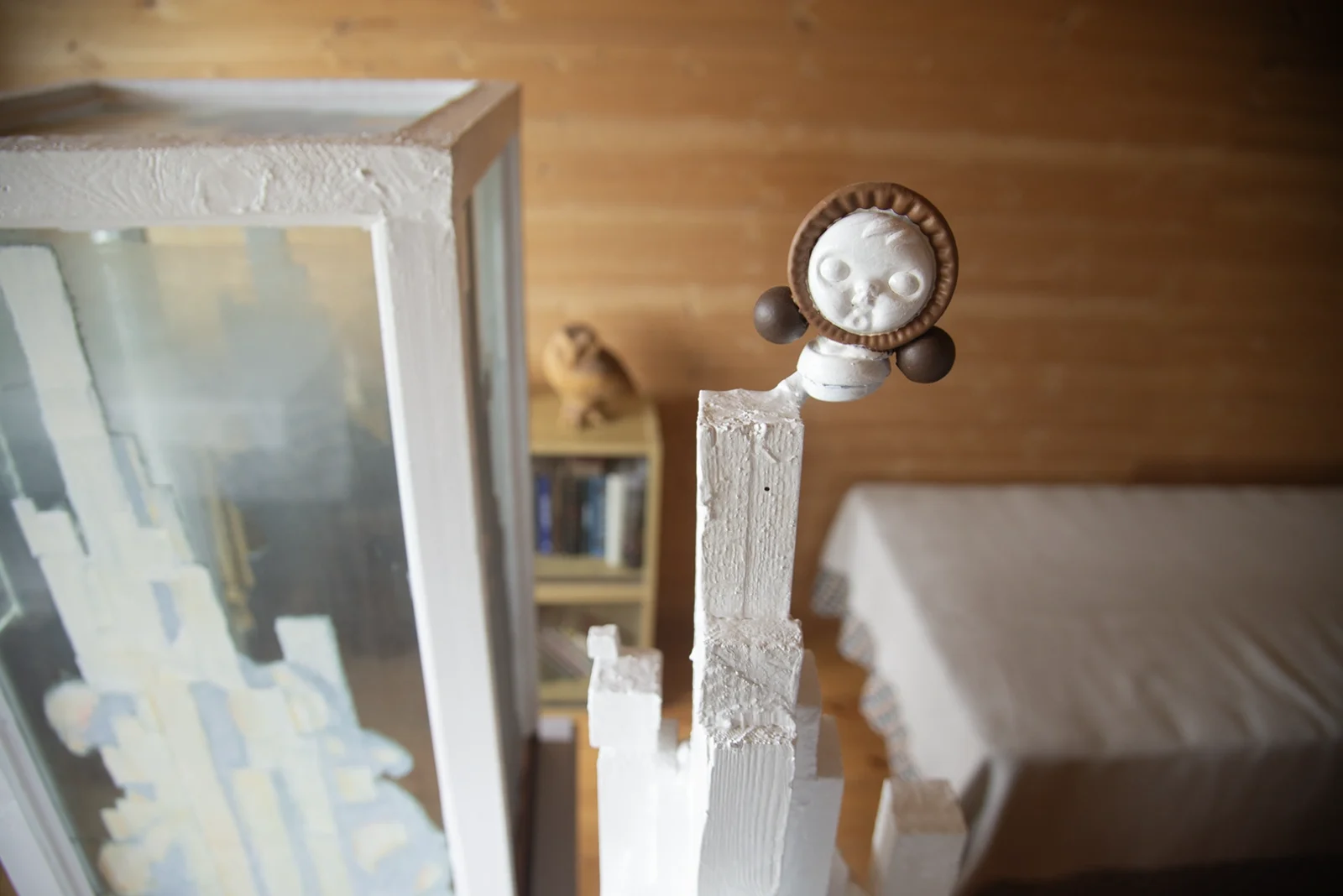
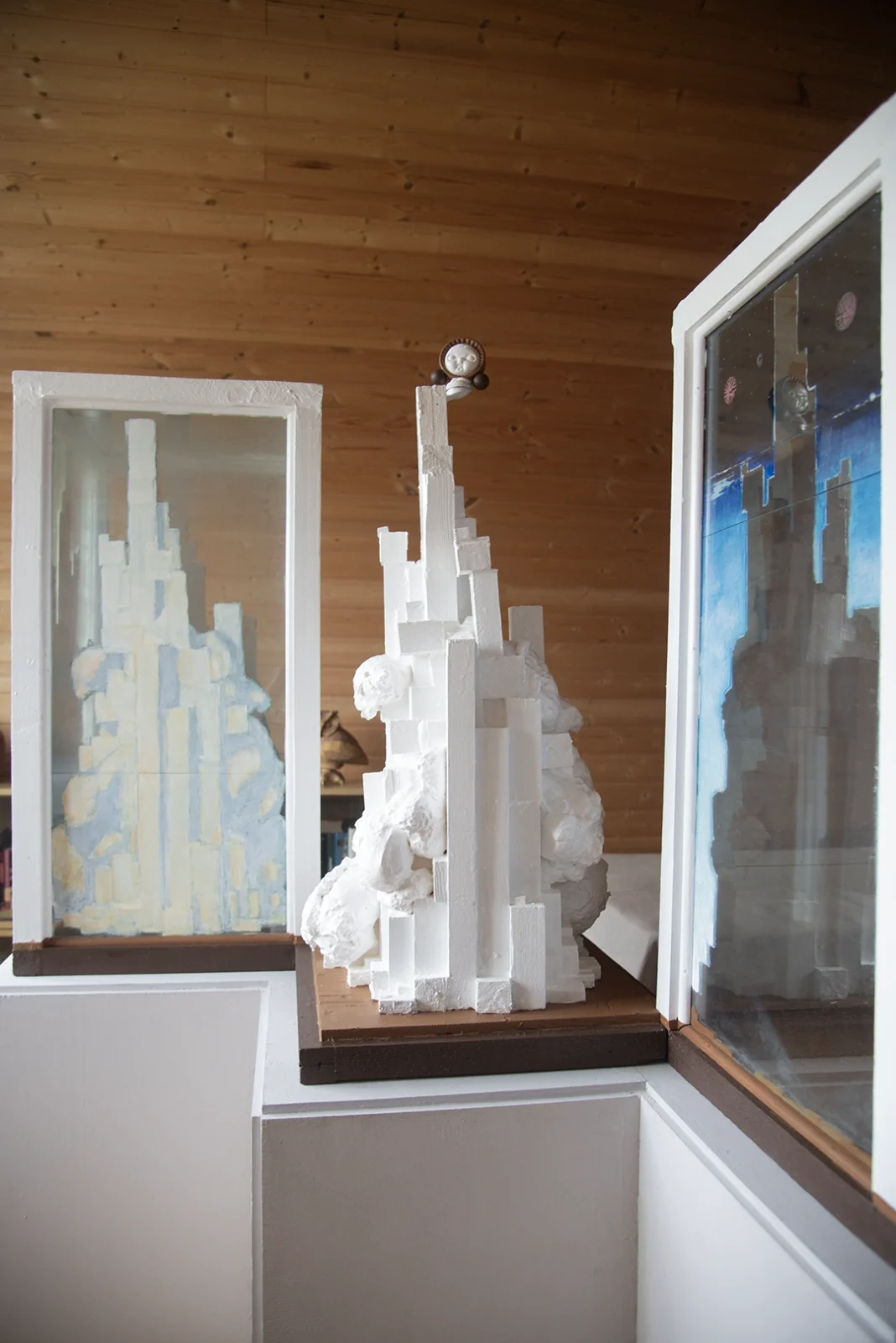
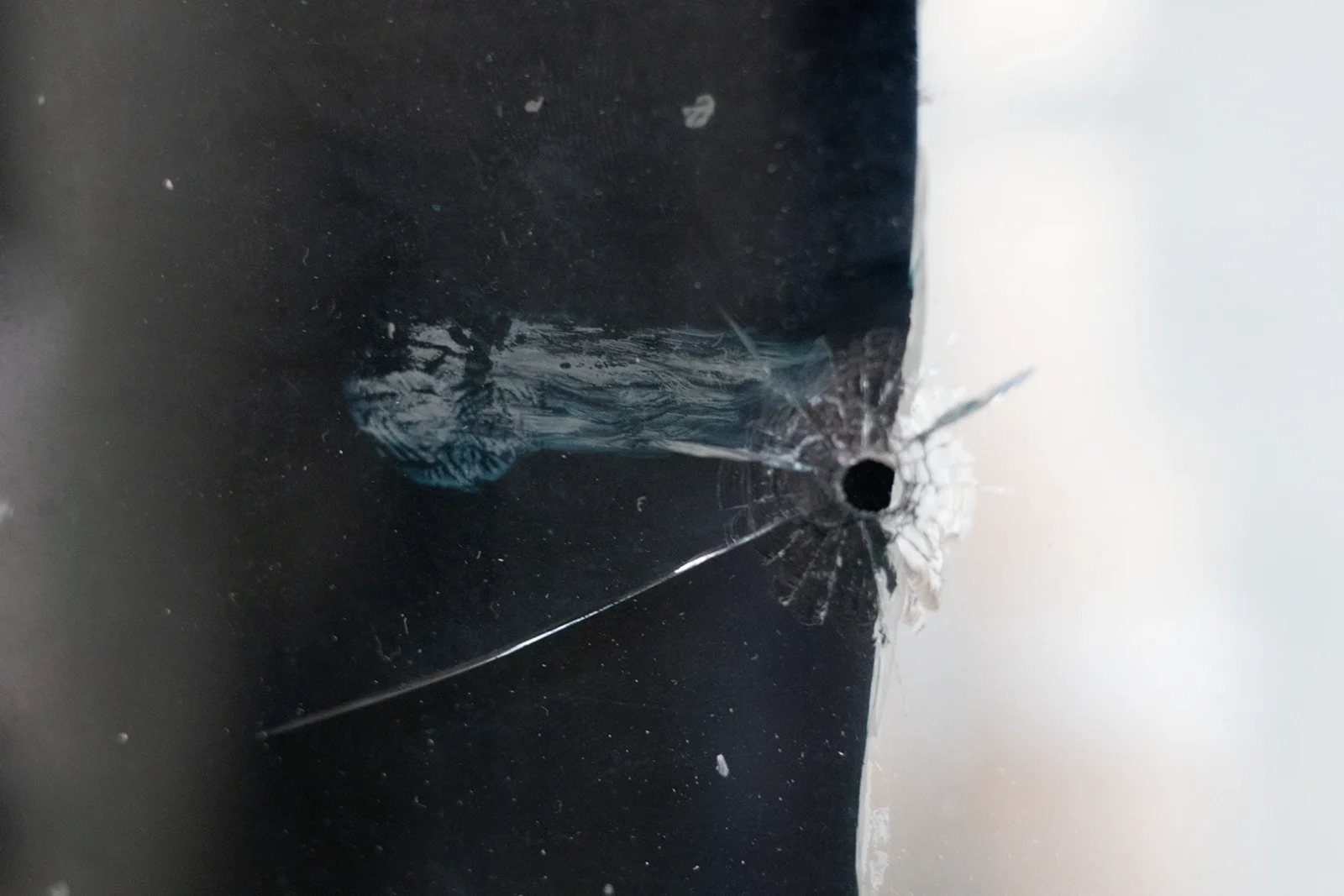
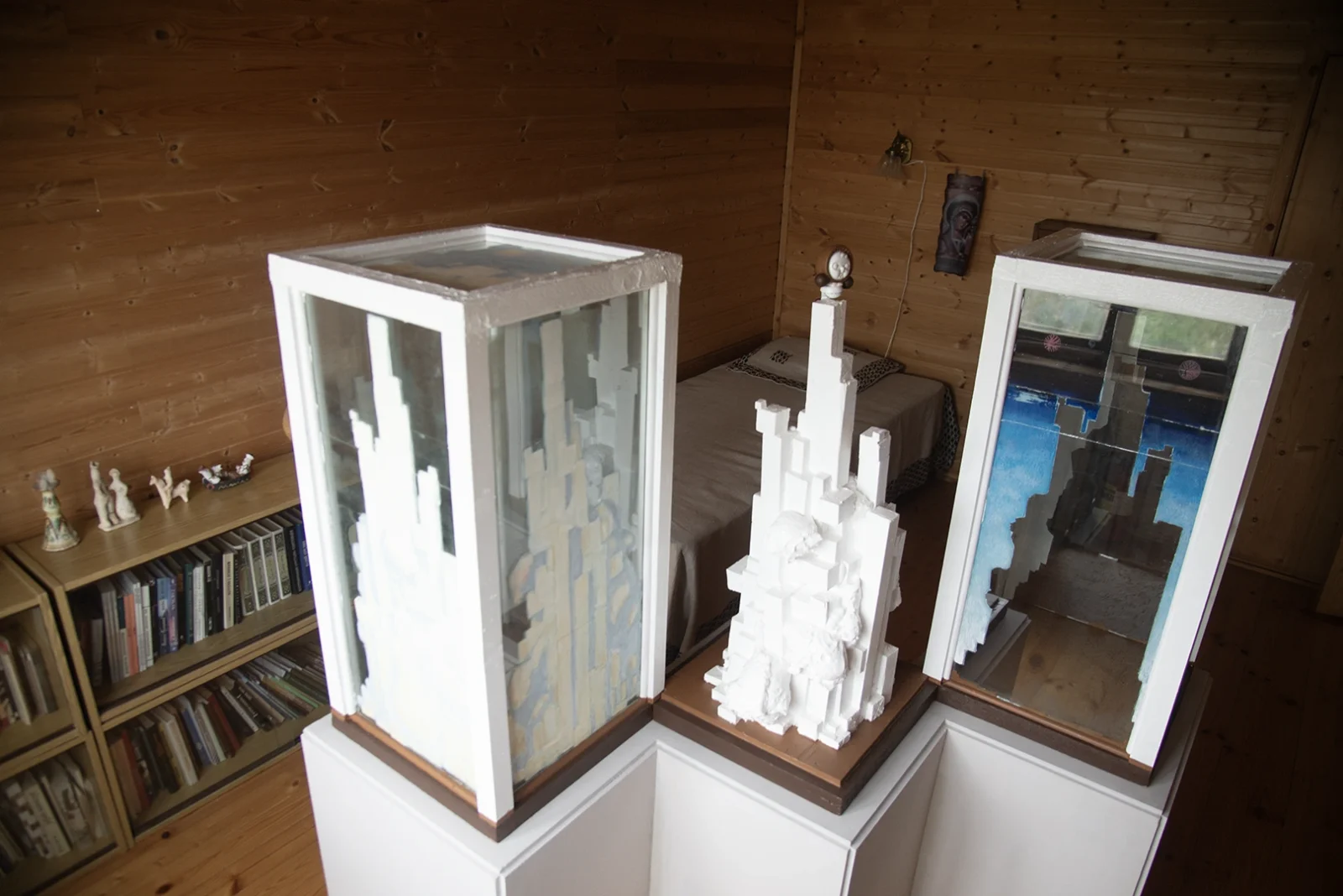
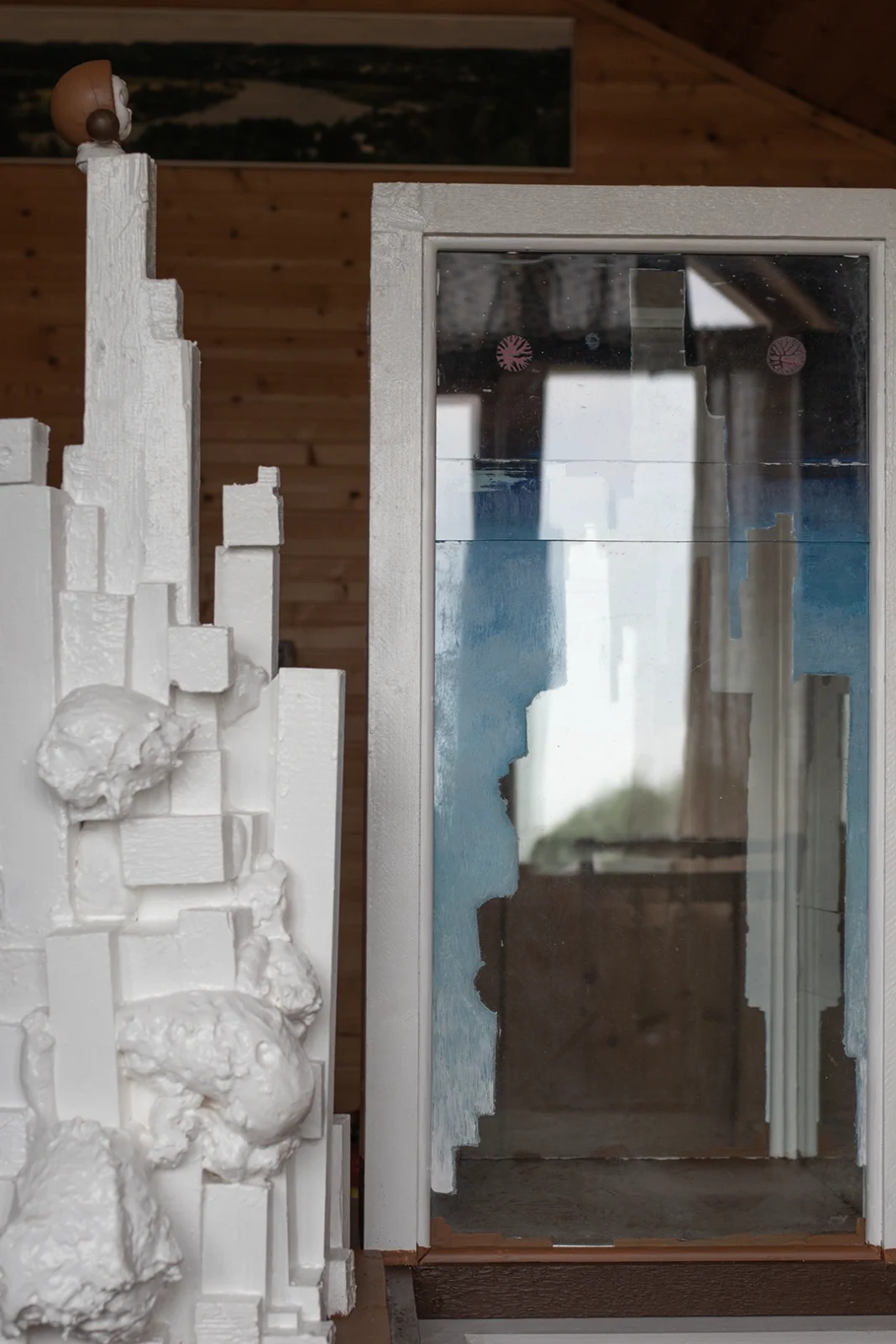
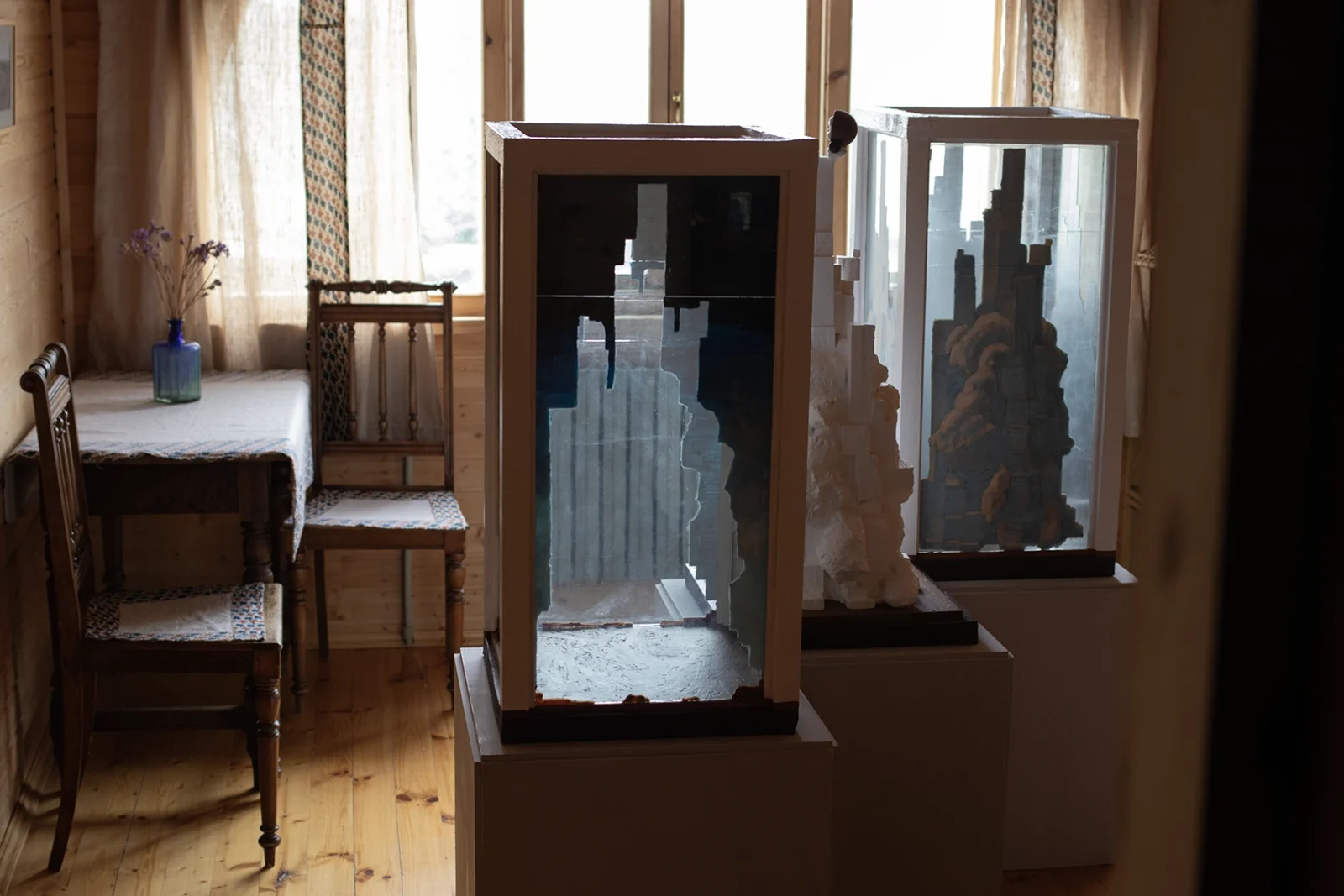
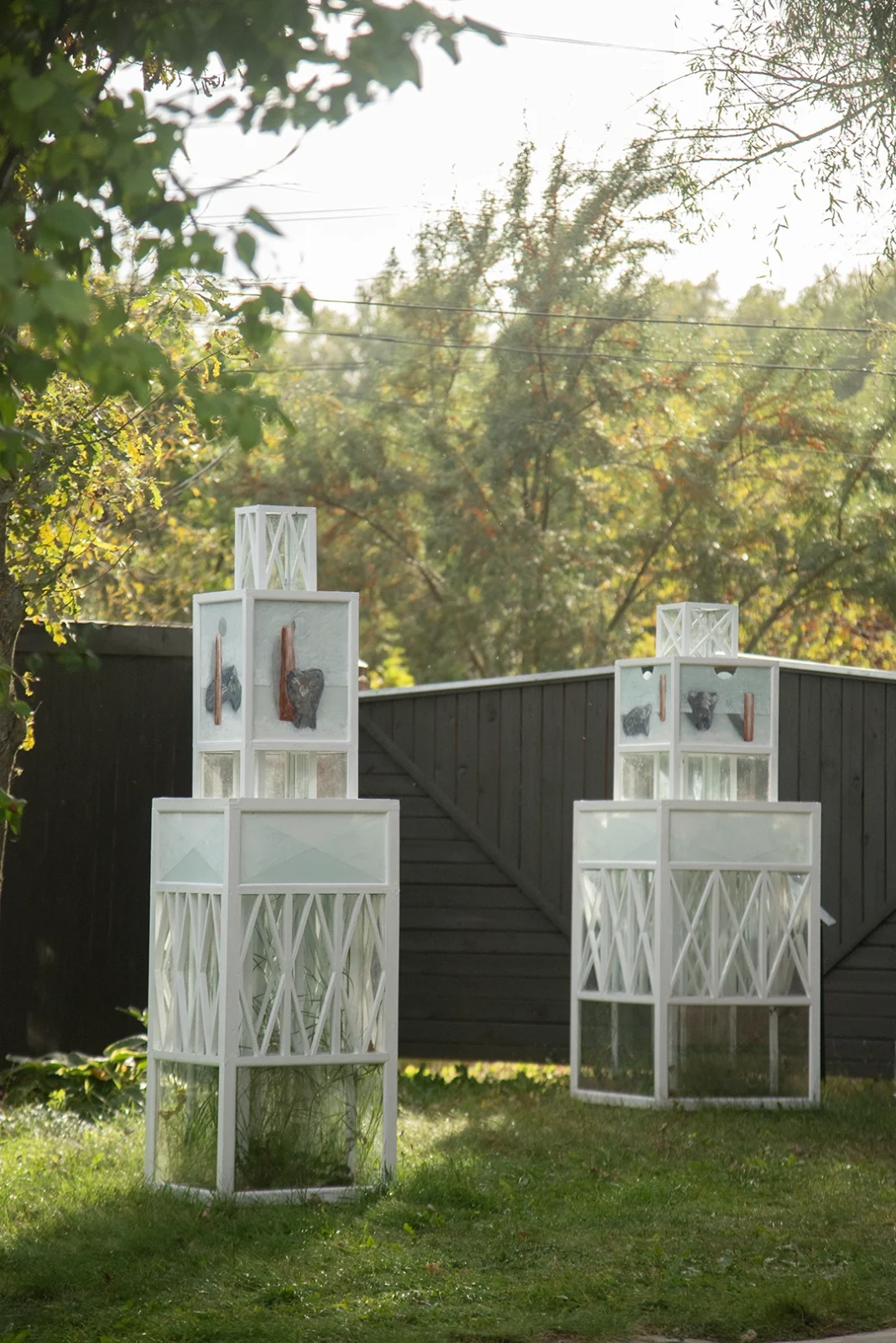
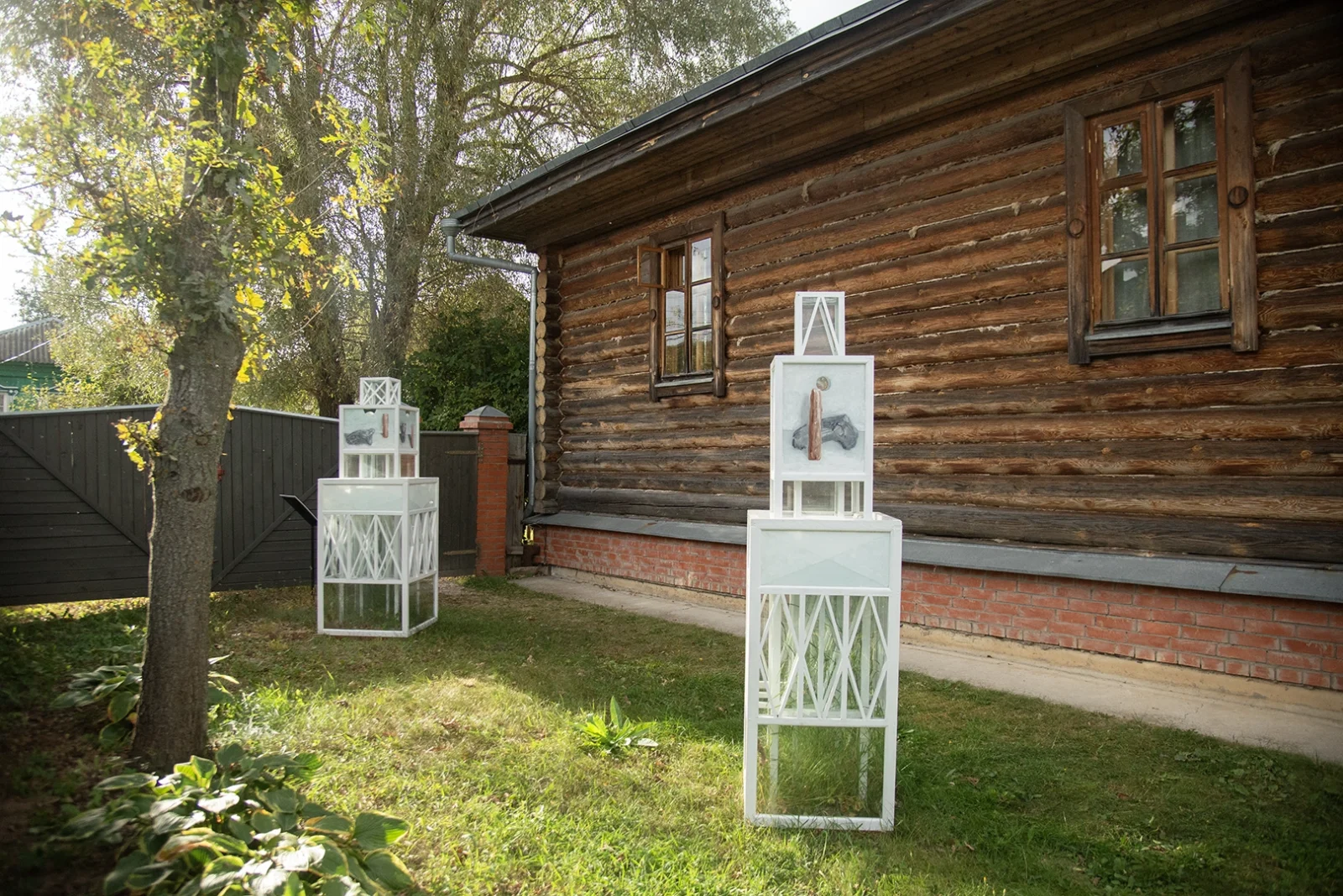
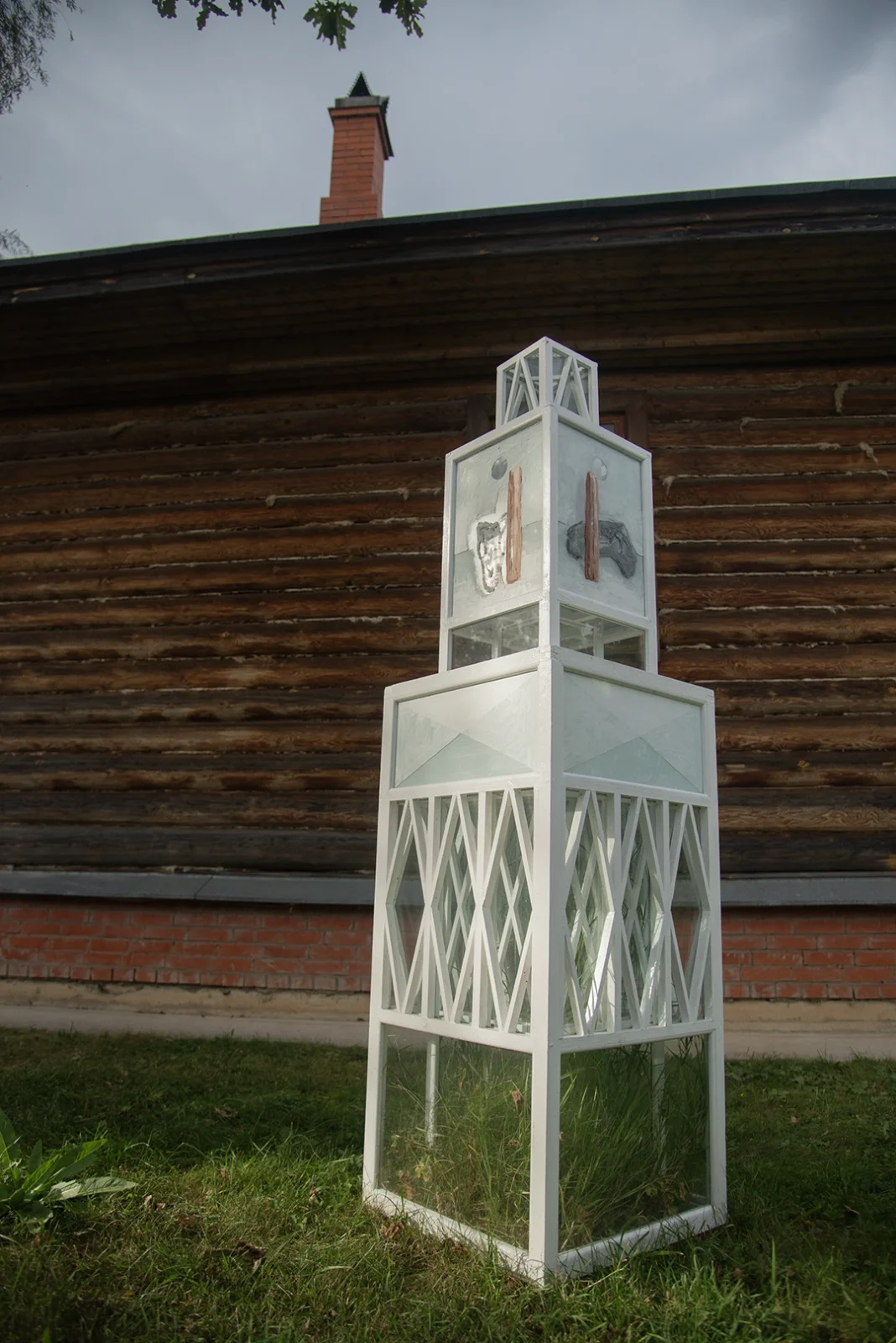
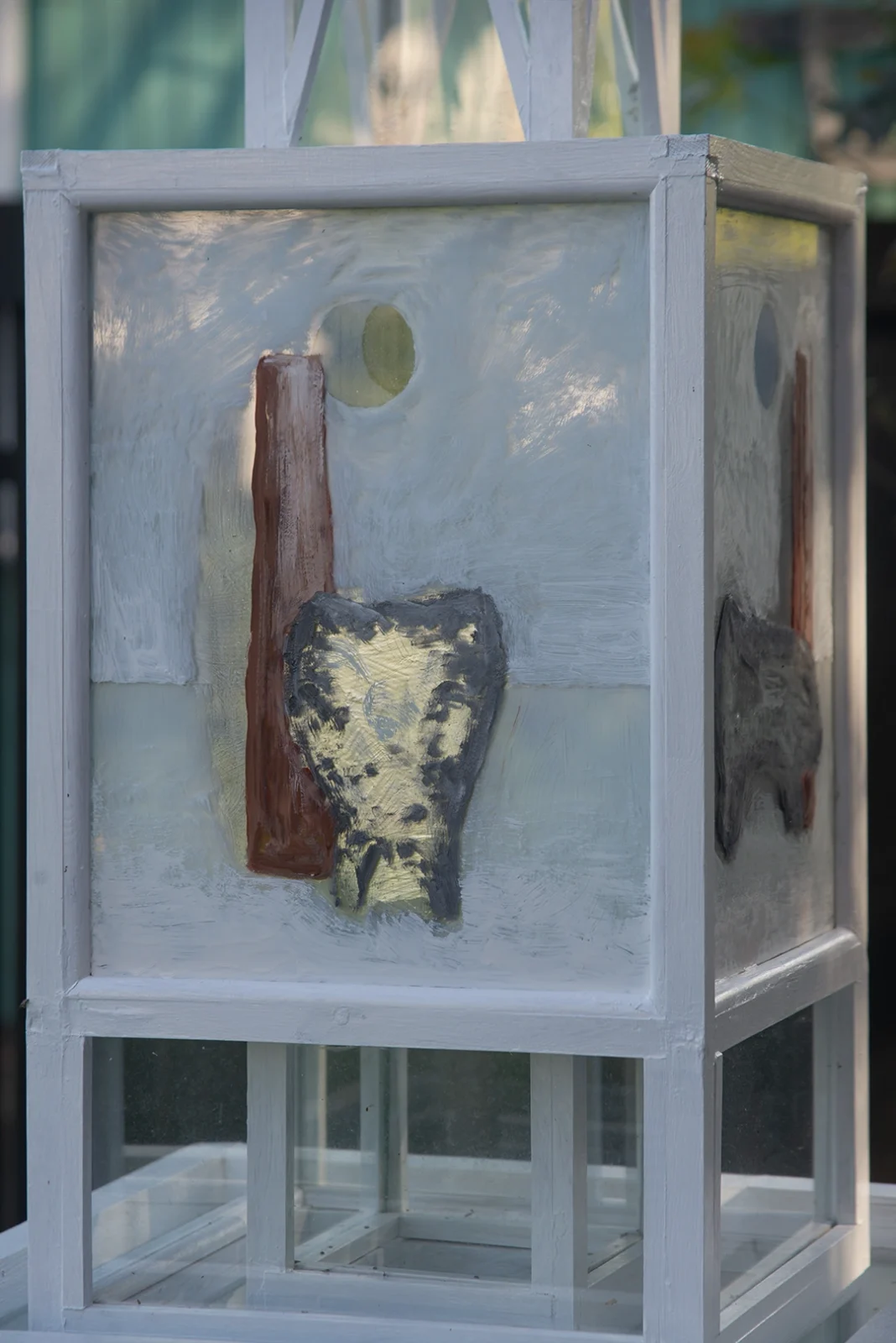
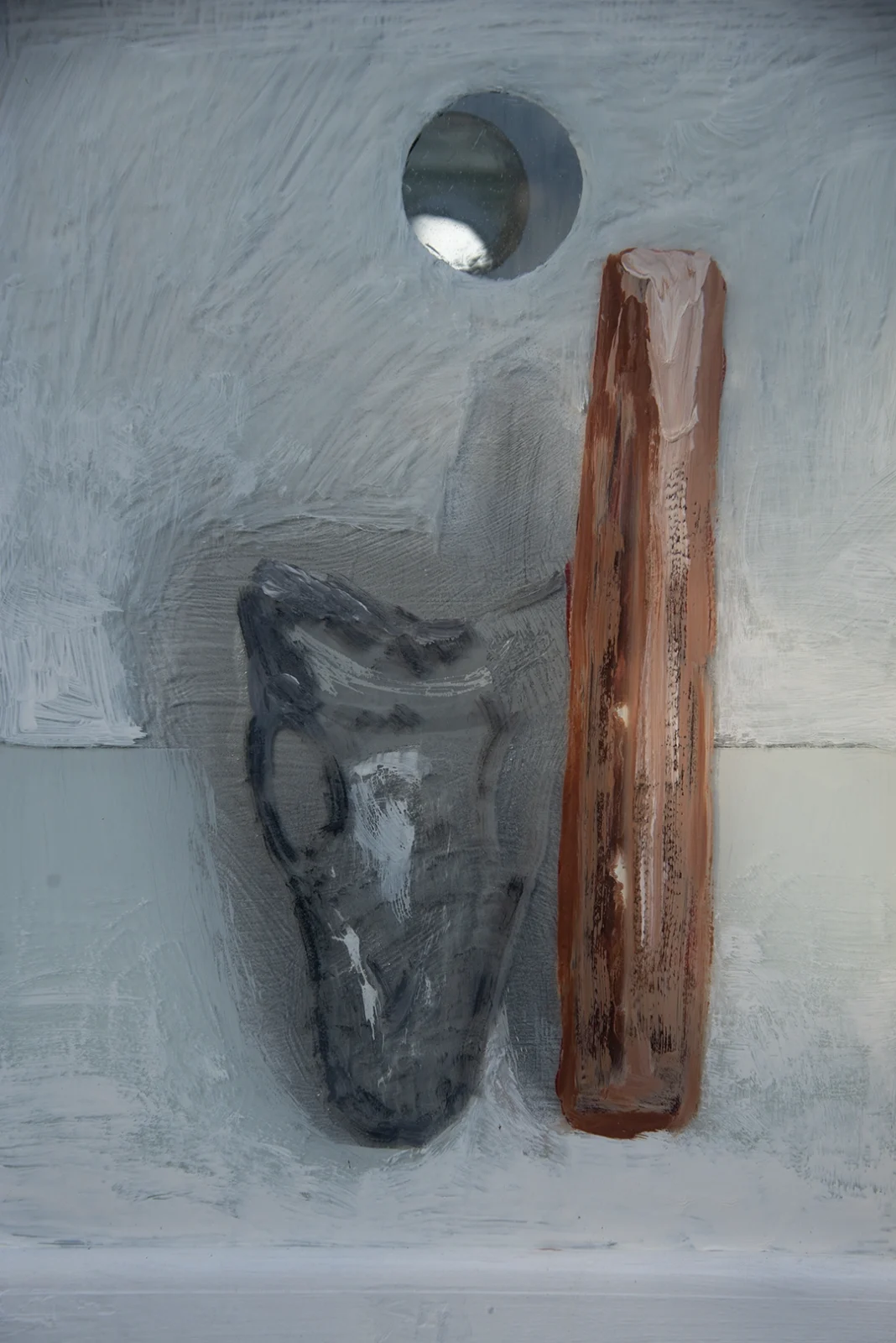
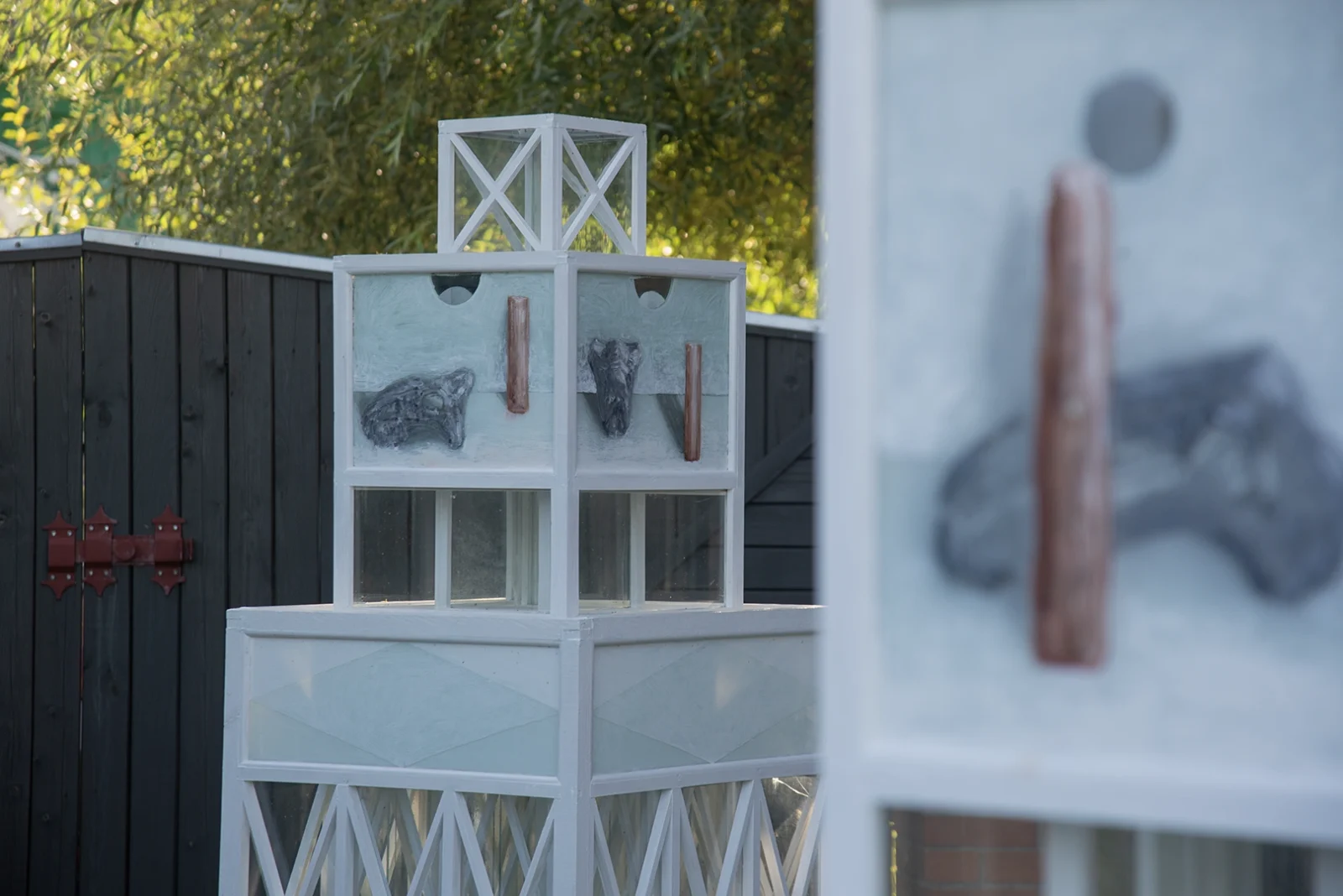
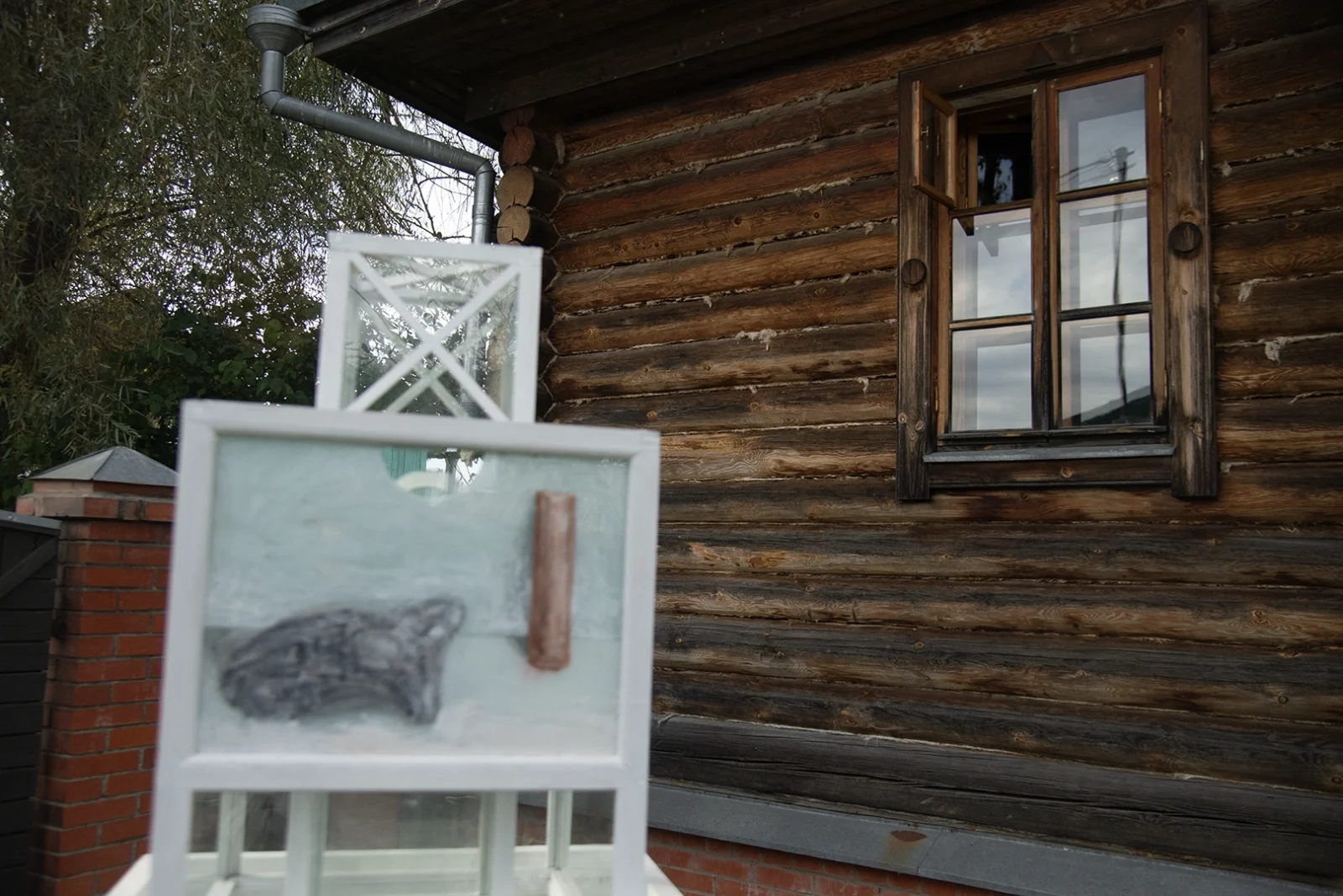
The main objects that embody this idea are two wooden glazed structures. They are either mileposts, or greenhouses with white background painting on the glass, the subjects of which were discovered by me in Tarusa. These are milestones of a path directed, on the one hand, into the endless depth of each person, and, on the other, endlessly outward. The milestone fixes the direction of the path and the distance covered, and it also sets the rhythm of the movement. This is a chance to look around, to evaluate what is left behind and what lies ahead. A greenhouse is home for valuable cultivated plants that are unable to withstand a harsh environment. The house itself is fragile, requiring care and attention. The conditions required for free development of thought protect the thinker from any routine of practical necessity or invasion of someone else’s will. They appeared to me like walls as invisible as the glass of the greenhouse. Glass is invisible unless one deliberately takes a close look at it.
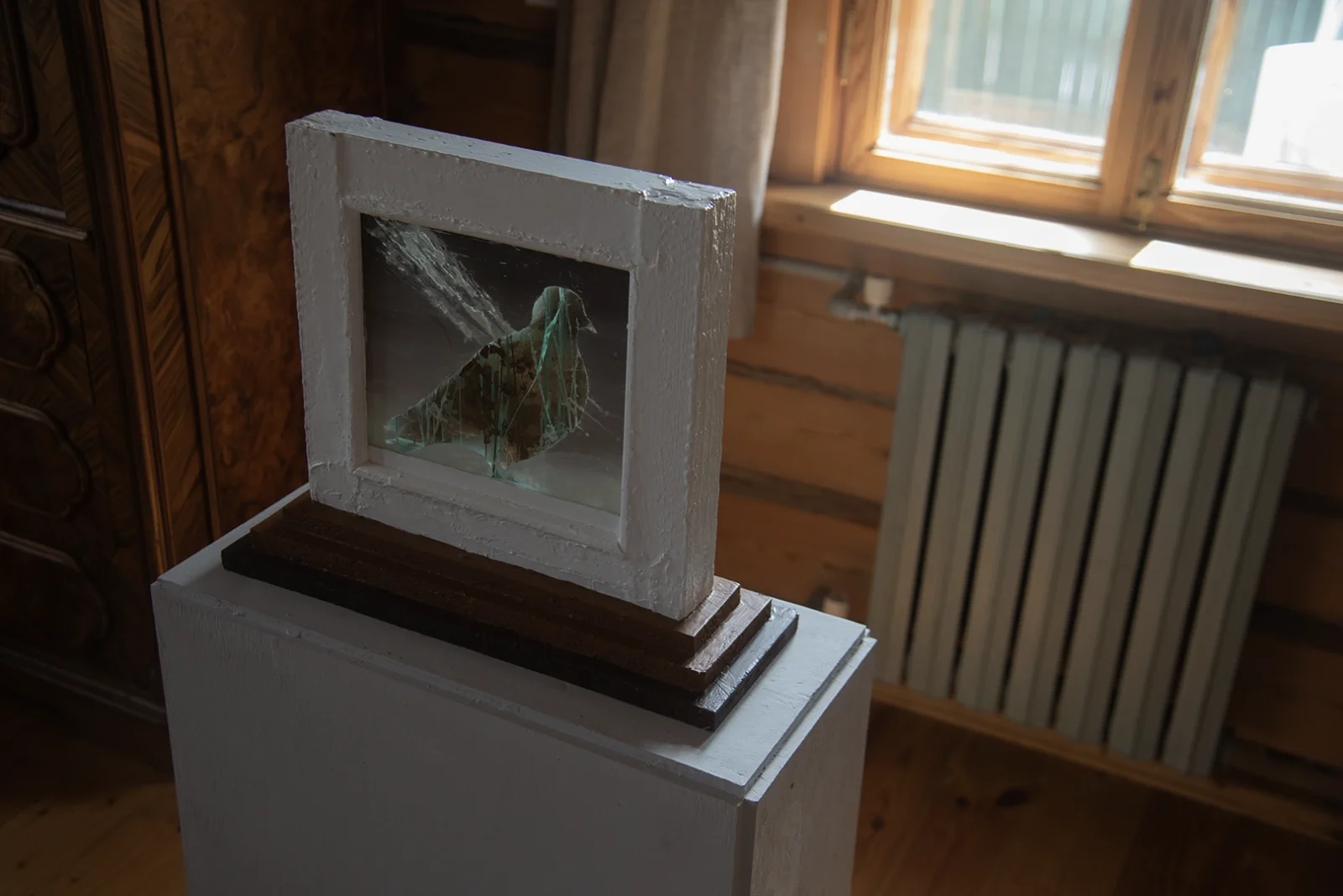
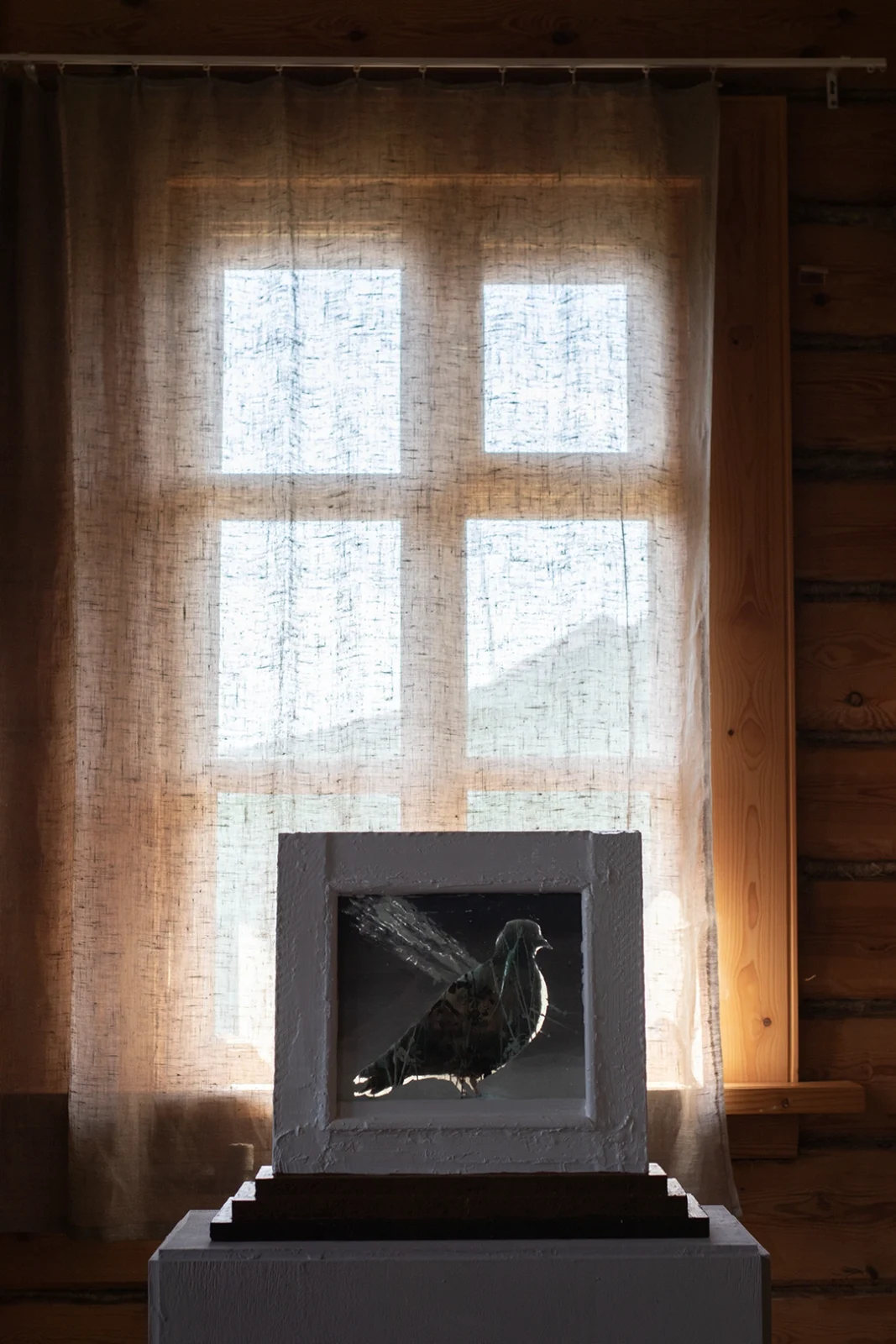
I think this idea can be applied to the life and creative activity of Eduard Steinberg. I dare suppose that creativity was both home and a way of knowledge for him at hard times, no matter how banal it might sound. The white paint used for painting glass can become color, even light and space. This is what happens in Steinberg’s creative activity. To me, his works appear to acquire a monumental character both in meaning and plasticity due to those qualities of the white color. That white color is akin to the color of catacomb frescoes, ancient Greek white vase painting, and Chinese painting.
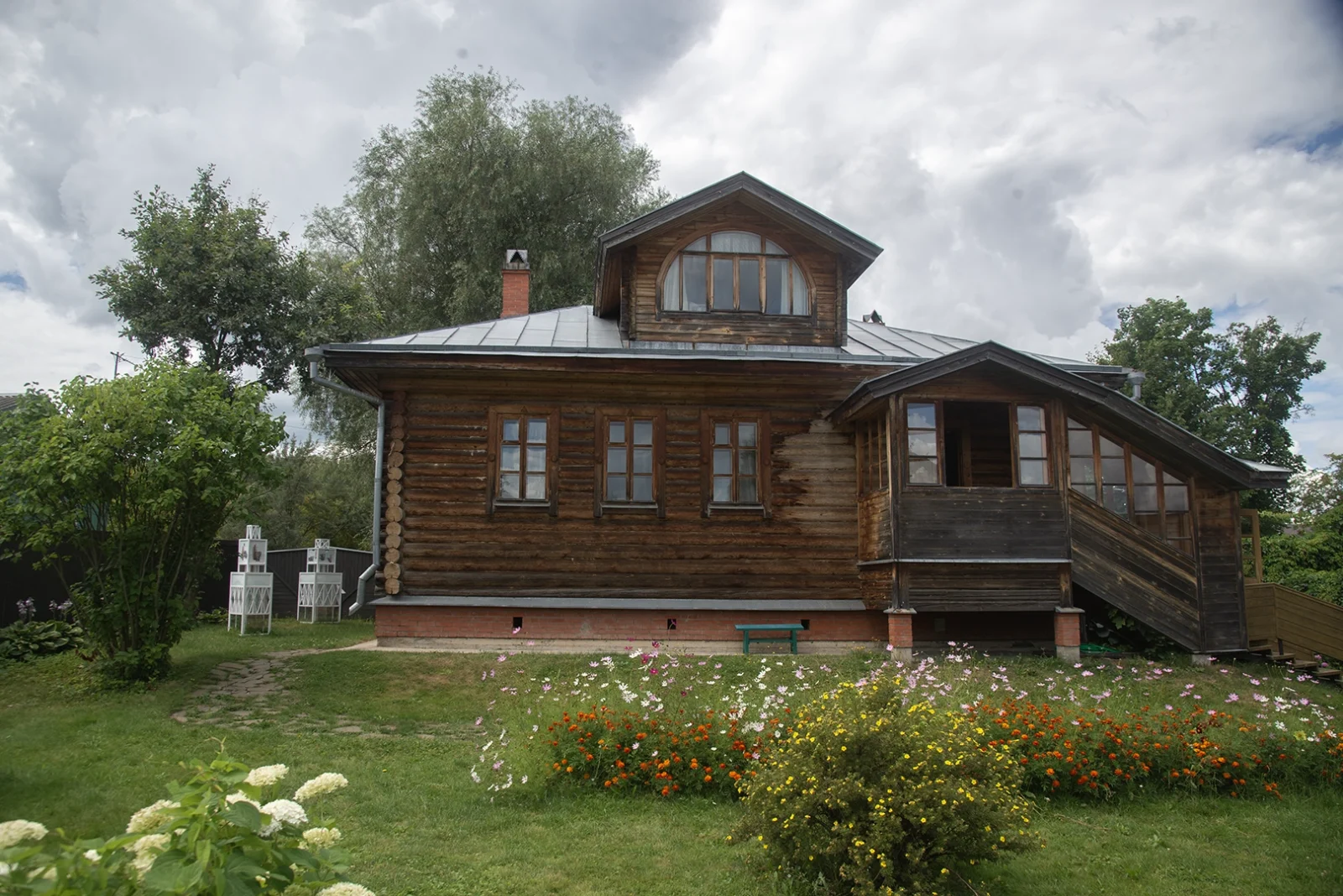
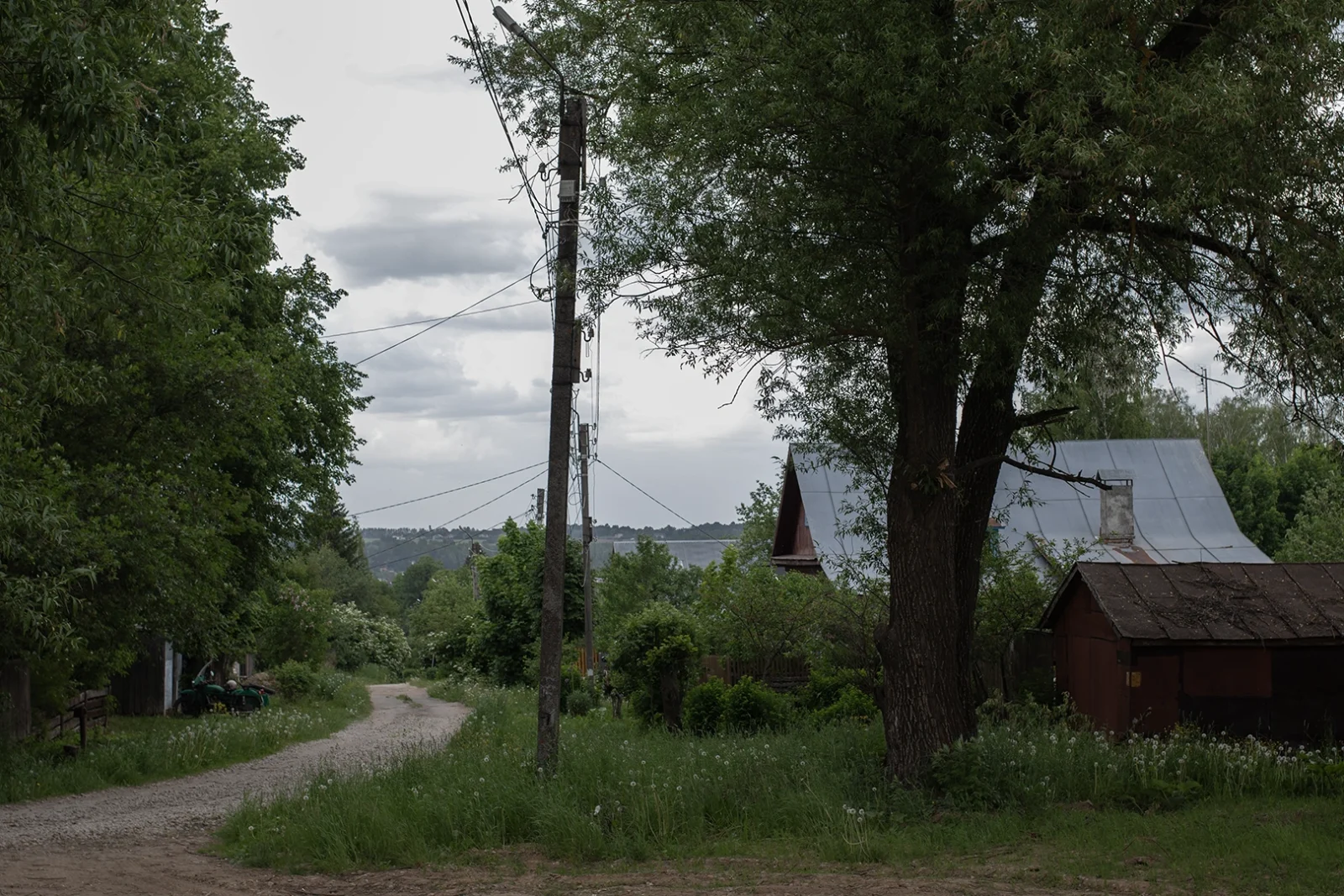
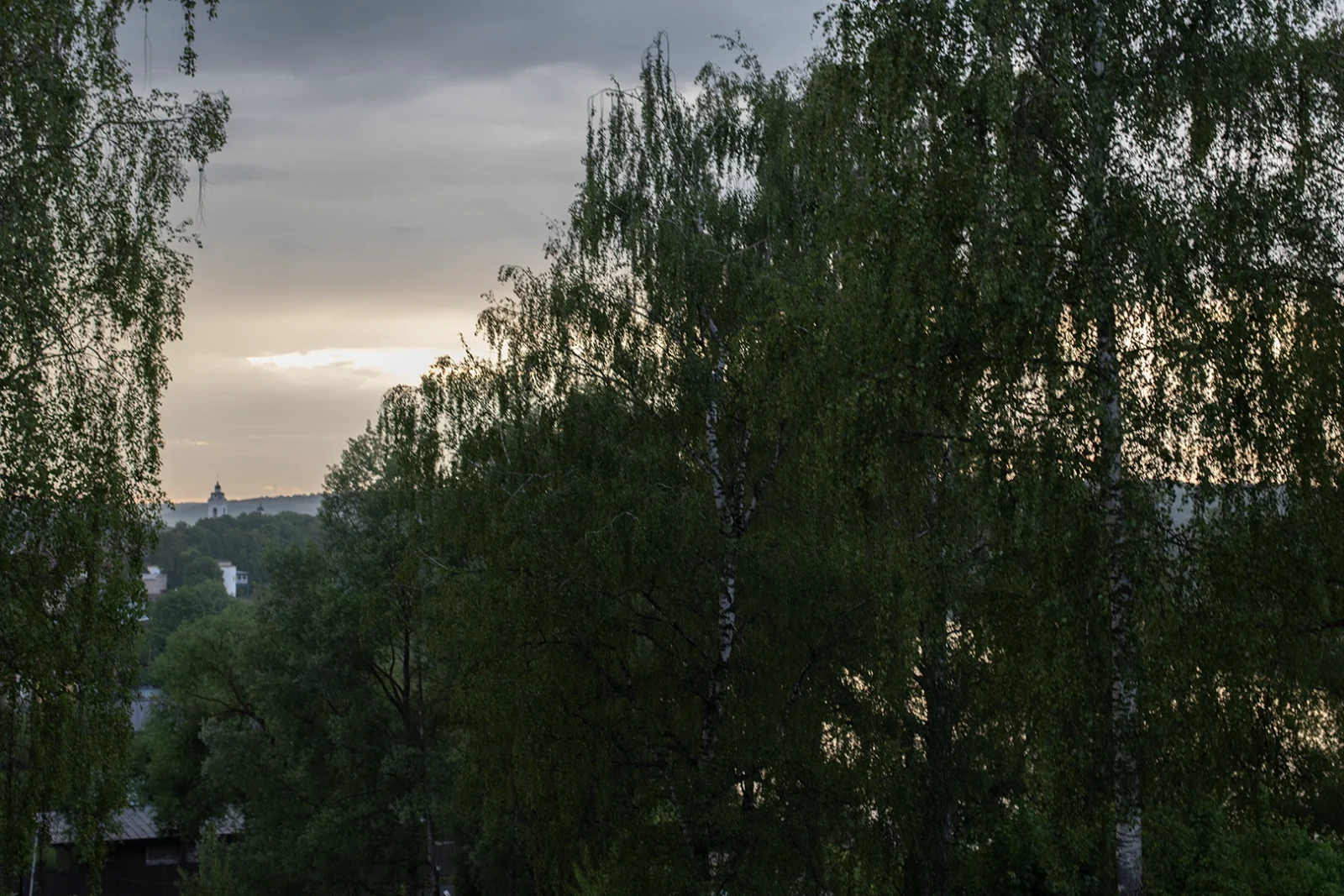
Tarusa is different from other provincial towns (from the so-called conventional city N) because creative people gathered here, at first on their own will, and then forcedly, found their home and place for communication and activities. This dacha place is equally remote from both the urbanism of a big city and the wild nature, where it is equally easy to get lost. A person seems to have enough of their own place and scope here. It is good to work here with quiet thoughts that are inaudible in a big city but deafening in a hermitage.
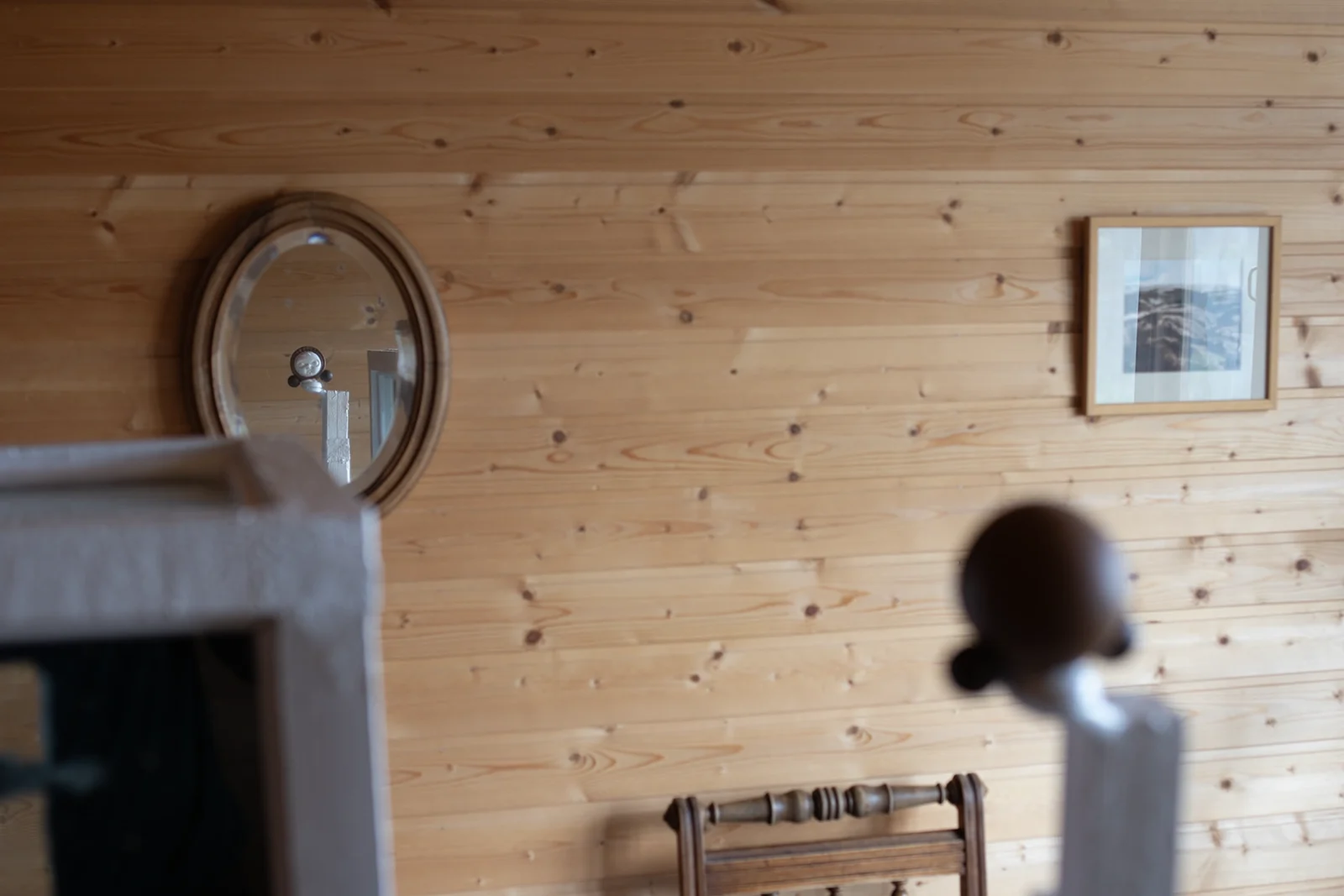
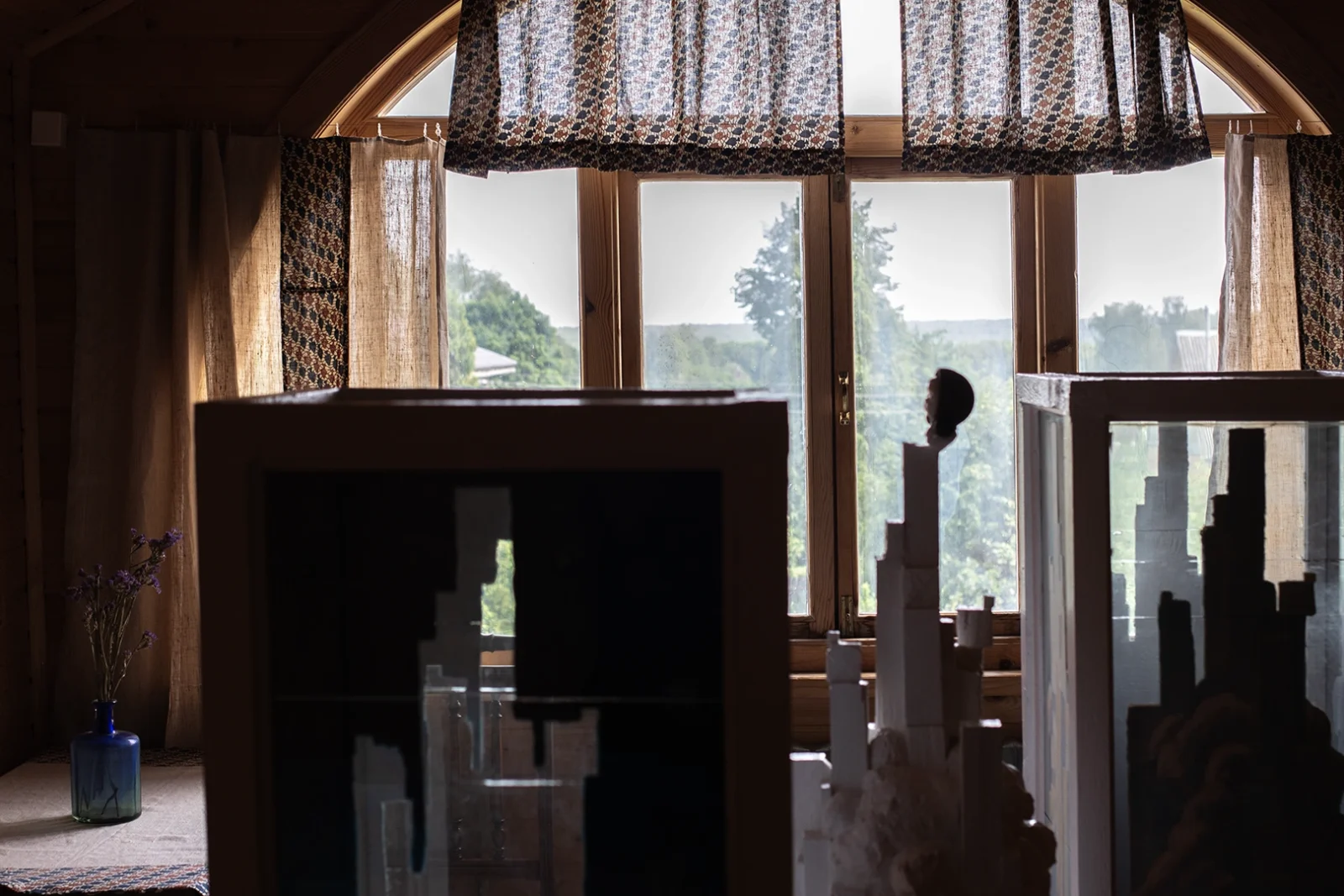
Veranda is one of the symbols of country life and communication. It is akin to a greenhouse. Its space is separated from the outside world by a (semi) transparent border, that is, it is not completely separated, including the outside world and vice versa. This feature has a great symbolic potential, and, hopefully, I have succeeded to embody it in my works.
Sergey Boyarintsev
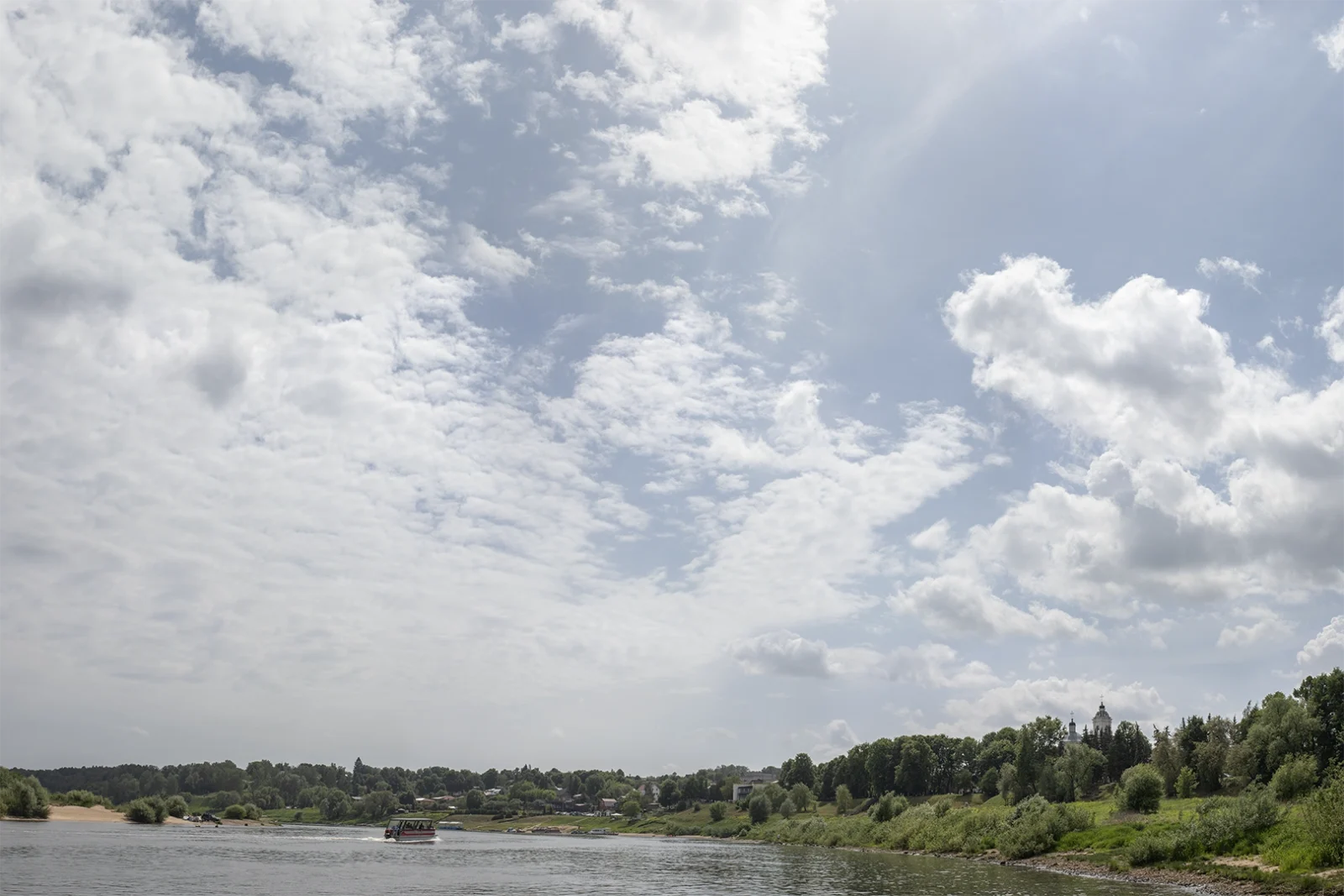
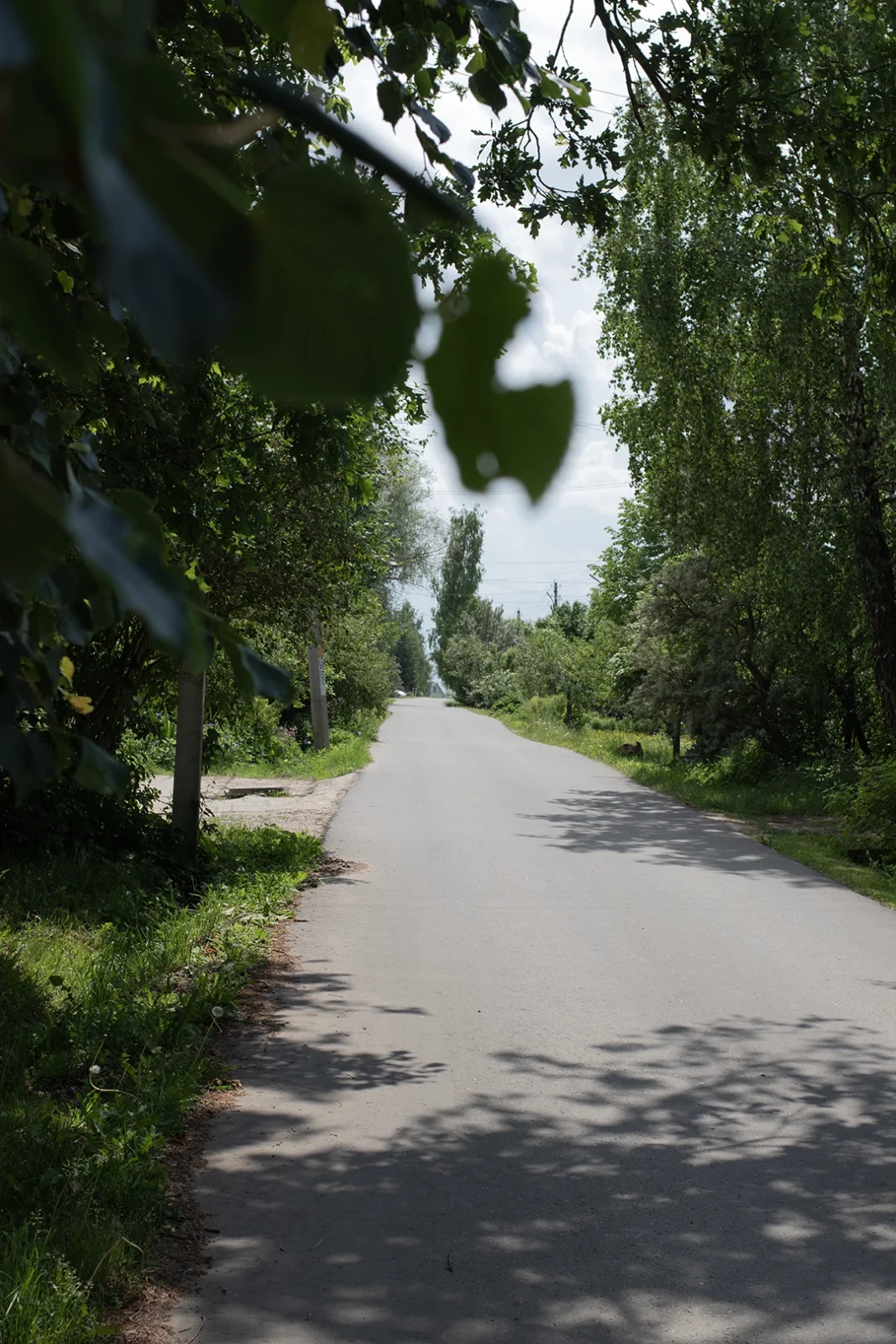
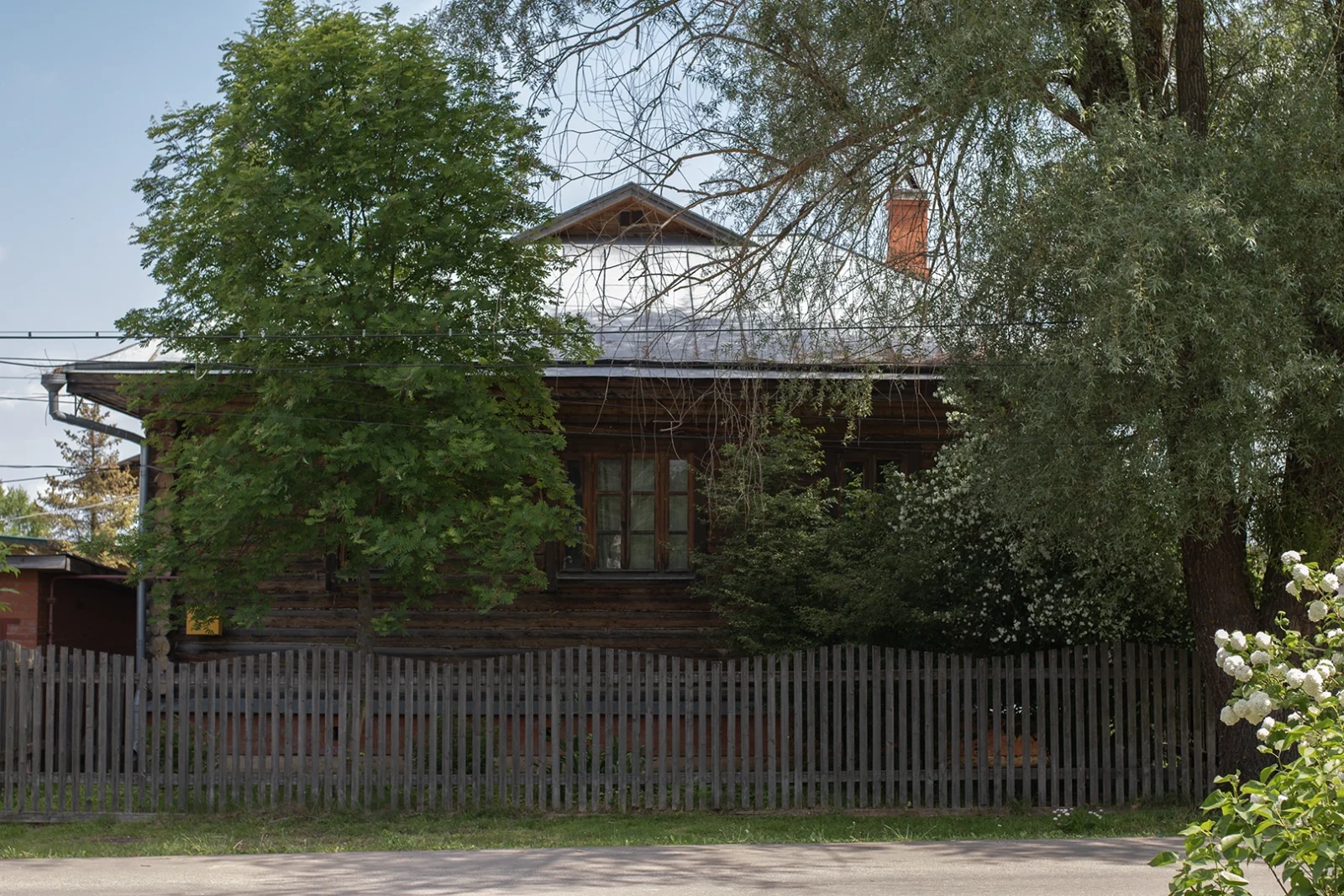
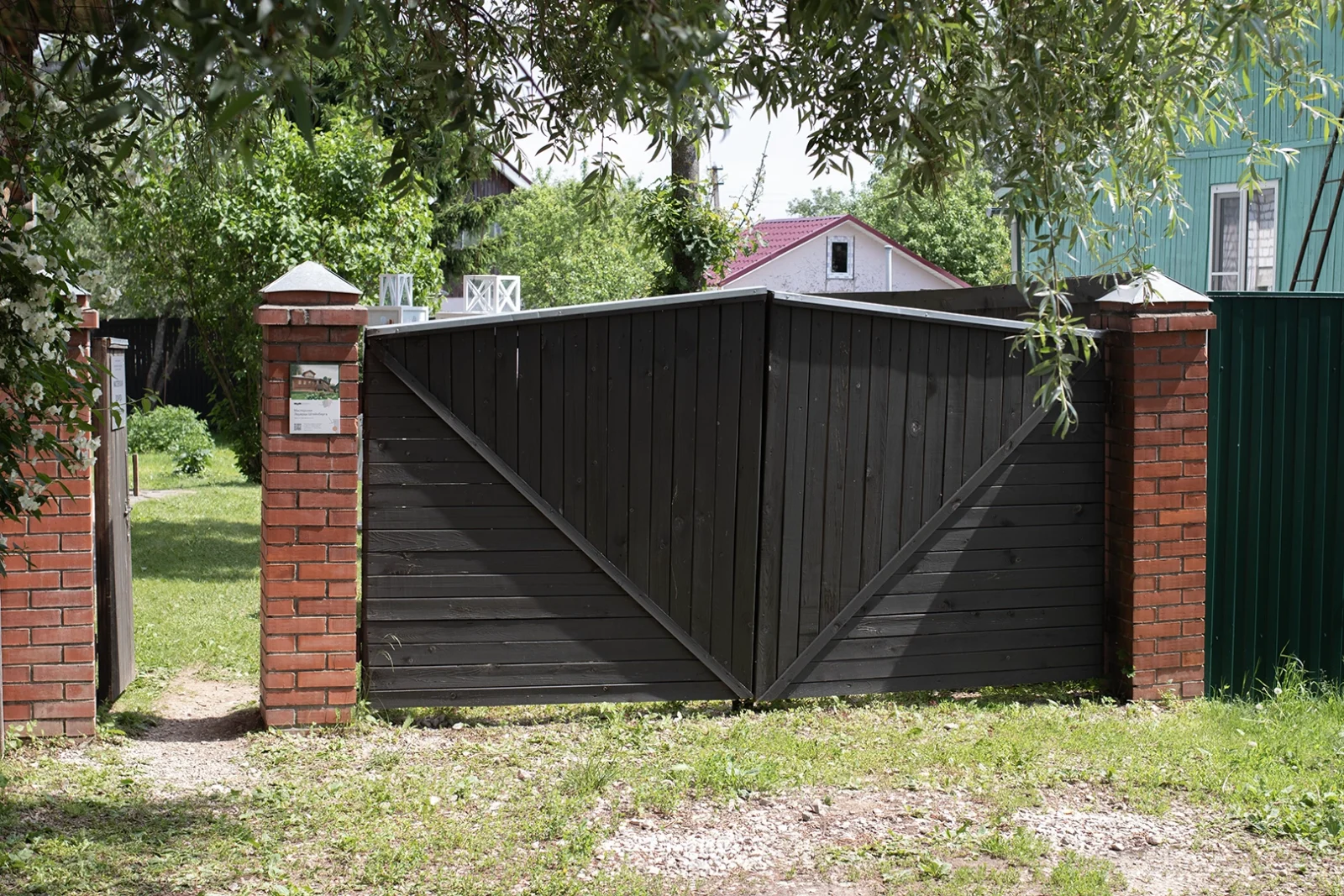
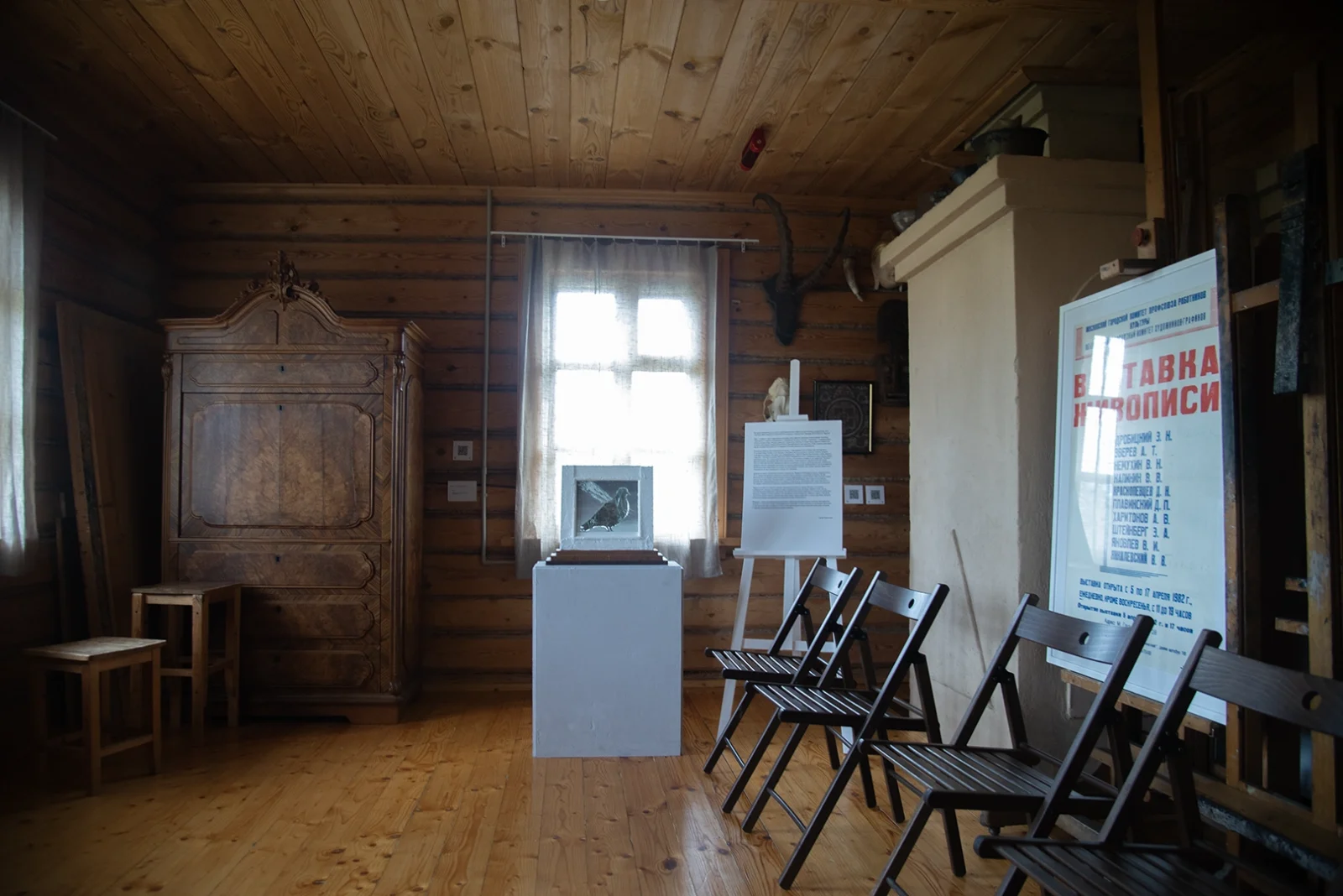
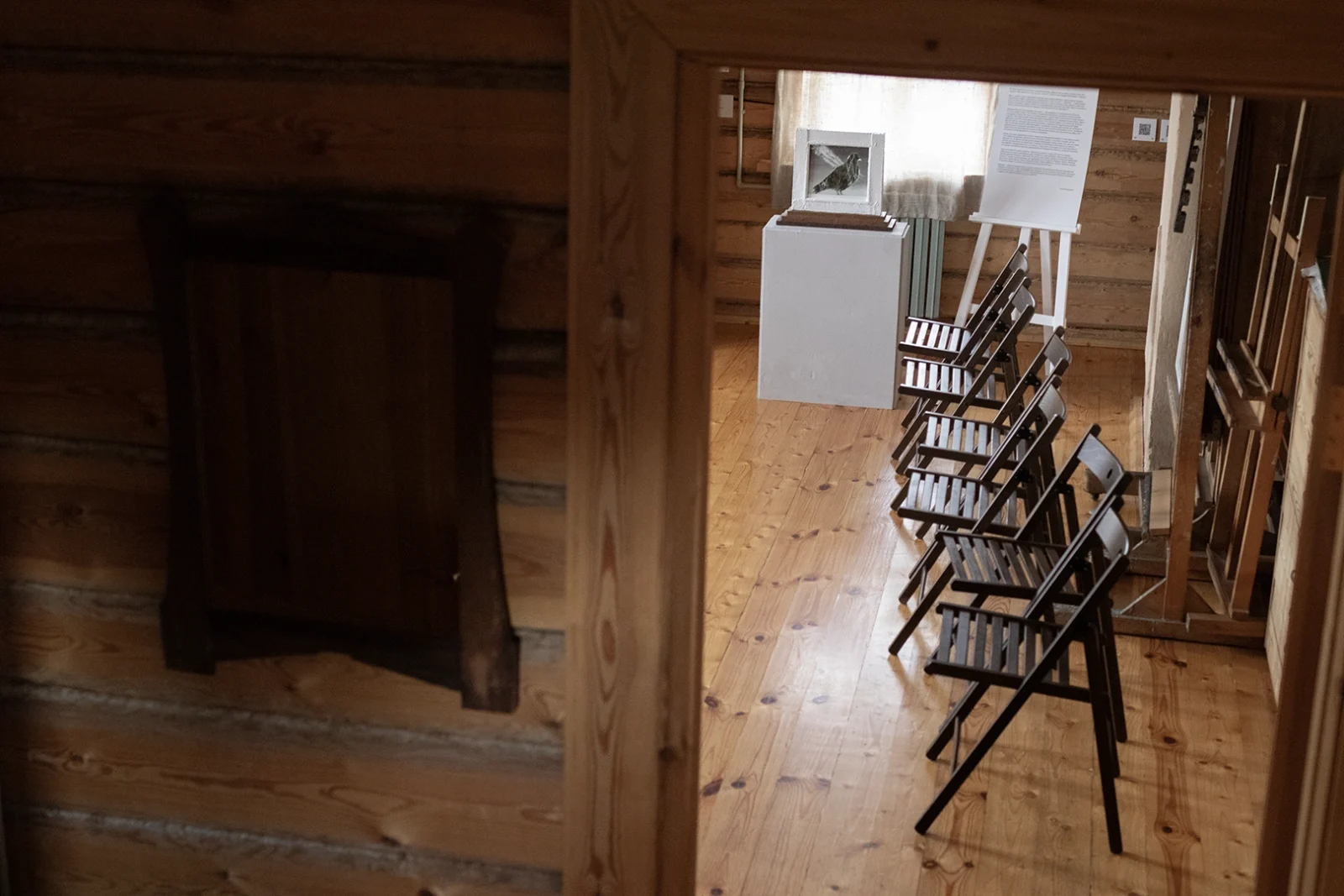
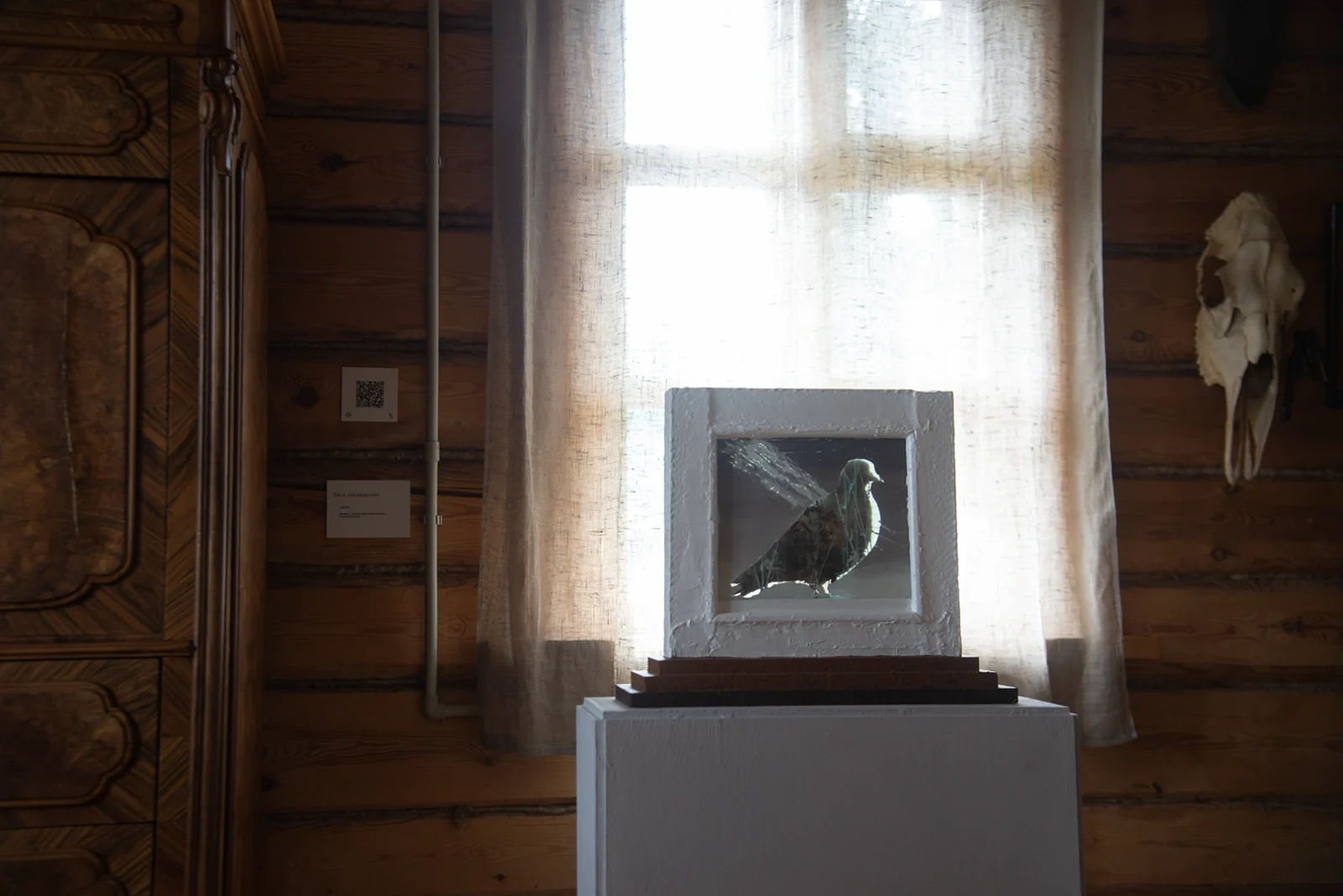
My memory is painted by Tarusa
Eduard Steinberg
The exhibition “To Myself from Myself” is the result of an art residency of Sergey Boyarintsev in Eduard Steinberg Studio. An art residency is a specific form of organizing creative activity, where participants find themselves in conditions ideal for research and creating works of art. For two months, The artist Sergey Boyarintsev studied and immersed himself in the art of nonconformism, the art of Steinberg and his like-minded “outcast generation” friends, and also the cultural and historical contexts of Tarusa for two months.
Tarusa has been an important point on the artistic map of Russia for a hundred years or longer. Since the late 19th century, a lot of creative intelligentsia representatives have lived and worked here: Vasily Polenov, Vasily Vatagin, Victor Borisov-Musatov and other landscape painters, writers, and scholars. The city is also part of the Pushkin Museum history. It was just here that the idea of organizing a future museum of fine arts came to the mind of the professor of Moscow Universty, historian and art critic Ivan Tsvetayev.
In the Soviet era, Tarusa was a “101st kilometer city” that was an informal name for a settlement where former prisoners and their families were permitted to reside. Vital creative energy and a feeling of rejection and opposition were connected there; and the young Edik Steinberg grew up in such an environment. Since that time onwards, Tarusa has become an embodiment of Russian spirituality for him. It was that landscape of central Russia where his soul aspired to; and it was there where his sensuous perception of the outer world was born. His harsh childhood impressions – father’s gulag years, lack of money, and war – were hidden in the peace of Tarusa.
Over the years, Tarusa has been home to Konstantin Paustovsky, who published the famous dissident miscellany “Tarusa Pages”, including literary works by Bella Akhmadulina, Ariadna Efron, and Nikolai Krymov, artists Igor Vulokh and Boris Sveshnikov, a pianist Svyatoslav Richter and many others. Away from the censorship and official agenda of the country’s capital, their artistic language gained freedom here. Tarusa was a secure place, a place for self-exploration and acceptance of the complex world that was not always fair. Steinberg deeply felt the creative potential of that space; he was inextricably linked with it, feeling belonging in it. In his last years, while living in Paris, Steinberg feared of never seeing his native land again; striving for getting enough of Tarusa, he hurried to his workshop that was the best place to work.
Today’s Tarusa still remains a city of art, keeping its ties with historical consciousness. And, according to the German historian, anthropologist and culture expert Aleida Assmann, the past is an integral part of the present. It is the past that lets the present be critically comprehended. Tarusa, with its multi-layered history, unfolding against the background of the Central Russian nature, gave impetus to new narratives found in works created by every next generation of artists. Cognition of the city, its timeless subjects and historical plexus helps one to get closer to understanding today’s aspirations.
The best way to understand a genius of a place is trying to speak this genius’ language. Communication starts here, in this house where art has been discussed and created for years. A resident artist starts a dialogue with Steinberg’s spiritual world filling the house with contemporary art, just like Eduard Arkadyevich built his connections with some early twentieth century artists, Kazimir Malevich in particular. The residency experience made it possible for Sergey Boyarintsev to rethink the phenomena of Tarusa and Eduard Steinberg’s Workshop. The art exhibition “To Myself From Myself” reveals the mystery of a place genius to viewers, emphasizing cause-and-effect relations between the form, artistic statement content, and the place of its origin.
Anna Zinovyeva
Сurator
Senior Project Specialist
Regional Projects Department,
The Pushkin State Museum of Fine Arts
The Pushkin State Museum of Fine Arts
Director Elizaveta Likhachyova
First Deputy Director Darya Parfyonenko
Chief Curator of Collections Tatyana Potapova
Deputy Director for Academic Research Ilya Doronchenkov
Deputy Director for Finance Alexey Popov
Deputy Director for Regional Development Diana Krause
Deputy Director for Administrative Operations and Security Vladimir Sergeyev
Advisor to the Director Anna Gor
Head of Exhibition Coordination Service Anna Kamenskikh
Head of Marketing and Communications Service Olga Sitnikova
Deputy Head of Marketing and Communications Service Yana Kushner
Head of Public Relations Department Anna Malygina
Head of Editorial and Publishing Department Ksenia Velikhovskaya
Head of Regional Projects Department Darya Kolpashnikova
Art Residency in Eduard Steinberg’s Workshop
Curator Anna Zinovyeva
Producers Angela Gordiuk, Olga Gavrilina
Editor Elena Garevskaya
Premises Manager Alexey Rymarev
Working Group Darya Artemyeva, Anton Baklykov, Nadezhda Bogdanova, Maria Volchenkova, Arina Gnilitskaya, Tamara Kink, Tatyana Lavrinova, Ekaterina Mogilevskaya, Darya Moskvina, Maria Nekrasova, Irina Filimonova, Karina Sholokhova
The Museum expresses special gratitude to Galina Manevich
This project was implemented with the support of Zoya Kiseleva